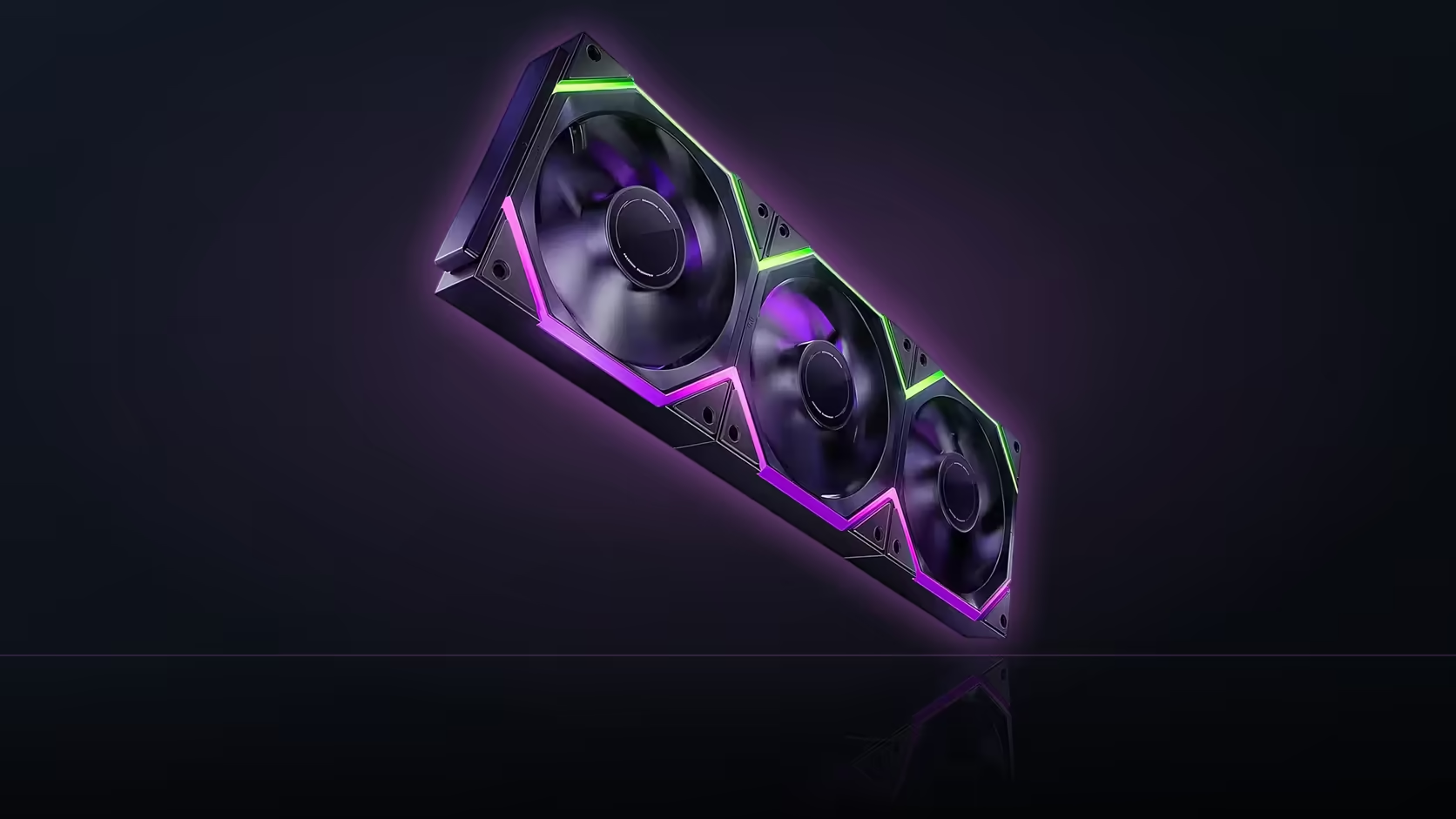
Deciding where the output cable leaves a fan row is much easier before that row is tied down, hidden behind a shroud, or bolted into place. The Nyota Pro joins its three fans through a modular interlock that fixes their order permanently once assembled, which makes the sequence, and the end the cable exits from, something worth settling at the bench rather than in the case.
Quick Answer
Assemble the Nyota Pro's three-pack in the order you want before mounting it, since the modular interlock fixes fan sequence and cable exit point once joined. Changing the order later means taking the row apart again, which is more involved than re-routing a loose cable. At R599 (VAT included) for the black or white pack, that planning step costs nothing but a few minutes at the bench.
🧮 Why the order matters before assembly
The interlock joins the fans in a fixed sequence, and the single output cable leaves from one end of that sequence rather than from the middle or from each individual fan. Whichever fan sits at that end determines where the cable exits the finished row, so the decision about order is really a decision about cable routing made in advance.
Working out which end should carry the cable
Look at where the addressable and fan headers actually sit on the motherboard relative to the case's fan mounting position, and pick the end of the row nearest that opening or the shortest sensible path to it. Getting this right up front avoids a cable run that has to travel the full length of the row before it can reach a header.
✂️ Why changing it later is more work
Because the interlock is a physical joint rather than a cable connection, correcting the fan order after assembly means releasing that joint, which in practice often means unmounting the row from the case first. That is a meaningfully bigger job than simply unplugging and re-routing a lead, which is what a cabled fan chain would require instead.
🪑 Assembling on the bench first
Building the interlocked row outside the case, on a bench or flat surface, is generally the easier approach. It lets the order be checked and the cable exit point confirmed before the assembly is offered up to the case's mounting points, so the row goes in as one finished piece rather than being built and corrected in place.
📐 What if the case splits its fan bays?
An interlocked row assumes adjacent fan positions. If a case separates its bays with any real gap, the row may not fit as a single assembly at all, and that is worth checking against the case's actual mounting layout before committing to the interlocked design over a cabled alternative.
🔒 When to finally secure the cable run
Only after the row is mounted, the fans have been tested, and the cable run has been confirmed to reach its header cleanly. Tying it down before that point risks having to cut and redo the run if anything about the routing turns out wrong once everything is in place.
🧪 Testing the row before it's fully secured
Once the interlocked assembly is mounted but before every tie is cut to length and the cable is fully dressed, it's worth running the fans through their PWM range and confirming the ARGB chain lights correctly from the exit point you've chosen. That test costs nothing beyond a few minutes, and it catches a cable that turns out marginally too short to comfortably reach its header, or a connector seated only partway, while both are still easy to fix. Discovering either problem after the run is fully tied down and the panel is back on turns a small adjustment into a proper teardown.
What the test confirms specifically
Watching the reported RPM change as a curve is adjusted confirms the PWM connection at the chosen exit point is sound, and cycling through a lighting effect confirms the same for the ARGB side. Both checks together verify that the order chosen at assembly, and the exit end that decided, actually delivers a working connection once everything is in its final position rather than just on the bench.
For a broader look at 120mm case fans, including cabled alternatives that route differently, Evetech's case fan category is worth comparing, and fan controller hardware is relevant if the build's lighting plan also involves a hub-based control route.
Frequently Asked Questions
Why does fan order matter with an interlocked row?
Because the interlock joins the fans in sequence and the single output cable leaves from one end of that fixed sequence.
What decides which end the cable should exit from?
The position of the case's headers relative to the mounting location, so choosing the nearer end keeps the run short.
Can the order be corrected after assembly?
Only by releasing the interlock, which usually means unmounting the row from the case to do properly.
Is it easier to assemble the row outside the case first?
Generally yes, building on a bench lets the order and cable exit be confirmed before it goes into the case.
What if the case's fan bays are spaced apart?
An interlocked row may not fit as designed, since the assembly assumes the fan positions sit directly adjacent to one another.
When should the cable finally be tied down?
Only after mounting, testing, and confirming the routing, to avoid having to cut and redo it later.
Planning a tidy interlocked fan row?
Browse Evetech's case fan range to find the right fit for your build's layout.