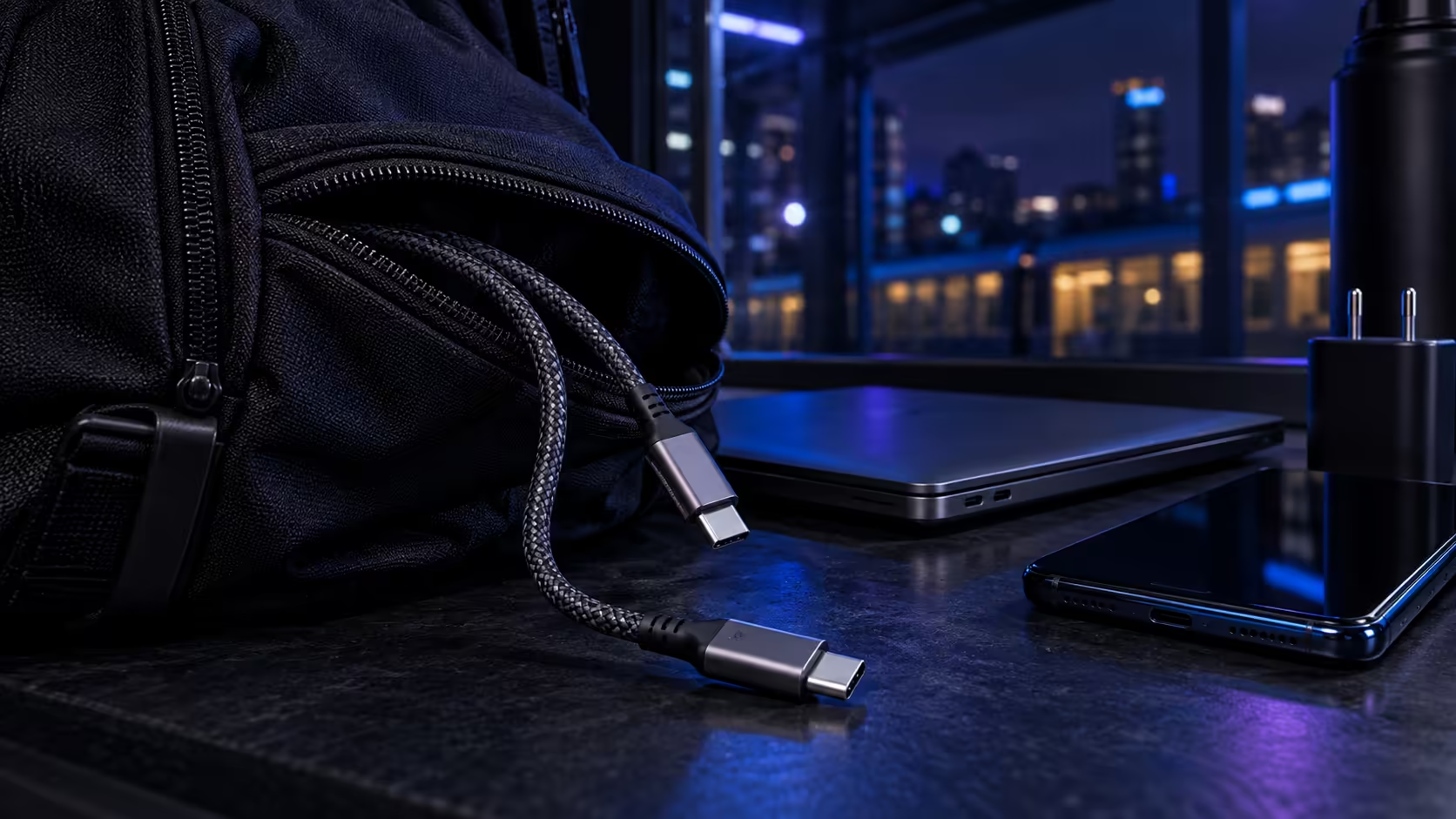
A long-lasting USB-C cable for a South African commute or a student's daily routine has to survive a specific kind of everyday punishment: coiled into a bag each morning, uncoiled again each evening, and squeezed between books, a laptop and whatever else happens to share the same pocket.
Quick Answer
On a daily commute the bend rating matters more than the wattage. A cable coiled into a backpack every morning and out again each evening is running its own flex test, and the Anker 544 publishes 30,000 bends at R399, with warranty cover handled here.
🚌 What a daily commute actually does to a cable
A cable packed and unpacked twice a day, whether on a taxi, a bus, a train or a car, accumulates flex cycles at a rate a desk-bound cable never experiences. Over a typical academic year of roughly 200 working days, that twice-daily routine alone can run into several thousand individual coiling and uncoiling events, which is exactly the kind of repeated stress a published bend rating is designed to measure and survive.
🎒 Habits inside the bag that speed up wear
Wrapping a cable tightly around a charger block to save space is a common habit that concentrates bend stress at a single, small radius rather than spreading it across a looser coil, quietly shortening the cable's life well before its rated cycle count is reached. A laptop backpack with a dedicated, padded cable pocket helps, since it stops the cable from being crushed under books or a water bottle, which is a separate source of wear beyond bending alone.
🧵 Why bend rating outranks wattage for this specific use
For most commuters and students, the laptop's own charger sets a wattage requirement well within what a standard 5A cable handles easily, so the wattage figure rarely differentiates one cable from another in practice. What actually determines how long the cable survives the daily bag routine is its bend rating, and the Anker 544's published 30,000-bend figure, paired with a bio-nylon braid, is specifically the number worth checking before anything else for this use case.
🛒 Buying sensibly on a student or commuter budget
At R399, the Anker 544, in the comprehensive cable range, costs less than replacing a cheaper, unrated cable two or three times over a single year of daily commuting, which is the more realistic comparison than the sticker price alone suggests. Warranty cover is handled locally, meaning a faulty cable is a straightforward exchange rather than a delay while a claim is sorted internationally. Check your laptop's own charging wattage before buying, since confirming the cable meets it is worth the extra minute regardless of the bend rating.
🌦️ Weather adds its own layer of wear
A USB-C cable pulled out in the rain, stuffed damp into a bag, or left in a hot car for hours faces conditions well beyond the controlled lab environment a bend test runs in. None of this is unique to South African commuting specifically, but the combination of daily flexing and occasional weather exposure together is exactly why a rated, braided cable earns its keep faster here than on a desk cable that never leaves an air-conditioned room.
Frequently Asked Questions
Does a cheaper cable really fail faster on a daily commute?
Often, yes, since an unrated cable has no published bend cycle figure to aim for and frequently fails at the connector well before a rated one would under the same daily handling.
Is it worth buying two cables, one for the bag and one for the desk?
It is a reasonable approach, since a cable that never travels avoids the bend stress a commuting one experiences daily, potentially extending both cables' useful lives.
Does coiling a cable loosely really make a measurable difference?
Yes. A single loose loop distributes bend stress across a wider radius than a tight wrap does, which measurably reduces stress concentration at any one point along the cable.
Should students prioritise cable durability over charging speed?
For most student laptops, both are covered by the same 5A-rated cable, so it is less a trade-off and more a matter of confirming both figures are met by the same purchase.
Does a cable ever fail suddenly without any warning signs at all?
Rarely. Most cables show some sign first, such as a connection that only holds at certain angles or intermittent charging, before failing completely, which is worth watching for during a busy exam period.
Is it worth carrying a spare cable during exam season specifically?
Yes, a low-cost precaution given how much a dead laptop matters during a demanding week, and a second rated cable costs far less than the disruption a single failure could cause at exactly the wrong moment during a tight assignment deadline.
Ready to buy a cable that survives a full academic year of commuting?
Check the bend rating first, since that is what your daily routine actually tests.