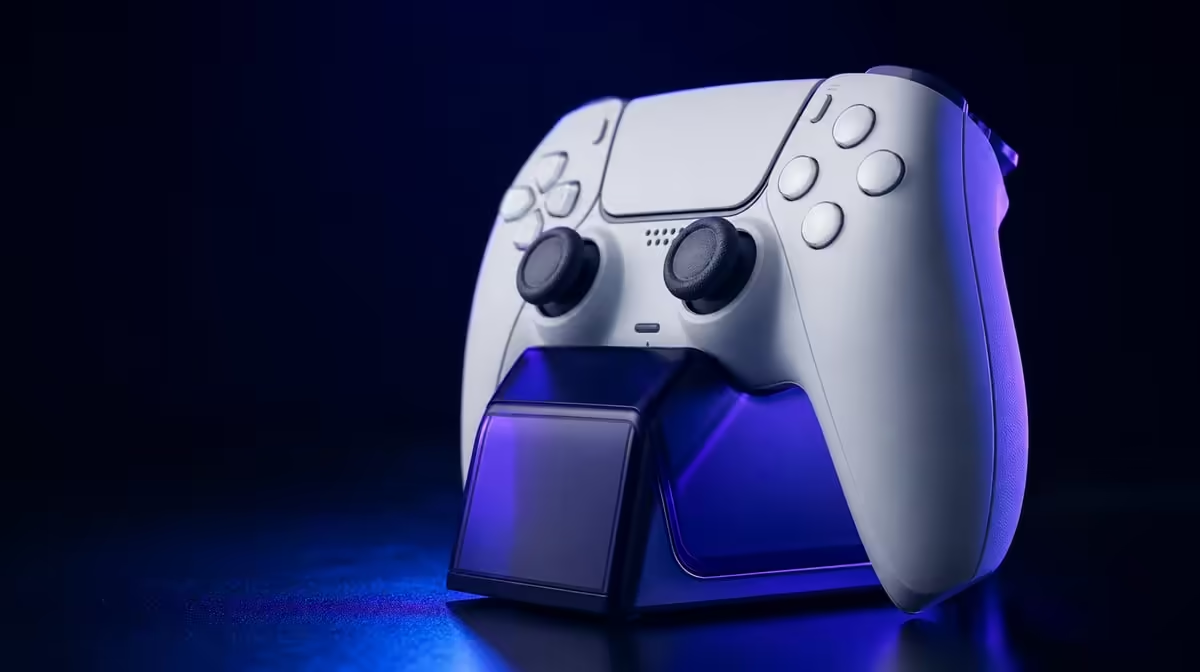
Magnetic controls still need a neutral point and a useful game test. Configure the Cyclone 2 TMR sticks and Hall triggers by checking centre and range first, then verifying graduated trigger travel before touching sensitivity. The R999 Phantom White controller uses Mag-Res TMR sticks for direction and Hall analog triggers for presses, so the two control types deserve different setup paths.
Quick Answer
Rest the Cyclone 2, confirm that both TMR sticks settle consistently, and sweep them through their range. Next, press each Hall trigger slowly in a supported game and verify a smooth return. The controller costs R999 with its dock included; save a default input profile before changing stick response or trigger mappings.
🧲 Establish the TMR neutral point
TMR is a magnetic sensing approach. In the Cyclone 2, the sticks use Mag-Res TMR hardware to report direction around a central resting position. This avoids the conventional rubbing measurement path found in potentiometer designs.
Place the controller on a level surface and release both sticks. Observe centre through a supported input view, then move one stick slowly in a full circle. Let it return without guiding it. Repeat from several directions and do the same with the other stick.
The goal is consistency. If the centre settles reliably, keep that result as the baseline. If the reading changes after one direction, note the pattern before increasing deadzone.
TMR sensing does not remove calibration, care or mechanical condition from the picture. Dust, pressure during storage and software profiles can still influence the finished response.
The Evetech controller category is the right place to compare other magnetic and conventional control options.
🎯 Tune stick response in small stages
After neutral passes, test fine movement near the centre. A large deadzone can hide a small offset while making the first part of input feel unresponsive. Reduce or increase it only in small steps where supported, then repeat the same slow correction.
Test the outer range separately. Move towards the edge at a steady pace and watch whether the game receives the expected broad input. Near-centre behaviour and full travel answer different questions, so one setting should not be used to compensate blindly for the other.
Leave game sensitivity until the hardware baseline is clear. Sensitivity changes the on-screen result, while deadzone changes where input begins. Adjusting both together makes a poor result hard to trace.
Save a named default profile before experimenting. If a later setting produces overshoot, return to the stable record rather than layering another correction on top.
Make two short notes for the sticks: neutral behaviour and game response. The first belongs to the controller baseline; the second depends on sensitivity and title settings. Keeping them separate prevents a fast camera from being mistaken for a sensor problem.
Repeat the test after a connection change only when the host recognises default input. A missing command caused by a failed route is not evidence about TMR precision.
🏁 Give Hall triggers their own test
The triggers use Hall magnetic sensing and report analog travel where the game supports graduated values. A trigger begins released, moves along one direction and returns. This differs from a stick moving across two axes.
Choose an action where partial press behaviour is visible. Press slowly, pause at different points, release fully and repeat. Do not assume every title uses the complete analog range; the game decides how it interprets the hardware.
Check both triggers separately before using them together with stick input. If one appears on or off only, inspect the title's controller implementation before changing a working profile.
The wider Evetech gaming accessories section can help with setup planning once both magnetic control types have proven their roles.
🧪 Combine the controls without hiding faults
After individual checks, move or aim with a TMR stick and press a Hall trigger gradually. Notice whether the grip remains stable and whether the stick returns to neutral after the press. This combined action resembles real play more closely than an input menu.
Keep RGB and unrelated profile changes out of the first test. Visual customisation cannot improve sensor response, and several simultaneous edits make the result ambiguous.
Connection should also remain fixed. The Cyclone 2 offers tri-mode flexibility, but switching routes while tuning adds another variable. Prove the control baseline on one supported host, then carry the same test to the next.
The included charging dock belongs after the input work. Returning the R999 controller to a stable dock position can create a repeatable storage habit that keeps pressure off the sticks. The Evetech accessories best-seller view offers wider context after this measured configuration is complete.
Run a final combined sequence at normal speed. Make a broad stick movement, settle near centre, press each trigger and release it fully. Consistency through the sequence matters more than a single menu reading because grip and timing enter the test.
Repeat the sequence on every intended platform before copying settings. If one host interprets trigger travel differently, preserve separate profiles. The magnetic hardware remains the same, but software support can change what the game receives.
After the separate stick and trigger checks, play one familiar sequence at normal speed. This final pass confirms that the chosen settings remain comfortable when both hands are moving and attention is on the game rather than a test display. Save only the profile that survives that ordinary-use check.
Frequently Asked Questions
What is the first TMR stick check?
Confirm that both sticks settle consistently at neutral while the controller is still. Then move through the range and allow a natural return.
Do magnetic sensors remove calibration needs?
No. They avoid a rubbing measurement path, but software, mechanics and physical care still affect the complete control.
Why should triggers and sticks be tuned separately?
Sticks report two-axis direction around a centre, while triggers report one-direction travel. Their tests and useful settings are different.
Which price includes these controls?
The GameSir Cyclone 2 Phantom White is R999, with its Mag-Res TMR sticks, Hall analog triggers and charging dock in the package.
Ready to configure magnetic input from a clean baseline? Explore Evetech gaming controllers and compare TMR stick feel, Hall trigger travel and the platform support your games require.