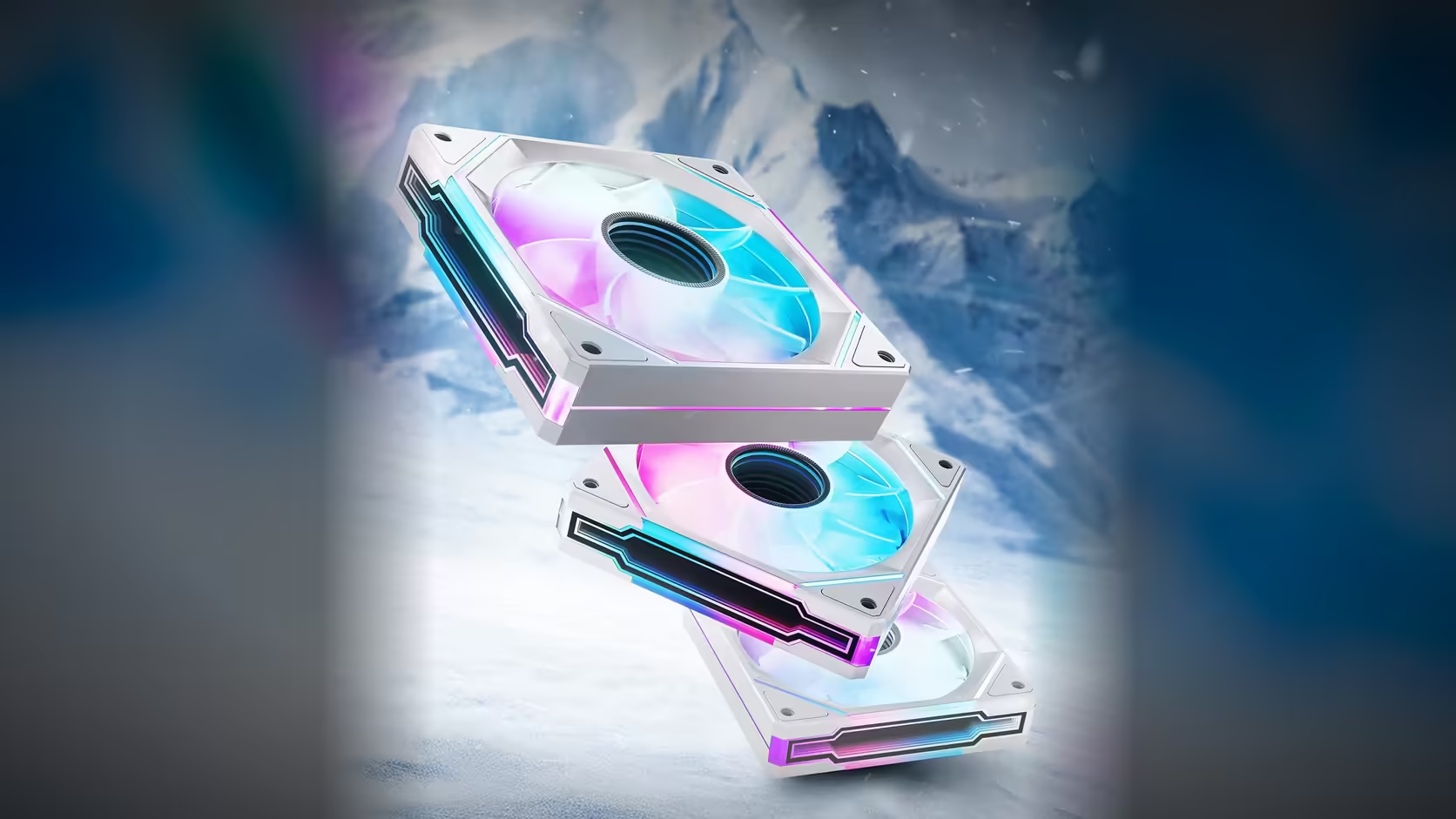
Working out header requirements for a row of Amici 5GT fans goes wrong the moment someone assumes the ARGB chain count also answers the PWM question. It does not, and treating them as one number instead of two is an easy way to end a build one header short.
Quick Answer
An Amici 5GT fan header count and lighting header count are two separate figures that need to be worked out independently. The ARGB leads link across three to four fans onto a single addressable header, but every fan still carries its own 4-pin PWM cable, so a three-fan row can reach the board on one lighting connection while still needing up to three fan headers for speed.
Two counts that look related but are not
It is a natural assumption: if the lights chain together, surely the speed cables do too. On this fan they do not. The ARGB lead is built to link fan to fan, ending in one connection to the board. The PWM lead is not built that way; each one runs independently from its fan to wherever it terminates, whether that is a dedicated header or a splitter feeding several fans into one connection.
Working the lighting count first
Start with how many addressable headers the lighting needs. Since the Amici 5GT description specifies linking across three to four fans, a row of three or four needs one addressable header, and a build running more than four fans needs at least a second chain on a second header. Most motherboards provide more than one addressable header, which is the usual way to split a larger lighting layout.
Working the PWM count separately
Now count the fan headers needed for speed control. Every Amici 5GT keeps its own PWM cable, so in principle a three-fan row needs three fan headers. In practice, a splitter reduces that to one physical connection for several fans, at the cost of the board typically reporting only one combined reading rather than each fan individually.
Why a splitter is often the practical answer
Boards vary widely in how many fan headers they provide, and it is common for a build to have more fan positions than headers. A splitter lets several PWM cables converge into a single header connection, provided the header's rated current covers what is being asked of it, a figure usually stated in the board's own specification or manual. The trade-off is monitoring resolution: a stopped fan on a splitter may not show up clearly if the board is only reading the combined signal.
What happens if the counts are not worked out ahead of time
A build assembled without separately counting lighting and speed connections risks discovering, mid-install, that there are enough addressable headers but not enough fan headers, or the reverse. Since the cabling for each system is already fixed by the product, that gap can only be closed with a splitter or a fan hub bought after the fact, adding a step that planning ahead would have avoided.
When a fan hub becomes worth considering
If a build genuinely runs short on fan headers even after splitters, a dedicated fan hub, powered separately from the motherboard, is the next option. It adds a component and its own connection point to the build, so it is generally worth reaching for only once splitters alone cannot cover the header shortfall. Evetech's case accessories range covers hubs and splitters alongside other fan-wiring extras; check current Amici 5GT stock in the case fans section when weighing fan counts against header availability.
Frequently Asked Questions
Why do the lighting count and the PWM count come out different?
Because the ARGB leads chain between fans while the PWM leads do not, so one system reaches the board on far fewer connections than the other.
How many headers does a three-fan row realistically need?
One addressable header for the lighting, plus up to three fan headers for speed, or fewer with a splitter in place.
Is using a splitter for PWM cables considered safe?
It is common practice, provided the fan header's rated current, stated in the board's specification, is not exceeded by what is connected to it.
Does a splitter change how a board reports fan speed?
Usually yes. Most boards report a single combined reading from a splitter rather than reading each connected fan individually.
What should I do if I genuinely run out of both header types?
A powered fan hub is the usual next step once splitters alone cannot cover the shortfall, though it is an added component rather than a built-in feature of the fans.
Does the lighting chain limit ever grow past four fans?
Not according to the product description, which specifies three to four fans as the linkable range for the ARGB leads.
Should this planning happen before or after buying the fans?
Before ordering is better, since the header count a board has may shape how many fans a build can sensibly run, which is worth knowing before committing to a pack size.
Planning header counts for a fan-heavy build?
See Evetech's case fans and case accessories ranges before wiring anything up.