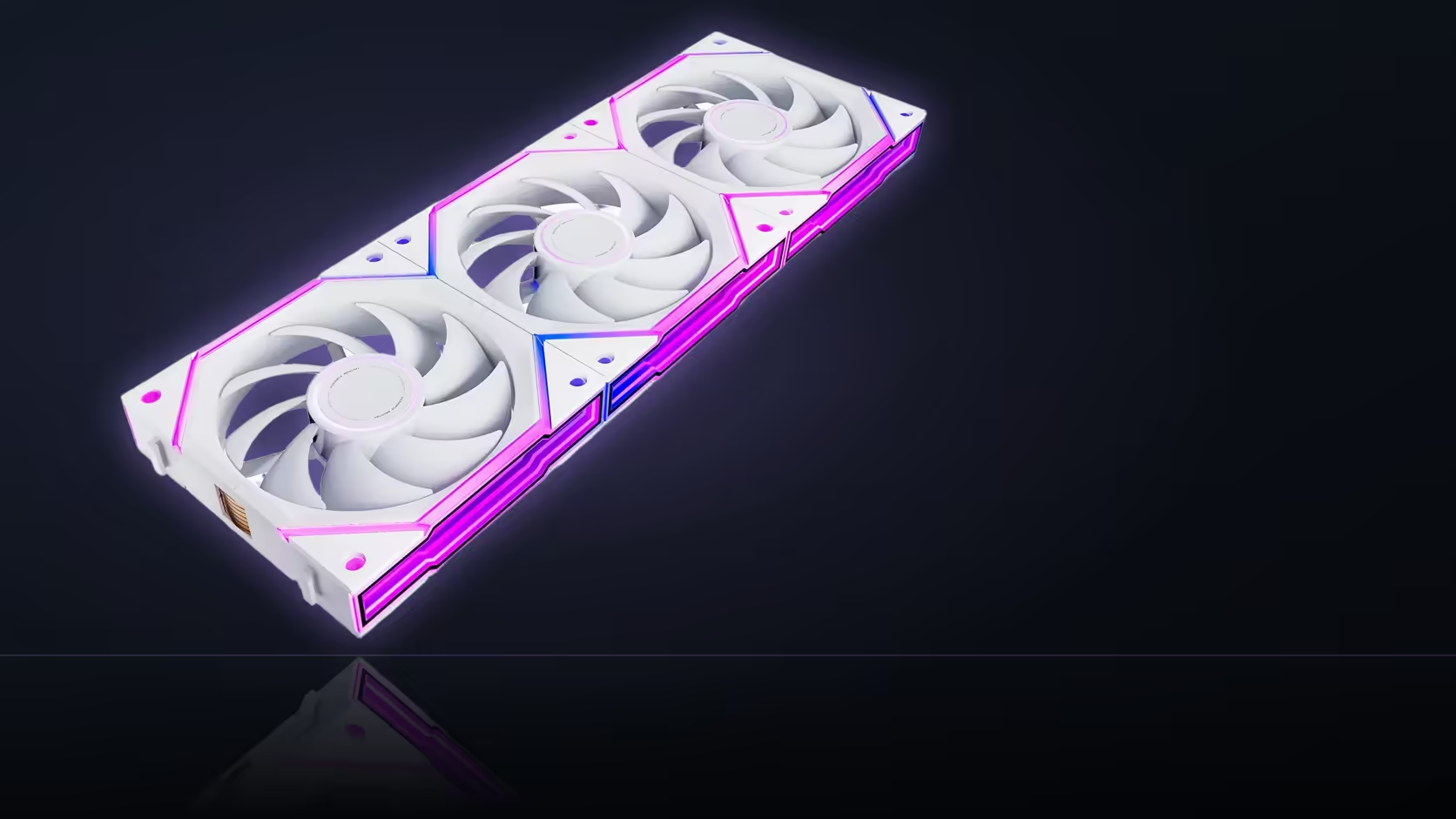
Order fans before working out which way the air actually needs to move, and the row that looked right in the box often looks wrong the moment it is mounted. The fix costs nothing and takes five minutes: sketch the case, mark the intake and exhaust positions, and only then decide which of the Nyota Ultra's blade directions each one needs.
Quick Answer
Forward and reverse Nyota Ultra fans are priced the same, a single at R249 and a three-fan set at R649, so the decision is not about budget but about matching blade direction to airflow and sightline together. Draw the airflow arrows first; order second.
🗺️ What the sketch should actually show
A useful sketch marks three things for every fan position: whether it pulls air in or pushes it out, where the case window or glass panel sits relative to it, and which face of the mounted fan that window will actually show. A rough diagram with arrows for airflow and a dot for where you usually sit and look is enough detail; this is a direction decision, not a measurement exercise.
↔️ Why airflow and appearance are two separate questions
Mounting orientation decides which way a fan moves air, full stop. Blade direction, forward or reverse, decides which face of the fan looks finished once it is installed. Those two things do not always point the same way: a fan can be correctly mounted as intake, moving air exactly as intended, while still showing its rear face to a viewer if the wrong blade direction was ordered. Treating airflow and sightline as one combined question is exactly how a mismatched fan ends up in a finished build.
🌬️ Confirming a reverse fan does not reverse airflow
A reverse-blade Nyota Ultra does not blow the opposite way to a standard one when mounted identically. Airflow follows the fan's physical orientation in the case, not the blade shape. What reverse actually changes is which side looks complete, which matters specifically in positions where the fan's rear would otherwise be the side facing a window. The published 58.5 CFM airflow figure and 800 to 2000 RPM PWM range apply identically to both versions.
📝 Turning the sketch into an order
Once the sketch names each position's role and required blade direction, tallying up how many forward and how many reverse fans are needed becomes straightforward, and it usually reveals a mixed order rather than one uniform direction throughout. Positions with no visible sightline at all can take whichever direction is left over or cheaper to source, since nothing about their appearance will be seen once the case is closed. Doing this before ordering avoids the common outcome of a second, corrective purchase for one fan facing the wrong way. Both blade directions are listed in the case fan range, and case accessories covers the daisy-chain cabling a mixed row needs.
🧭 Walking through a worked example
Take a common layout: three front intake fans behind a mesh panel that a side window looks directly into, and one rear exhaust that sits behind the motherboard tray where nobody ever looks. The sketch marks the front three as needing reverse blades, since their rear face would otherwise show through the mesh, and marks the rear exhaust as a free choice, since its orientation is never seen. That single sketch turns into an order of one reverse three-pack and one standard single, rather than four fans of the same direction bought without checking which ones actually needed to differ.
🖊️ Keeping the sketch for later reference
A photograph of the finished sketch, kept alongside the order confirmation, is useful well beyond the initial installation. If a fan is later swapped, added, or moved to a different position during a case refresh, having the original airflow and direction plan on hand saves working it out from scratch a second time. That small piece of documentation costs nothing to keep and often pays for itself the next time the case is opened.
Frequently Asked Questions
What exactly should the airflow sketch include?
Which positions bring air in, which push it out, and which of those positions your normal seat actually lets you see into the case.
Why treat airflow and blade direction as separate decisions?
Because mounting orientation sets airflow while blade shape sets appearance, and the two do not always agree on what a position needs.
Does a reverse-blade fan actually blow air backwards?
No. It moves air the same way as a standard fan mounted identically; only the visible face changes.
How many of each direction will a typical build need?
That depends entirely on the sketch, since every case layout puts fans in different roles relative to its windows.
Does direction matter for a hidden fan position?
Not visually, so those positions can take whichever direction is spare or cheaper without any downside.
Is a detailed diagram necessary, or is rough enough?
A simple sketch with directional arrows covers what is needed; this is about direction, not precise measurement.
Ready to sketch your case before placing a fan order?
Browse Evetech's case fan range once your intake and exhaust positions are mapped out.