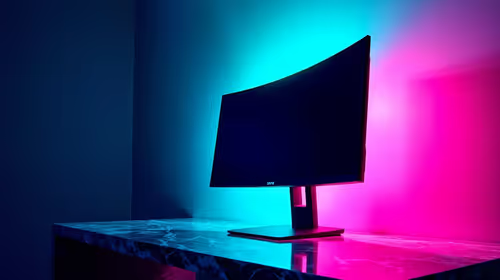
HDR succeeds when dark detail, mid-tones and highlights remain distinct, not when the image is simply brighter. A DisplayHDR 400 True Black monitor needs system HDR enabled, a sound black level and game-by-game calibration. The R23,699 reference here, ASUS ROG Strix OLED XG34WCDG, adds QD-OLED contrast and 99% DCI-P3 colour to that process.
Quick Answer
Enable HDR in the operating system, run its calibration patterns, then adjust each game's black point, paper-white or peak controls using visible scene detail. The R23,699 XG34WCDG combines DisplayHDR 400 True Black with QD-OLED and 99% DCI-P3 coverage, so the aim is controlled contrast and natural colour rather than maximum slider values.
🌓 Begin with an accurate SDR baseline
Before switching HDR on, establish that ordinary content looks balanced. Set brightness for the room, choose a neutral colour mode and inspect photographs or videos you know well. Skin should not look fluorescent, grey objects should remain neutral and dark clothing should retain folds.
This baseline matters because a poor SDR configuration can be mistaken for an HDR problem. It also gives you a dependable desktop mode for applications that do not use HDR. Avoid judging the screen only from a vivid showroom clip, where saturated colour and isolated highlights are designed to impress quickly.
Room lighting changes perception. A bright window behind the viewer can wash out shadow differences, while a pitch-dark room can make moderate highlights feel intense. Control direct reflections and use gentle ambient light before chasing small slider changes. Evetech's OLED monitor category lets buyers compare the panel format before deciding which HDR feature set fits the room.
⚙️ Calibrate the system before the game
Enable HDR in the operating system for the XG34WCDG and use the available calibration sequence. Black-level patterns should reveal the first intended near-black steps without turning the entire background grey. White patterns should preserve visible differences close to the bright end instead of merging every patch into one flat shape.
Keep the output resolution at UWQHD and confirm that 175Hz remains selected after HDR is enabled. Picture-mode changes can sometimes encourage users to adjust several unrelated controls at once; check the signal first, then the image. The monitor's 0.03ms GTG and adaptive-sync support concern motion, so leave those settings stable during picture calibration.
DisplayHDR 400 True Black describes an HDR capability that places particular emphasis on deep black presentation alongside defined highlights. QD-OLED pixels can create a strong separation between dark and bright content. The useful result is a night scene with readable shadow texture and bright lamps that stand apart, not a uniformly dark screen pierced by clipped white patches.
🎨 Tune colour without flattening detail
The XG34WCDG covers 99% DCI-P3, giving HDR content access to a broad colour range. Coverage is capacity, not an instruction to maximise saturation. Start from the neutral or accurate-looking mode and inspect varied material: foliage, skies, skin, fire, interface elements and dim interiors.
If two neighbouring shades merge, reduce the control that is clipping them rather than compensating elsewhere. Overdriven contrast can erase bright texture; a raised black level can turn deep scenes misty. Move in small increments and return to the reference patterns after any major change.
Gaming genres expose different weaknesses. Horror reveals crushed blacks, racing highlights bright reflections and skies, and colourful action games show whether saturated effects still retain internal variation. A mixed test set gives a more durable result than tuning around a single favourite scene.
🎮 Finish inside each HDR title
Games can apply their own tone mapping and may label controls differently. Use the system baseline as the foundation, then follow the game's calibration images. Set the dark reference so intended symbols are barely visible and adjust the bright reference until highlight detail reaches the specified boundary.
Return to real gameplay after every calibration screen. Menus are useful for consistency, but they do not reproduce the contrast of a torchlit corridor, a sunset or a bright effect against black. Keep notes for games that require different values, particularly when switching between SDR and HDR releases.
The curved monitor collection helps separate screen shape from picture technology, while the broader gaming monitor range provides context for resolution and refresh choices. The XG34WCDG's 1800R curve supports immersion, but curve does not determine HDR accuracy.
Protect consistency between sessions
Save the preferred HDR mode and avoid using a global slider as a quick fix for one unusually dark game. Recheck system HDR after graphics-driver updates or input changes. A short calibration pass is more reliable than trying to remember how a scene looked weeks earlier.
Frequently Asked Questions
Where should HDR be enabled first?
Enable it in the operating system before opening the HDR game. This establishes the correct signal path and lets the platform calibration create a common starting point.
How do I avoid crushed shadow detail?
Use near-black patterns and a dark game scene, then adjust until subtle dark steps remain distinguishable. Do not raise the black level so far that true blacks become grey.
What should happen to bright highlights?
Highlights should stand clearly above the surrounding image while retaining texture where the content contains it. If clouds, metal or flames become flat white shapes, reduce the relevant peak or contrast control.
What does DisplayHDR 400 True Black indicate here?
It identifies the XG34WCDG's HDR capability with an emphasis on deep black presentation. Pair it with careful calibration so both shadow information and bright accents remain useful.
How important is 99% DCI-P3 coverage?
It gives compatible HDR content a broad colour space to use. Accurate settings still matter because wide coverage alone does not guarantee natural colour balance.
What does the HDR-capable monitor cost?
This HDR QD-OLED reference costs R23,699. Alongside HDR, the XG34WCDG includes UWQHD resolution, 175Hz refresh and adaptive-sync support.
Ready to see what controlled HDR can reveal? Review Evetech's OLED and gaming monitor categories with your room lighting, favourite HDR genres and preferred ultrawide format in mind.