Owning a battery-powered light is only half the story, since how it gets used session after session decides whether that battery still performs the same a year later. A led streaming light with its own cell needs a slightly different care routine to a mains-only fixture, and most of that routine comes down to a few simple habits.
Quick Answer
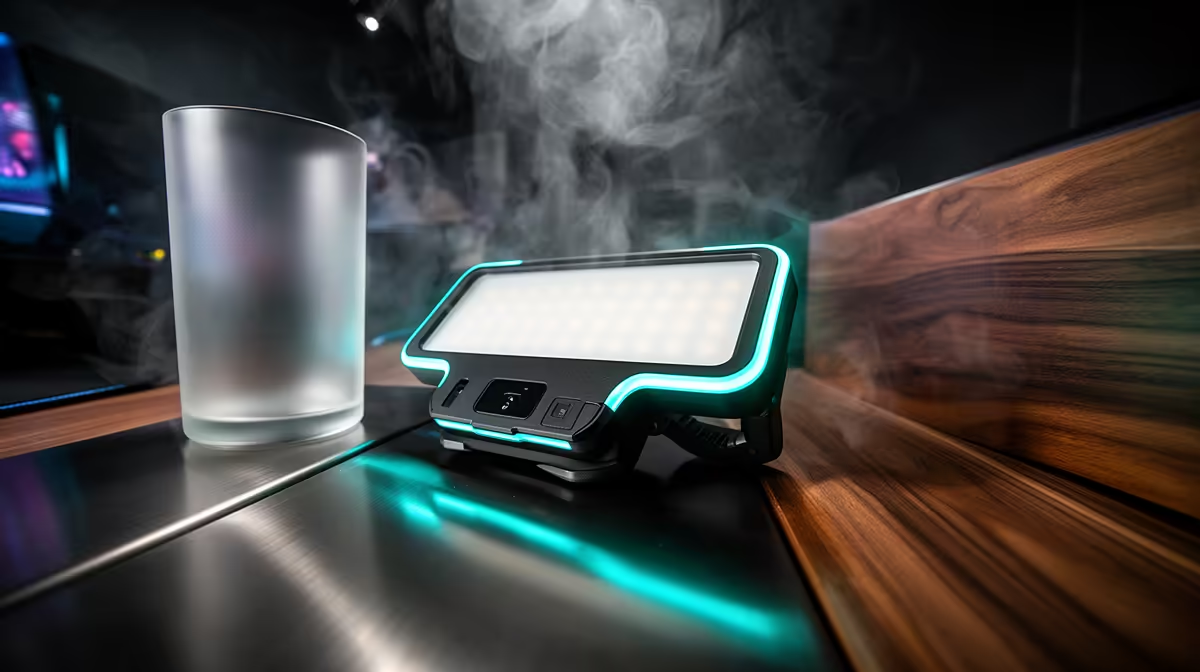
Getting the most from the NearStream SL10B, priced at R629, mainly comes down to charging it fully before a long recording or streaming session and choosing a sensible brightness level rather than defaulting to maximum output. Doing both protects the 2000mAh built-in cell and keeps runtime consistent across more sessions over time.
🔋 Charging Habits That Extend Real-World Runtime
Charge before, not during
Topping the battery up fully before a planned session, rather than relying on a partial charge, avoids the light dimming or cutting out mid-stream. Checking the current charge level against the SL10B's Evetech listing specs is a useful reminder of what the 2000mAh cell is rated to handle per full charge.
Avoid running it down to empty every time
Like most rechargeable cells, a battery that regularly runs completely flat before recharging tends to lose capacity faster over time than one that gets topped up more often. Charging after most sessions, rather than waiting until it dies mid-use, is a simple habit that pays off months later.
💡 Brightness Choices That Protect the Battery
Running a light at maximum brightness for every session drains the battery faster and is often unnecessary, since most home setups sit close enough to the subject that a moderate setting already gives even coverage. Reserving full brightness for situations that genuinely need it, such as a larger room or additional ambient light competing with the fixture, stretches runtime considerably on ordinary days.
Matching brightness to the room, not habit
A dim, close-up bedroom setup rarely needs the same output as a brighter open lounge area. Adjusting brightness based on the actual room rather than a fixed favourite setting is one of the simplest ways to get more sessions out of a single charge.
🌡 Storage Habits That Add Up Over Time
Avoid leaving it fully drained for long periods
A light left completely flat for weeks between uses tends to fare worse over its lifespan than one stored with at least a partial charge. If a longer break between sessions is planned, giving the unit a top-up before putting it away is a small habit that protects the cell.
Keep it away from extreme heat
Leaving any battery-powered device in direct sun on a windowsill, or in a hot car, accelerates wear on the internal cell far more than normal desk use ever would. Storing the light somewhere at a normal room temperature when it is not in use is a simple way to avoid unnecessary strain.
Use the light regularly rather than letting it sit unused
A battery that sits completely idle for months at a time, whether full or empty, is not doing itself any favours either. Rotating it into regular use, even for short sessions, tends to keep a rechargeable cell healthier than long stretches of complete inactivity.
🧰 Keeping the Rest of the Setup Working With It
A portable light performs best alongside gear that does not fight its cordless design, so mounting it with a clip or arm from Evetech's gaming accessories range keeps it stable without needing a cable run for support. When it does need charging, routing that cable neatly using options from Evetech's cable solutions avoids adding clutter to an otherwise cordless setup.
Frequently Asked Questions
How often should a battery-powered streaming light be charged?
Charging it after most sessions, rather than waiting for it to run flat, generally keeps the battery healthier over the long term.
Does maximum brightness always give the best picture?
Not necessarily, since most home distances only need moderate output for even coverage, and maximum brightness mainly drains the battery faster.
Can the light be used while it is charging?
This depends on the specific model's design, so it is worth confirming before relying on charge-while-in-use for a live session.
Does battery capacity degrade over time regardless of care?
All rechargeable batteries lose some capacity eventually, but sensible charging habits and avoiding full discharges slow that decline noticeably.
Is a lower brightness setting still usable for streaming?
Yes, for most desk distances a moderate brightness setting still gives clean, even coverage without needing the highest output available.
Does storing the light in a hot room damage the battery?
Consistent heat exposure, such as leaving it on a sunny windowsill, can wear down a rechargeable cell faster than normal room-temperature storage.
Should a rarely used light be charged before every long break?
Topping it up before a longer break between sessions, rather than storing it flat, is a sensible habit that helps preserve capacity over time.
Ready to stretch a portable light's battery further? Managing brightness and colour temperature on the NearStream SL10B helps its built-in battery last through longer sessions. Evetech lists the light at R629 under streaming lighting.