




Build a Hollow Knight-Ready Gaming PC for R40,000
Hollow Knight R40,000 PC build planning starts with balanced parts. For SA gamers, compare CPU and GPU fit, RAM needs, SSD space, PSU headroom and cooling before buying.
Read moreFor a bedroom gaming setup in SA, a high-airflow case is worth considering when heat and fan noise would bother the room.
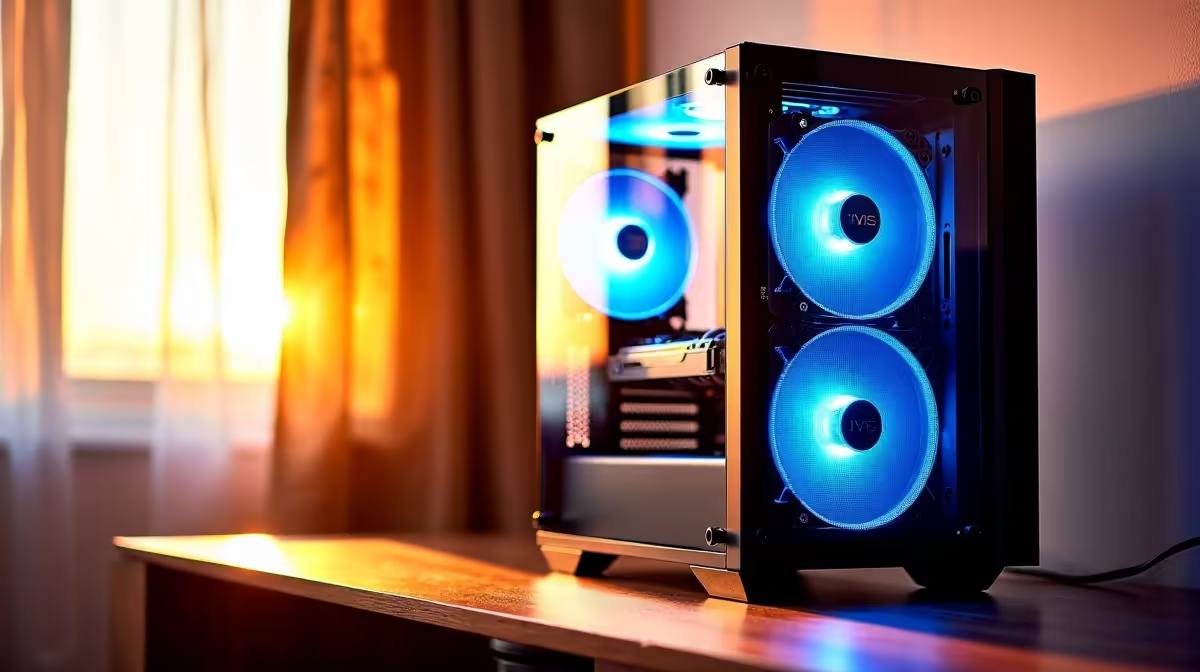
A high-airflow case is worth buying for a bedroom gaming setup when the CPU and GPU produce sustained heat that a compact closed case cannot remove quietly. It is not automatically better for sleep or study. Open mesh can expose more fan noise and admit dust, while a large tower may dominate the room. Balance cooling, sound, footprint and cleaning access.
No high-airflow case has verified pricing in the current factpacks. Compare live Evetech options by motherboard support, GPU length, cooler height, included fans, dust filters, front ports, drive bays, panel access, dimensions, noise and warranty. Check whether additional fans or a controller are required before comparing full cost.
Mark the case footprint and cable route on the bedroom floor. Plan a clear intake-to-exhaust path, keeping the front away from walls, curtains and bedding. Run a demanding game while logging temperatures, clock behaviour and sound from both the desk and bed. Gradual fan curves can reduce late-night surging.
Choose the airflow case when it controls sustained heat at acceptable volume and still leaves safe movement space. A smaller quiet case may suit modest hardware better. Clean filters regularly and use headphones carefully, because case design cannot make a hot high-power PC completely silent in a small room.
Planning a bedroom gaming PC? > Ask Evetech to verify case clearance, cooling and footprint for the components and room.
In a bedroom setup, the case choice should help move warm air away from the desk without making the PC feel oversized.
A balanced airflow case matters most if the gaming PC sits near a bed, wall, or closed corner for daily use.
Confirm the ASUS Prime B850M-F WiFi and RM850e fit cleanly, then judge whether the bedroom has enough breathing space.
Gamemax Sigma R235 keeps the cooling spend low, while Xigmatek is the stronger angle for a more settled bedroom build.
The bedroom angle makes heat control and everyday noise more important than chasing a larger-looking case.
A high-airflow case helps the listed parts breathe, but it cannot make an unsuitable room layout disappear.
Hollow Knight R40,000 PC build planning starts with balanced parts. For SA gamers, compare CPU and GPU fit, RAM needs, SSD space, PSU headroom and cooling before buying.
Read more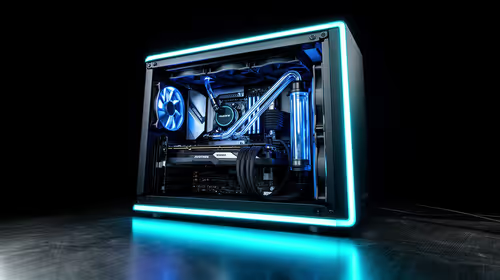
iRacing R80,000 builds should target smooth sim racing, not vanity specs. This recommended build for iRacing at R80 000 SA buyer's guide should weigh CPU strength, GPU headroom, triples or VR plans, cooling, and reliable peripherals.
Read more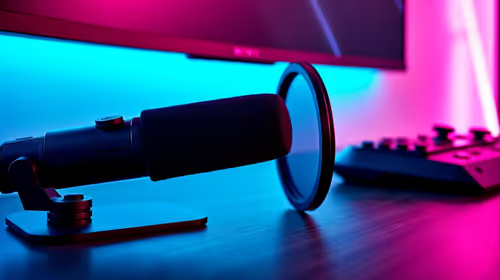
A podcast recording setup is worth buying for a small SA online store when clear product audio will support listings, clips or customer explainers.
Read more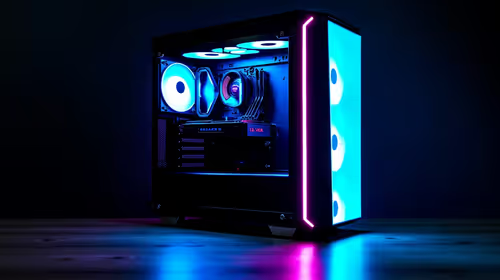
A first-time SA buyer should pick a video-editing PC that is understandable, upgrade-friendly and strong enough for work and play. The provided creator options include RTX 5070 Ti 16GB R12,700 through RTX PRO 4000 24GB R16,700, so avoid paying for complexity that the user will not use.
Read more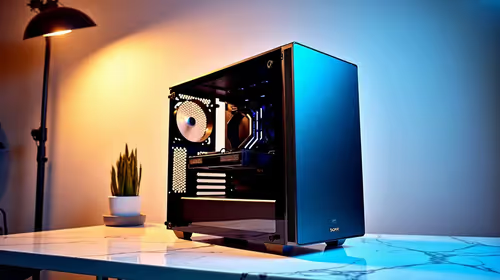
Medical students in South Africa should get a streaming setup built around study reliability first, then creator PC power if rendering, AI or large media work is real. The provided options cite RTX 5070 Ti 16GB R12,700 through RTX PRO 4000 24GB R16,700, with higher workstation scaling noted.
Read more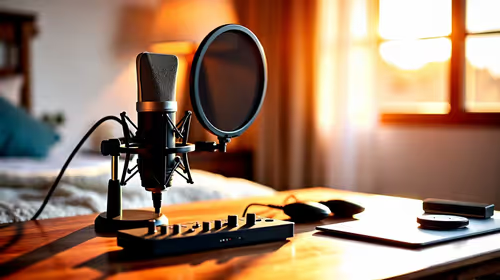
In a quiet bedroom, a USB microphone can cope well if the room stays controlled and the setup remains simple. The purchase should focus on clean voice capture, convenient placement and whether the existing device can record without adding noise or clutter.
Read more
Firefox can mute one noisy tab using its speaker button or context menu. Check the tab control before changing Windows volume or replacing a working headset.

ASUS PA329CDV combines a 4K 120Hz QD-OLED panel with USB-C charging and Auto KVM. Compare colour work, laptop power and desk connections before treating overseas availability as an SA offer.
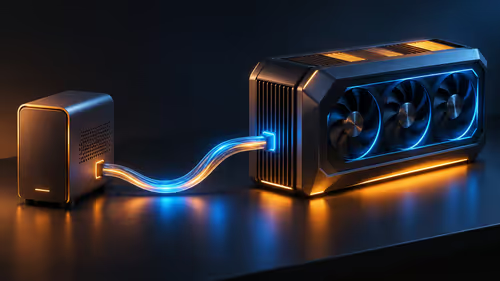
Teclast N30 Pro pairs Core 3 304 with 12GB memory and USB4. Its expansion connection is useful, but an external graphics plan needs a complete cost and compatibility check.

Firefox private browsing separates a temporary session from normal browsing history. It does not make you anonymous online, and files or bookmarks you deliberately save can remain after the last private window closes.
Firefox can mute one noisy tab using its speaker button or context menu. Check the tab control before changing Windows volume or replacing a working headset.

Firefox has a startup-cache control on its Troubleshooting Information page. Use it for a focused interface test and keep it separate from clearing website data or refreshing the profile.

Firefox Primary Password protects access to locally saved logins. It is separate from a website or Mozilla account password, and forgetting it can put saved credentials at risk during reset.

Firefox can add bookmarks from an HTML file through its Library import menu. Back up the current collection first and distinguish an additive import from restoring a Firefox backup.
Firefox can mute one noisy tab using its speaker button or context menu. Check the tab control before changing Windows volume or replacing a working headset.
Firefox has a startup-cache control on its Troubleshooting Information page. Use it for a focused interface test and keep it separate from clearing website data or refreshing the profile.
Firefox Primary Password protects access to locally saved logins. It is separate from a website or Mozilla account password, and forgetting it can put saved credentials at risk during reset.
Firefox can add bookmarks from an HTML file through its Library import menu. Back up the current collection first and distinguish an additive import from restoring a Firefox backup.