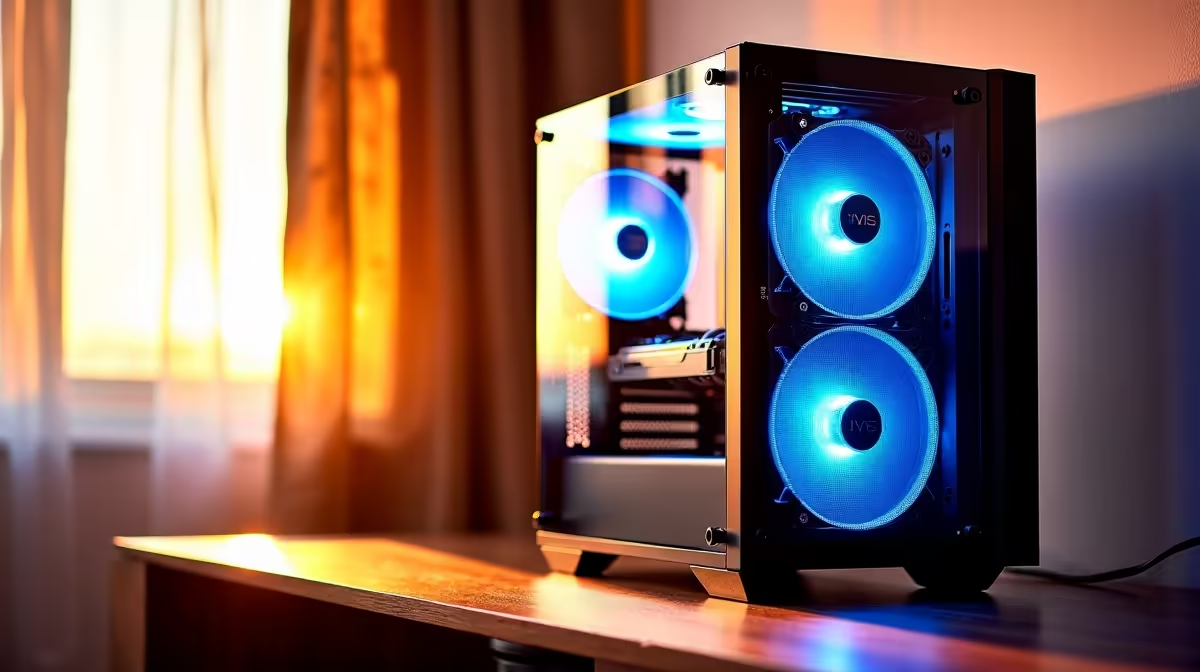
A high-airflow case can be worth buying for a quiet bedroom PC because unrestricted intake lets fans move the same air at lower speed. It is not automatically silent. Open mesh can reveal coil noise, hard-drive vibration and graphics-card fans that a closed panel partly masks. Measure the existing computer first.
Test heat and noise together
Run the normal game or work task for an hour with the case closed. Log processor and graphics temperatures, clock stability and fan speeds, then listen near each component. Clean blocked filters and correct fan curves before replacing the enclosure. Night-time room noise makes small mechanical sounds more noticeable.
The Gamemax Aeris 330 mATX case is factpack-verified at R650. The Deepcool CG330 appears at R770. Confirm current motherboard support, graphics and cooler clearance, fan mounts, included fans, front I/O and filter access. Neither price proves quiet operation for a specific build.
Plan a clear intake and exhaust path without filling every mount. Use stable surfaces, secure panels and isolate vibrating drives. Keep the case off thick carpet and allow ventilation around furniture. Buy when the controlled test shows heat or high fan speed that better airflow can reduce, and the room trial confirms acceptable sound character. If temperatures are already safe, address the specific noisy cooler, fan or drive instead of moving every component into a mesh case.
Planning a quieter bedroom PC? > Compare verified cases with Evetech around component fit and measured thermals.