Quick Answer
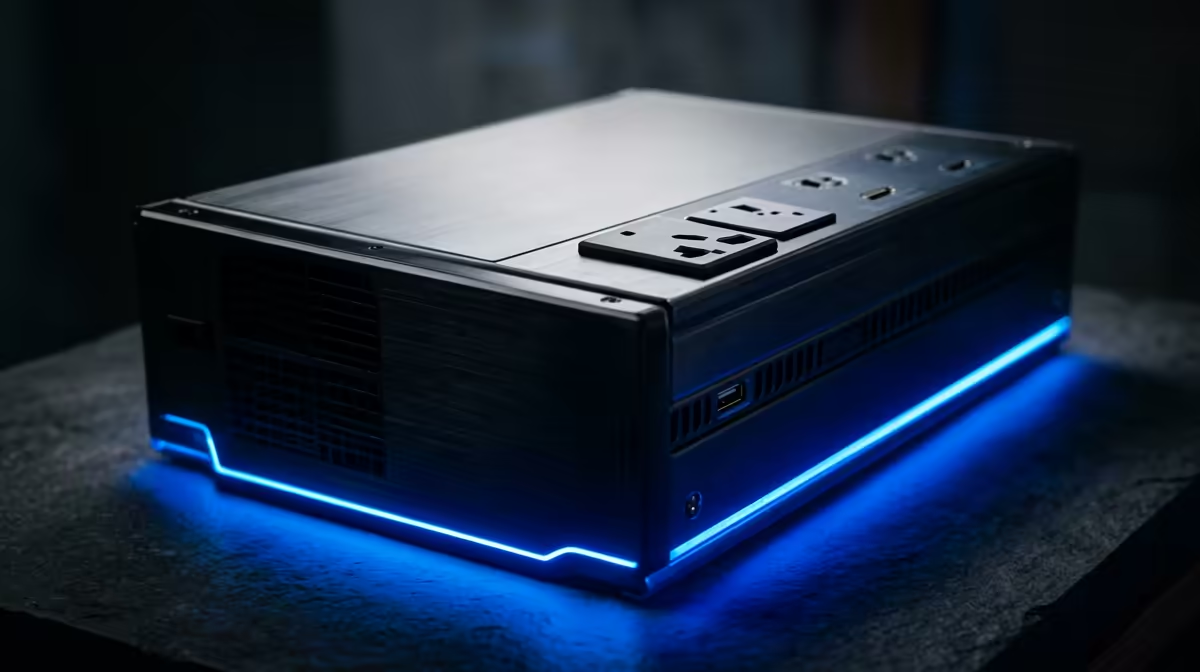
You need enough UPS plugs to cover the gear that must survive a power dip - typically your PC, monitor and router, so a UPS with four to six battery-backed outlets is the practical sweet spot. Do not plug printers, speakers or chargers into the battery side; they waste runtime you want for a clean shutdown.
Count Only The Essentials
Battery-backed outlets are precious, so reserve them for what truly needs protection: the PC, the monitor and the network router or modem. That is usually three to four plugs. A UPS with four to six battery outlets gives you that plus a little headroom, which is enough for most home setups.
Surge-Only Outlets Help
Many UPS units split their outlets into battery-backed and surge-only. Put non-critical gear - speakers, a printer, a charger - on the surge-only side so they still get protection without draining the battery. This keeps your runtime focused on the devices that matter during an outage.
Sizing Beyond Plug Count
Plug count is only half the story - the VA rating sets how long the battery lasts. A 1,000-1,500VA unit (R2,000-R3,500) running a PC, monitor and router gives a few minutes to save and shut down. More plugs on an under-sized UPS just drain the battery faster, so balance both.
FAQ
How many UPS plugs do I really need?
Usually three to four battery-backed outlets - PC, monitor and router. A UPS with four to six gives useful headroom. Reserve those outlets for essentials and put the rest on surge-only sockets.
Can I plug everything into the UPS?
You can, but you should not put it all on the battery side. Printers, speakers and chargers waste runtime. Use the surge-only outlets for those and keep the battery outlets for gear that needs to stay on.
Does more plugs mean longer runtime?
No - runtime is set by the VA rating and the load, not the plug count. Adding more devices to a battery side actually shortens runtime, so size the VA rating to the load you genuinely need to protect.
your PC, monitor and router into the battery-backed outlets and put speakers or chargers on the surge-only side - that focuses precious runtime on the gear that needs a clean shutdown.