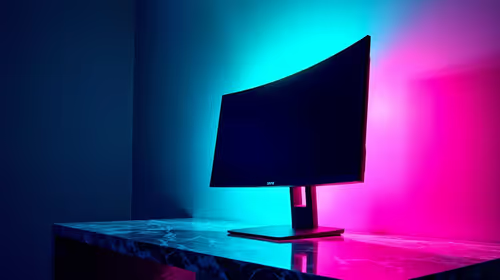
A monitor can have excellent electronics and still create a poor desk if its panel sits too low, too high or off to one side. Monitor height tilt swivel and pivot adjustment should remove effort from your posture before a gaming session begins. The Alienware AW2726DL includes all four stand movements with its 27-inch QHD IPS screen, 280Hz refresh and R4,499 price.
Quick Answer
Set height first so your relaxed gaze lands around the upper third of the screen, then use tilt to face the panel squarely. Swivel should align the display with your shoulders, while pivot is best reserved for reading, coding or a secondary vertical layout. The R4,499 AW2726DL offers height, tilt, swivel and pivot adjustment, so use the stand to fit your body rather than fitting your body to the desk.
📏 Establish height from a neutral posture
Sit fully back with feet supported and shoulders loose. Look ahead without lifting the chin or dropping the head. Raise or lower the display until the upper portion of the panel meets that line of sight and the centre remains comfortable with a slight downward gaze.
Do not use the chair height purely to compensate for the monitor. Chair adjustment should first support the legs, hips and desk relationship. Once that foundation feels natural, move the screen. If the stand reaches its limit, a stable riser under the base can help, but it must preserve enough depth and prevent wobble.
Screen distance is personal, yet the full 27-inch image should fit within comfortable eye movement without making you lean forward to read UI elements. QHD resolution gives the AW2726DL fine detail; use operating-system scaling where necessary rather than moving the panel so close that rapid edge-to-edge viewing becomes tiring.
Explore the full gaming monitor category to compare stand designs alongside resolution and panel size. Ergonomics belongs in the shortlist, not as an afterthought.
📐 Use tilt to make the panel face you
After height is set, tilt the display so its surface is close to perpendicular to your viewing direction. Excess upward tilt can catch ceiling light, while a steep downward angle may deepen reflections from the desk. Make small changes and inspect a plain dark image for glare across the corners.
Tilting is not a substitute for correct height. A low display angled sharply upward can still pull the neck forward because the content remains below the natural gaze. Likewise, a high monitor tilted down may force the eyes and chin upward. Return to the neutral sitting position after every change; people often unconsciously follow the screen while adjusting it.
The IPS panel helps maintain colour and brightness as the viewing angle shifts, but square alignment remains useful for consistent judgement, particularly when working with photos or comparing dark game scenes. It also makes the left and right edges feel equally distant.
🧭 Align swivel with the way you sit
Swivel rotates the panel horizontally while the base stays planted. Use it when the desk or shared workspace prevents the stand from sitting directly in front of your seat. The goal is for the screen centre, keyboard and torso to share one line, reducing repeated neck rotation.
For a dual-screen arrangement, choose one primary display. Place it directly ahead for gaming and angle the secondary screen inward. If both receive equal use, centre the gap between them and rotate your chair rather than twisting at the neck. The AW2726DL's swivel adjustment makes either layout easier to refine without dragging the base.
Cable slack matters. Run cables with enough free movement for the full swivel and height range, then secure the excess farther back. A taut cable can tug on a connector or quietly pull the panel away from the position you selected.
The PC monitor deals page is useful for weighing an adjustable stand against other features at a similar spend. A cheaper fixed stand may need a separate mounting solution, changing the real desk cost.
🔄 Give pivot a specific job
Pivot rotates the screen between landscape and portrait. Competitive games and most video suit landscape because their field of view is designed around width. Portrait earns its space for long documents, code, chat, reference material or a secondary information panel.
Before rotating, raise the monitor enough for a corner to clear the desk and confirm the cables can follow. Turn the panel gently, select portrait orientation in Windows and check that text scaling remains readable. Rotate back before launching games that handle portrait modes poorly.
Pivot can also help with temporary cable access, but do not use the screen as a lever. Hold the panel at its supported edges and keep pressure off the LCD surface. Once the orientation is set, recheck height because the useful eye line changes with the panel's geometry.
Review popular layouts through the monitor best-sellers shelf, paying attention to which options include a full ergonomic stand. The AW2726DL pairs those movements with 2560x1440, 280Hz, 1ms GTG, FreeSync Premium, HDR10 and 93% DCI-P3, so its physical fit complements a broad performance feature set.
Reassess after a full session rather than a minute. Neck tightness, leaning, shoulder lift and frequent refocusing are clues that a small adjustment remains. Mark the preferred height if the desk is shared so the correct position can be restored quickly.
Frequently Asked Questions
Which monitor adjustment should be made first?
Start with height while sitting neutrally. Tilt, swivel and distance all depend on where the panel sits relative to your eyes.
Is portrait mode useful on a gaming PC?
Yes, mainly for supporting tasks such as guides, chat, documents and code. Keep the primary game on a landscape screen unless the title is designed for another orientation.
Why does the screen angle change after moving its height?
Stand mechanisms can alter the viewing relationship as the panel travels. Recheck tilt and cable tension every time you make a substantial height change.
Can an IPS panel be viewed from any angle?
IPS generally maintains its picture well off-axis, but a centred view still gives the most consistent geometry, brightness and reflection control.
Ready to make the screen meet your posture on its own terms? Browse Evetech's gaming-monitor range with stand movement on your checklist, then shape the desk around a relaxed line of sight.