Quick Answer
To avoid overbuying case fans for a monitor upgrade, fit fans to your actual thermals and case, not to a number. If you are upgrading the monitor before the GPU, your cooling needs have not changed, so two or three good 120mm or 140mm fans are plenty. Spend the saved money toward the future GPU instead.
A monitor upgrade does not need more fans
Buying a new monitor adds no heat to your PC, so it changes nothing about cooling. The common overbuy is loading a case with six or seven fans "to be safe" when three well-placed ones, intake at the front, exhaust at the rear, one at the top, already keep most builds cool. Match fan count to your case's mounts and your components' heat, not to a maximum.
Plan around the future GPU
If a GPU upgrade is coming, that is when cooling needs may rise. But buy those fans when you buy the GPU, not now, because a more powerful card may come with its own cooling guidance, and you will know your real thermals then. Spending on extra fans today, before the GPU, is money that would serve you better in the GPU budget.
Right-size your cooling
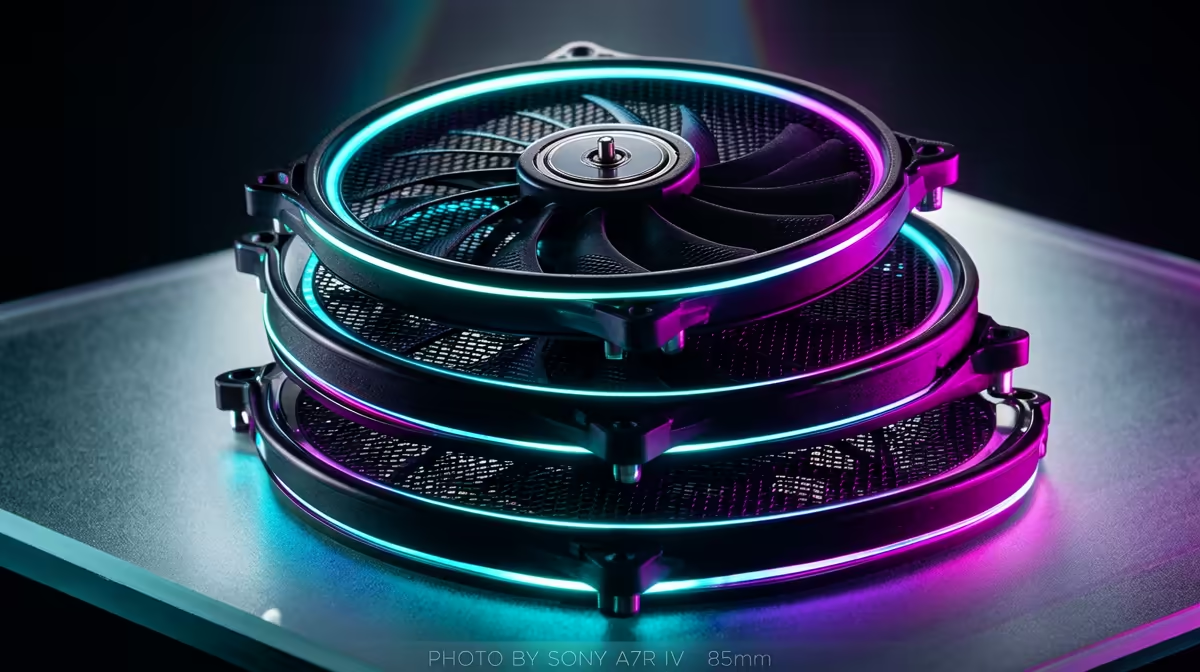
For a typical mid-range build, two intake and one exhaust fan suffice. Use quality fluid-dynamic-bearing PWM fans rated under 25dBA so they stay quiet, and set a sensible fan curve. Each draws only about 2W, so three is no burden. That covers a monitor-first upgrade without waste.
FAQ
Does a new monitor need more case fans?
No. A monitor adds no heat to your PC, so your cooling needs are unchanged. Keep your current fans and put any spare budget toward the GPU you plan to upgrade next.
How many case fans does a mid-range build need?
Usually three: two front intakes and one rear exhaust, optionally one top exhaust. More than that rarely lowers temperatures meaningfully and just adds cost and noise.
What do quality case fans cost at Evetech?
Good fluid-dynamic-bearing PWM fans currently run about R250 to R500 each at Evetech. Buying three quality fans beats overbuying six cheap ones.
fans for a monitor upgrade, check your actual CPU and GPU temperatures under load. If they are fine, your cooling is fine, and that money belongs in the GPU fund, not extra fans.