Quick Answer
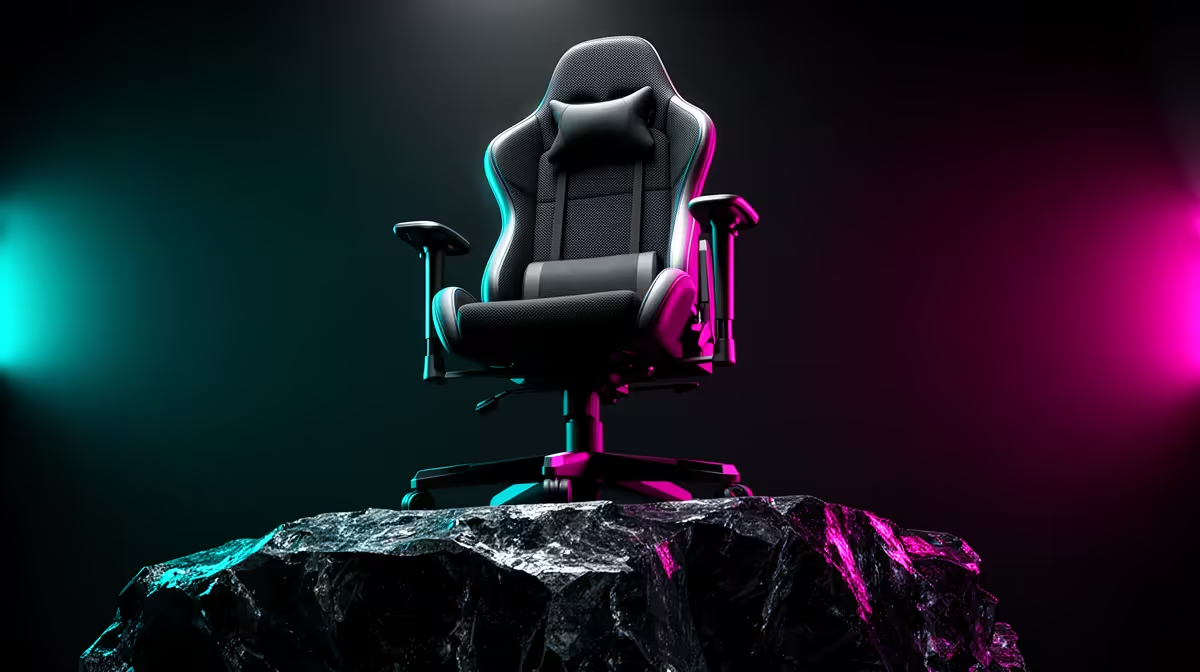
Spend R2,500-R4,500 on a gaming chair and you get a steel frame, real lumbar support and a Class-3 gas lift rated for daily use. Below R1,500 the foam flattens and the lift sags within a year. For long study or gaming sessions, fit and lumbar matter more than the racing-stripe look.
What to avoid when buying a chair for low-latency online play
Skip chairs with thin cold-cure foam, plastic Class-2 gas lifts and fixed armrests — they are the parts that fail first. Avoid 'one size' racing shells if you are tall; check the seat height range covers 45-55cm and the backrest reclines past 135 degrees. A R900 chair that hurts your back is no saving at all.
Frame, gas lift and warranty are the real spec sheet
A steel frame and a SGS-certified Class-3 or Class-4 gas lift are the marks of a chair that lasts. 4D armrests adjust height, depth, width and angle so your shoulders relax. A two-year local warranty matters — it is the gas lift and casters that wear, and you want them replaced painlessly. Stick to brands with proper South African distribution so RMA stays painless if something fails inside warranty.
Match the chair to your body and your hours
If you sit 6+ hours, an ergonomic mesh chair with adjustable lumbar can beat a foam racing chair for back health, though it costs more. For shorter sessions a well-built racing chair around R3,000 is comfortable and durable. Try the recline and armrest range before you commit.
FAQ
Are cheap gaming chairs worth it?
Under R1,500 they usually use thin foam and a weak gas lift that sags within a year. A R2,500-R3,500 chair with a steel frame and Class-3 lift is the value floor for daily use.
Mesh or racing-style gaming chair?
Mesh ergonomic chairs breathe better and support your back for long sessions; racing chairs feel plush and look the part. For 6+ hour days, lean mesh; for mixed use, a quality racing chair is fine.
What gas lift class should I look for?
A Class-3 or Class-4 SGS-certified lift is the safe choice — Class-2 lifts are the ones that sink under regular use. Confirm the rating before buying, as it is the most common failure point.
gas-lift class and warranty before the colour — a Class-3 lift and a two-year local warranty matter far more than the racing stripes.