Quick Answer
Compare mini PCs by fit, sustained behaviour, warranty path and the one number that changes daily use. For quiet PC builds, check 16GB RAM, 512GB NVMe storage and HDMI 2.0/USB-C display output before paying for extras. Confirm current stock before checkout and treat price bands as planning ranges, not exact live prices.
Measure the part that changes use
Map the real session first, whether it is study, gaming, editing, lab work or shared-room use. For quiet PC builds, the pressure points are fan noise, port count, memory, storage and display output. A practical shortlist starts around Intel N100 or Ryzen 7 7840HS-class mini PC with 16GB RAM, 512GB NVMe storage and HDMI 2.0/USB-C display output, then checks whether R4,500-R18,000 still leaves budget for the rest of the setup.
Fit and compatibility checks
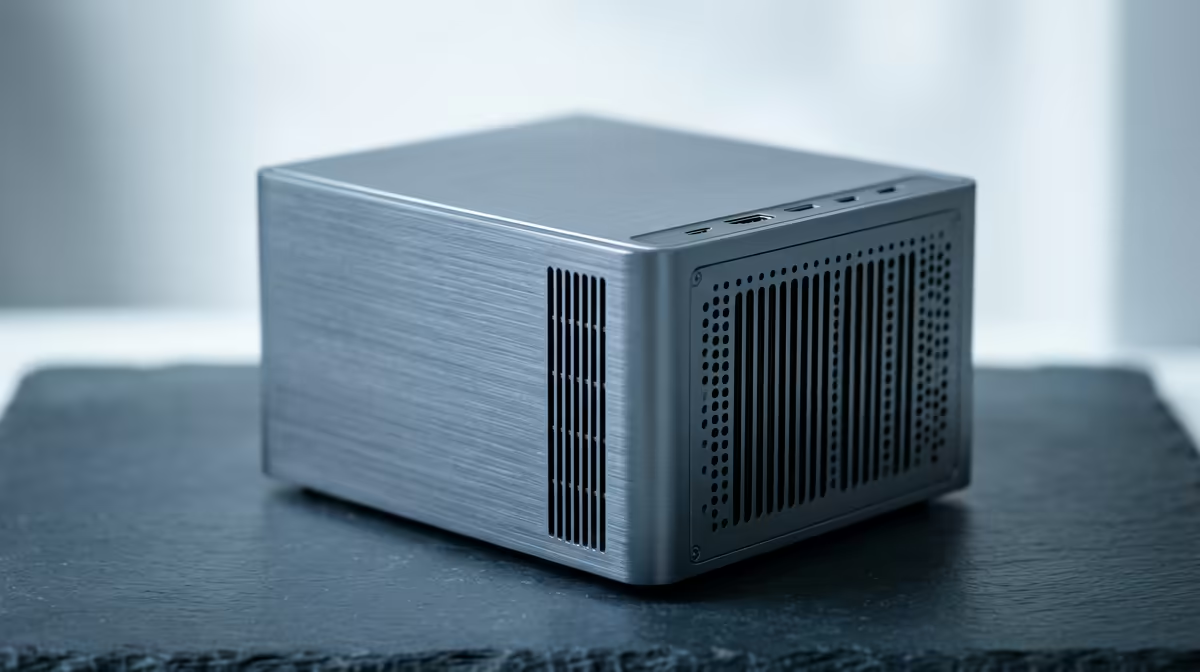
Compatibility is the quiet deal-breaker, so confirm sockets, ports, mounting, power, drivers or app support. Also check cable length, mounting space, cleaning access and local warranty handling. Small PCs reward realistic expectations. They are strong for study, office, media and light esports, but cooling still matters.
How to compare value fairly
Skip the feature that only improves the product photo. The better test is simple: will it fit, will it stay reliable for two years, and will it improve quiet PC builds? If one answer is no, spend on the part causing the actual bottleneck.
FAQ
What budget should I set for a mini PC in South Africa?
Plan around R4,500-R18,000 as a cautious local band. Stock, exchange rates and bundles can shift the final amount, so use the range for filtering.
Which spec matters most for quiet PC builds?
Start with 16GB RAM, 512GB NVMe storage and HDMI 2.0/USB-C display output. It links the product choice to the real device, room, case, workload or comfort need.
When should I choose the cheaper option?
Choose it when it still reaches 30-60fps in light esports at 1080p and avoids fit, noise, cable or support problems. Move up only when the extra spend removes a limit you will notice every week.
write down your current device, room limit, main workload and one measurable target such as 30-60fps in light esports at 1080p. Buy the mini PC that satisfies that list first.