


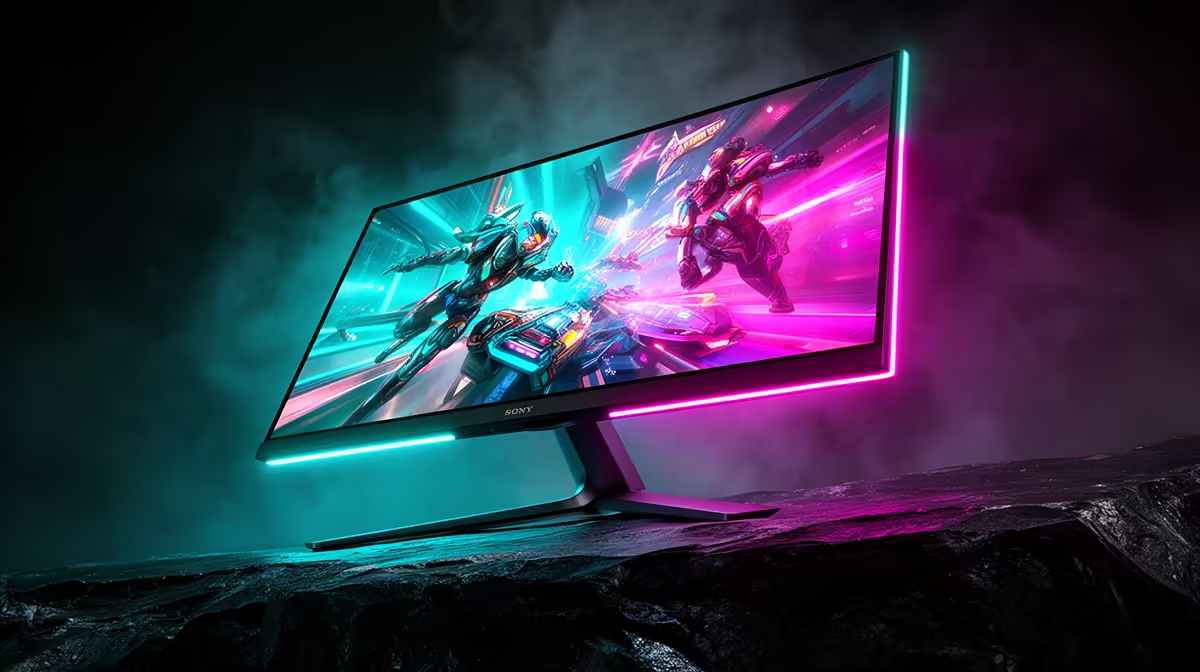
Players on a OLED gaming monitor hit frame pacing issues most often after an update shifts how the system schedules work.
Quick Answer
The fix for frame pacing issues on a OLED gaming monitor is a short checklist: stable drivers, correct frame cap, cool components, and one repeatable benchmark. A 27-inch 1440p OLED panel runs about R14,500, and 32-inch 4K OLED units pass R28,000. Numbers beat guesses every time.
Recreate frame pacing issues With One Repeatable Scene
Pick a single in-game area you can reload on demand and run it the same way each time. Note whether frame pacing issues arrives during loading, busy fights, online play, or only after the OLED gaming monitor warms up. A capable setup can still feel rough when 240 Hz settings or background tasks are unsettled, so a fixed scene gives you comparable frame timing readings instead of vague impressions.
Update Drivers From A Clean State
Install the latest stable GPU and chipset drivers, reboot once, and avoid stacking other changes in the same pass. A clean driver state removes a frequent trigger for frame pacing issues on a OLED gaming monitor. If a recent update introduced the problem, roll back to the previous known-good version and retest the same scene.
Test Smart
a short log: setting changed, before value, after value. A 30-second repeatable run is worth more than testing three different games.
Verify Cables, Ports And Connections
Swap to a known-good certified cable and a different port, since a marginal link can cause frame pacing issues that looks like a deeper fault. On a OLED gaming monitor this is a two-minute check that rules out a whole class of problems. Reseat the connection, retest the same scene, and record the result before moving on.
FAQ
Could a cable or port be causing frame pacing issues on my OLED gaming monitor?
It can. A marginal or wrong-spec cable produces drops and hitches that mimic deeper faults. Swap to a certified cable, try another port, and re-run the same scene to rule it out in minutes.
Is 0.03 ms response relevant when fixing frame pacing issues?
It can be. Confirming 0.03 ms response is configured correctly removes a common hidden cause before you blame other parts. Verify it, retest the same scene, and record the frame timing result.
Does a OLED gaming monitor need a specific power profile to perform?
Yes. Set Windows and any vendor utility to high performance, not eco or balanced, so frame timing is not capped to save energy. Then confirm temperatures stay in range during your test scene.
Let the data choose your next monitor. After your test scene reveals the real bottleneck behind frame pacing issues, compare the relevant Evetech monitor options instead of guessing.











