When input lag shows up on a fresh RX 9070 XT, the instinct is to blame the new part. In practice the cause sits in drivers, sync settings, or the display path - all things you can rule out in minutes.
Quick Answer
The input lag you feel after this upgrade is almost always V-Sync stacking with an uncapped frame rate. Turn V-Sync off, cap frames around 3-5fps under your panel's refresh, and enable a low-latency mode to bring the delay back under roughly 25ms. That distinction saves South African gamers real money - it separates a free fix from a genuine upgrade you'd buy at Evetech.
How to Pin Down Input Lag on a RX 9070 XT
To isolate input lag on a RX 9070 XT, set one familiar game scene as a baseline and measure the same flick or turn each time. Turn off V-Sync, then enable NVIDIA Reflex (or AMD Anti-Lag) and cap frames 3-5fps below your panel's refresh. If a wired mouse at 1000Hz feels instantly tighter, the original problem was wireless or polling. If nothing changes, move to the display and HDR processing path.
RX 9070 XT Settings That Actually Matter
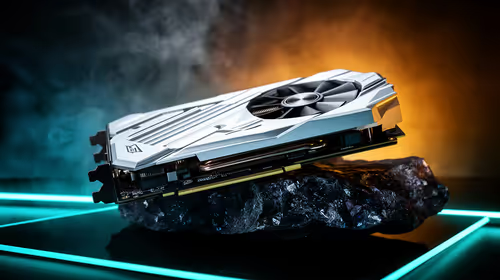
The RX 9070 XT wants a clean PCIe slot and a current driver; confirm Resizable BAR is On in BIOS and that the card is in the top x16 slot. Do a clean GPU driver install (DDU in Safe Mode, then the latest package) so no leftover profile from your previous card is fighting the new one. Use a certified DisplayPort 2.1 or HDMI 2.1 cable so the panel can run its full refresh - an old cable silently caps you at 60Hz. As a yardstick, a modern 1440p title should sit comfortably in the 90-160fps band on this class of card, so use that as your pass/fail line rather than chasing a perfect number.
Reading Your Test Results
After two or three controlled tests you'll see the pattern. If the input lag clears with settings, you've saved the cost of a part - the fix was free. If it only improves with a hardware change, that's your signal to upgrade the one component the test exposed, not the whole rig. For South African buyers that means matching spend to a proven bottleneck: a sub-R2,000 cable or peripheral, a R3,000-R6,000 NVMe drive, or a larger rx 9070 xt graphics cards purchase only when the numbers justify it.
FAQ
Is the RX 9070 XT faulty if I still get input lag?
Usually not. Input lag that survives a clean driver install, a verified memory profile and the correct sync settings is rare - work the free fixes first. Only book a hardware check if a known-good test scene still misbehaves after every setting is ruled out.
Is it worth booking the build in at Evetech for input lag?
Only after the free checks. If a clean driver install, verified memory profile and correct sync settings all fail, a workshop test can confirm a faulty part - but most input lag clears up at the settings stage.
How do I know if it's a network problem causing input lag?
Run a wired Ethernet test against your Wi-Fi: if the cable removes the issue, it was the wireless link. Watch ping and packet loss during play - under 30ms ping and well under 1% loss is the target for online gaming.
anything, run the baseline test above. Save your working settings profile once the input lag is gone, then re-test after major game or driver updates. Only browse new RX 9070 XT Graphics Cards at Evetech if a clean, fully-tuned setup still falls short.