When low FPS shows up on a fresh AM5 motherboard, the instinct is to blame the new part. In practice the cause sits in drivers, sync settings, or the display path - all things you can rule out in minutes.
Quick Answer
After a AM5 motherboard upgrade, low FPS almost always means the new part isn't actually doing the work yet: the wrong GPU is selected, Resizable BAR is off, or a power plan is throttling clocks. Fixing those usually restores the 20-40% gain you paid for. For SA setups this is the money question: most of the time the fix is free, and only a clear test result justifies a new part.
Find the Real Cause of Low Fps
Confirm the AM5 motherboard is actually doing the work: in the game's GPU/CPU overlay, check which part is at 95-100% load. If neither is, a power plan or frame cap is throttling you. If the GPU sits idle while frames stay low, the wrong GPU is selected or Resizable BAR is off. Each is a free fix worth real frames.
The AM5 motherboard Checklist for Smooth Play
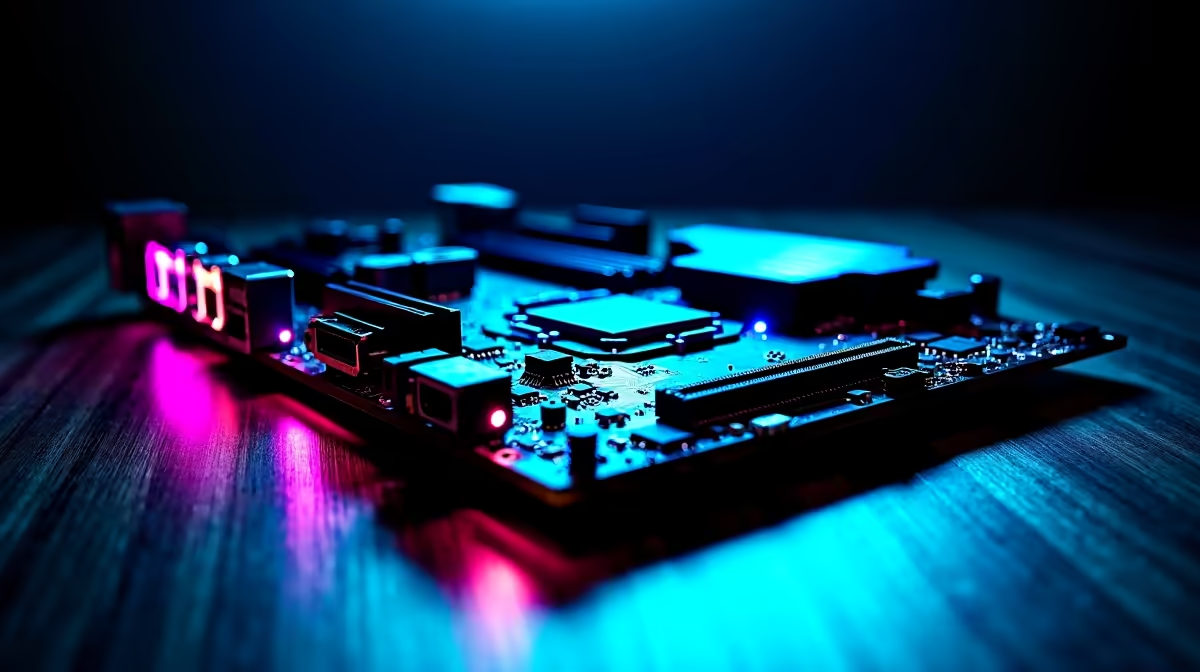
On a AM5 motherboard, the BIOS version decides a lot: an early release often ships with loose memory training and aggressive power saving. Install the board's chipset package fresh and disable any 'gaming mode' utility that overrides Windows scheduling. Flash to the current BIOS, then load defaults and re-enable EXPO/XMP from scratch rather than carrying an old profile forward. As a yardstick, a stable board holds DDR5-6000 (the AM5 sweet spot) without WHEA errors and keeps frametimes flat under 16 ms at 60fps, so use that as your pass/fail line rather than chasing a perfect number.
Reading Your Test Results
Treat the result as a buying guide. A problem that vanishes with a different cable, port, or sync setting costs nothing to fix. A problem that only shifts with more capable hardware tells you exactly what to budget for. That keeps SA spending sensible - you upgrade the am5 motherboards or supporting part the test pointed at, instead of guessing and over-buying.
FAQ
What single setting helps low FPS the most on this setup?
For most users it's the sync and frame-cap combination: turn V-Sync off, cap frames a few below your refresh rate, and enable a low-latency mode. A stable board holds ddr5-6000 (the am5 sweet spot) without whea errors and keeps frametimes flat under 16 ms at 60fps.
How do I know if it's a network problem causing low FPS?
Run a wired Ethernet test against your Wi-Fi: if the cable removes the issue, it was the wireless link. Watch ping and packet loss during play - under 30ms ping and well under 1% loss is the target for online gaming.
Does storage speed matter for low FPS?
For loading and streaming hitches, yes. On a AM5 motherboard, the BIOS version decides a lot: an early release often ships with loose memory training and aggressive power saving. Keeping the game on your fastest NVMe drive with 15-20% free space removes a lot of avoidable stutter.
anything, run the baseline test above. Note down which single change fixed the low FPS so you can re-apply it after the next driver or Windows update. Only browse new AM5 Motherboards at Evetech if a clean, fully-tuned setup still falls short.