When microstutter shows up on a fresh USB DAC, the instinct is to blame the new part. In practice the cause sits in drivers, sync settings, or the display path - all things you can rule out in minutes.
Quick Answer
On a USB DAC, microstutter is a frame-pacing problem: even at a high average FPS, uneven frametimes make motion judder. Enabling a frame-rate cap and Low Latency mode to smooth the 1% lows usually removes it without any new hardware. For South African buyers that matters: it tells you whether you actually need to budget for new parts or just spend ten minutes in the right menus.
How to Pin Down Microstutter on a USB DAC
Record a 60-second frametime capture on the USB DAC. Smooth gameplay sits as a near-flat line; microstutter shows regular spikes even at a high average FPS. Cap the frame rate, enable Low Latency mode, and re-test - if the line flattens, it was pacing, not power. If spikes persist, suspect the memory profile or a background task.
USB DAC Settings That Actually Matter
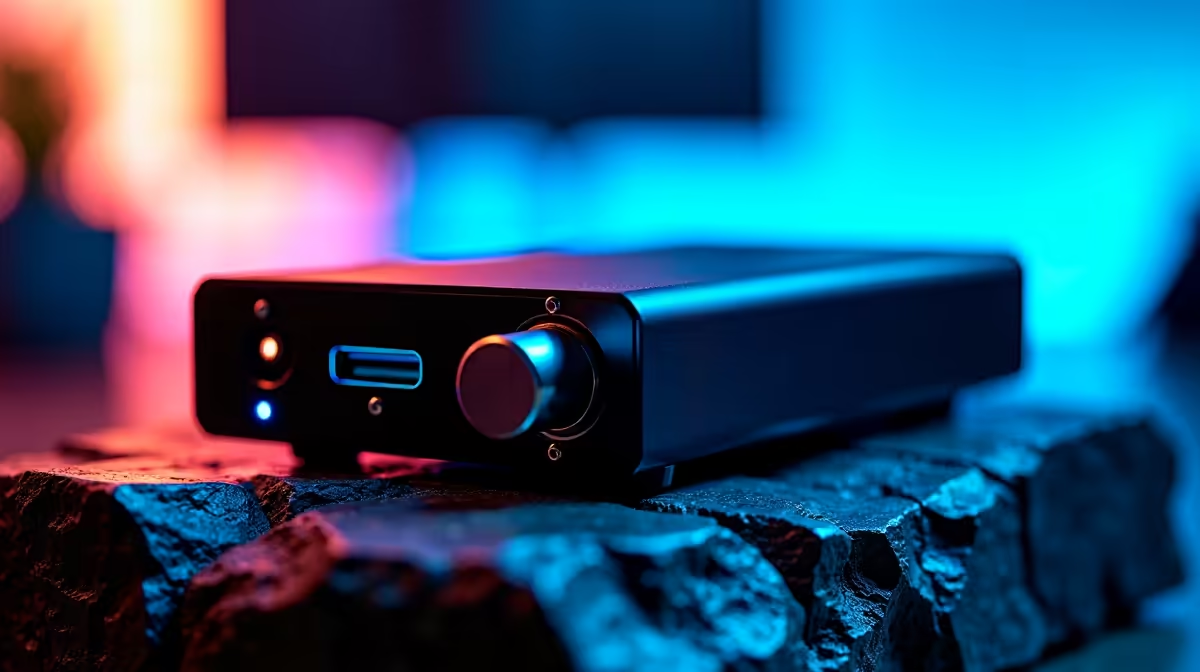
A USB DAC handles audio, so it never causes video stutter - but a buggy USB driver or a shared controller can. Install the DAC's ASIO/USB Audio driver and disable exclusive-mode conflicts in the sound control panel. Give the DAC its own rear USB port rather than a hub shared with other high-bandwidth devices. As a yardstick, match the DAC's sample rate in Windows (commonly 48,000Hz or 96,000Hz) to avoid resampling glitches, so use that as your pass/fail line rather than chasing a perfect number.
When a Fix Becomes an Upgrade
Treat the result as a buying guide. A problem that vanishes with a different cable, port, or sync setting costs nothing to fix. A problem that only shifts with more capable hardware tells you exactly what to budget for. That keeps SA spending sensible - you upgrade the usb dacs or supporting part the test pointed at, instead of guessing and over-buying.
FAQ
Do I need to buy new parts to fix microstutter?
Rarely. The large majority of cases are settings, drivers, or storage placement - all free. Spend money only once a clean test still falls short, and then buy the one part the test pointed to rather than a full rebuild.
How do I know if it's a network problem causing microstutter?
Run a wired Ethernet test against your Wi-Fi: if the cable removes the issue, it was the wireless link. Watch ping and packet loss during play - under 30ms ping and well under 1% loss is the target for online gaming.
Does storage speed matter for microstutter?
For loading and streaming hitches, yes. A USB DAC handles audio, so it never causes video stutter - but a buggy USB driver or a shared controller can. Keeping the game on your fastest NVMe drive with 15-20% free space removes a lot of avoidable stutter.
Worked through every free fix and the microstutter is still there? That's the point to look at the right part - browse current USB DACs stocked at Evetech and match the upgrade to the exact bottleneck your test exposed.