A no-signal screen is one of the most common post-build headaches, and ninety percent of cases are solved without opening a wallet, just by tracing the cable and driver chain. For South African builders the calm approach matters, since shipping a part back across the country costs days you do not need to lose.
Quick Answer
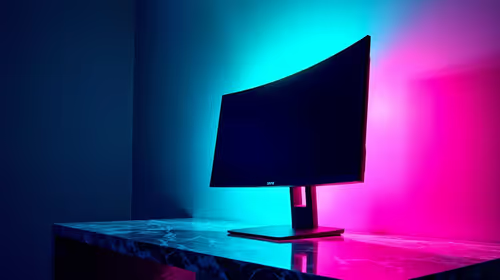
A no-signal screen on a oled gaming monitor setup is almost always a wrong input, a tired cable, the motherboard port, or a driver state, not a dead card. Trace the physical signal path first, then check Windows and drivers; budget around R6,500 to R28,000 only if a part truly fails. Comparable hardware here sits around R6,500 to R28,000, so confirm it is not a cable or setting before reaching for your card.
Check power and seating in the case
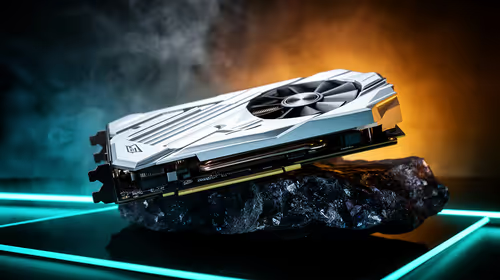
Power down, pull the plug, and confirm an OLED gaming monitor is firmly seated with every power lead clicked home and the support bracket holding the card level. A slightly lifted slot or an unplugged auxiliary connector can leave a build at no-signal even when fans spin. Reseat once, then retest before assuming a part is dead.
Set the correct primary output in BIOS
Some boards default display priority to onboard graphics, which leaves a discrete card silent. Enter BIOS, set the primary or initial display to the PCIe slot, and disable onboard video if the build has no use for it. Save, exit, and the picture usually returns on the next post.
Test with a second screen or cable
Borrow a known-good cable and a second display to split the problem in two. If the spare screen lights up, the original monitor or its cable is the suspect; if it stays dark, the output side is where to look. This single swap saves hours of guessing and stops you returning healthy parts.
FAQ
Do I need to reseat the graphics card every time?
No, reseat once if the slot looks lifted or a power lead is loose, then retest. Repeated reseating risks bending pins and rarely helps beyond the first careful attempt.
Is it safe to keep using the rig while I troubleshoot?
For display and settings issues, yes, it is safe to keep testing. If you see heat warnings, repeated shutdowns, or burning smells, power down and inspect before continuing, since those point at power or thermal faults rather than software.
How much should I budget if a part is actually faulty?
For this class of gear plan on roughly R6,500 to R28,000 depending on tier and brand, and only buy after the free checks rule out cables, settings, and seating. Most readers never reach this step.
Match the parts before you spend. Browse OLED gaming monitors with the right cable and monitor combination so your build hits its full refresh rate out of the box.