When a display refuses to wake, the fault is far more often a wrong input or a port mix-up than a faulty card, and a calm five-minute check usually finds it.
Quick Answer
On a rtx 5070 build a monitor that is not detected usually means the cable sits in the wrong port or the panel is on the wrong input. Fix the signal chain before spending anything, since most cases cost nothing to solve. If a part does turn out to be faulty, expect roughly R18,000 to R60,000 for a like-for-like swap, which is reason enough to test before you buy.
Confirm Windows actually sees the panel
Once any picture appears, open display settings and press Detect, then check whether the layout is set to duplicate, extend, or single. A driver update can silently save the wrong arrangement so a working monitor reads as missing. Device Manager will also flag a generic or warning-marked display adapter that needs a clean driver reinstall.
Check power and seating in the case
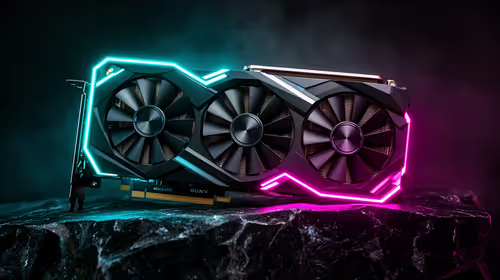
Power down, pull the plug, and confirm the RTX 5070 is firmly seated with every power lead clicked home and the support bracket holding the card level. A slightly lifted slot or an unplugged auxiliary connector can leave a build at no-signal even when fans spin. Reseat once, then retest before assuming a part is dead.
Trace the signal path before anything else
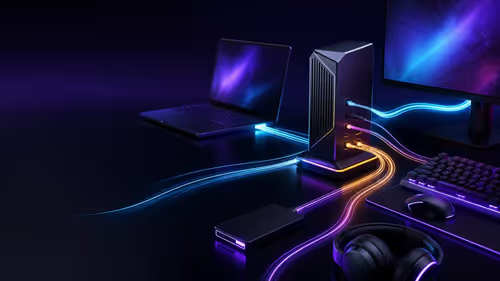
Plug the display cable into the RTX 5070, never the motherboard port, unless you are deliberately testing onboard video. Set the monitor to the matching input such as DisplayPort or HDMI, and drop any adapter so you are testing a single clean run. A swapped input or a tired cable explains most no-signal screens.
FAQ
How much should I budget if a part is actually faulty?
For this class of gear plan on roughly R18,000 to R60,000 depending on tier and brand, and only buy after the free checks rule out cables, settings, and seating. Most readers never reach this step.
Could a faulty monitor cause a no-signal screen?
It can, which is why a second screen or a known-good cable is the quickest way to split the problem. If the spare display lights up, the original panel or its cable is the suspect rather than the PC.
Why does my screen work on the motherboard port but not the card?
That means video is leaving through onboard graphics instead of the discrete card, usually because of a BIOS display priority or a cable in the wrong socket. Move the cable to the card and set the PCIe slot as the primary output.
Build it to run right from day one. Pair RTX 5070 graphics cards with a certified high-bandwidth cable and a panel sized to the rig to avoid the most common display headaches.