Refresh problems on a Steam Deck look like a hardware fault but rarely are; the rate lives in display settings, the cable spec, and the GPU driver more than in any single part. That stays true here even when a similar guide suggests otherwise.
Quick Answer
The rate lives in three places: Windows display settings, the monitor's on-screen menu, and the GPU control panel. Set it in all three, use a cable rated for the rate (around R450 to R1,200), and confirm the GPU driver is current before assuming the panel is faulty. Keep it in mind through the whole job, not just the first attempt.
Rule out the accessory, then the display
Peripherals like a mouse, headset, keyboard, DAC, or router do not set the screen's refresh rate, so do not let an unrelated upgrade distract you. Confirm the rate in display settings on the GPU output, then check the accessory's own polling or sample rate separately. Keeping the two diagnoses apart stops you chasing a refresh fault inside a device that never controlled it. Treat a Steam Deck as its own case rather than copying a generic checklist.
Set the rate where Windows hides it
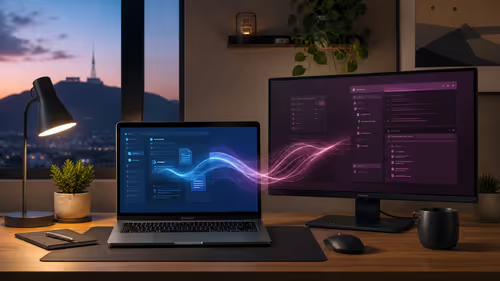
The refresh control sits under Settings, System, Display, Advanced display. Pick the highest rate listed for the active panel, not the default 60Hz. If you run more than one monitor, each is set separately, so a second screen can quietly stay at 60Hz while the main one runs high. Apply, confirm the prompt, and watch for any tearing that suggests the wrong mode. For a Steam Deck in a South African home, that margin is worth protecting.
FAQ
Should I set the rate in Windows or the GPU control panel?
Set it in both so they agree. Windows Advanced display settings is the master, but the GPU control panel can override per-game, so a mismatch causes flicker or a drop back to 60Hz. Match them, then reboot to confirm. Keep this tailored to a Steam Deck and the result holds up the first time.
Why does one monitor run high while the other stays at 60Hz?
Each display has its own refresh setting in Windows. Select the second monitor in Advanced display settings and raise its rate separately. A weaker cable or port on the second screen can also force it down to 60Hz. Once a Steam Deck is sorted here, the rest of the diagnosis falls into place.
Does my device's output limit the rate?
It can. Handhelds and laptops over a dock may cap at 60Hz unless DisplayPort Alt Mode and a capable dock are used. Check the device's documented output rate and the dock spec before blaming the monitor. Keep a Steam Deck simple here and the fix becomes obvious.
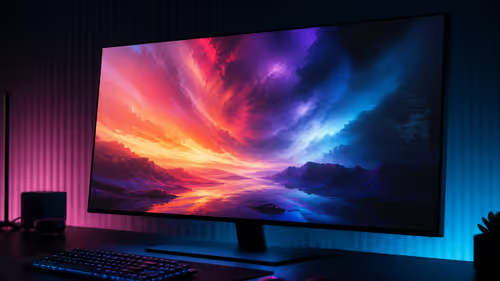
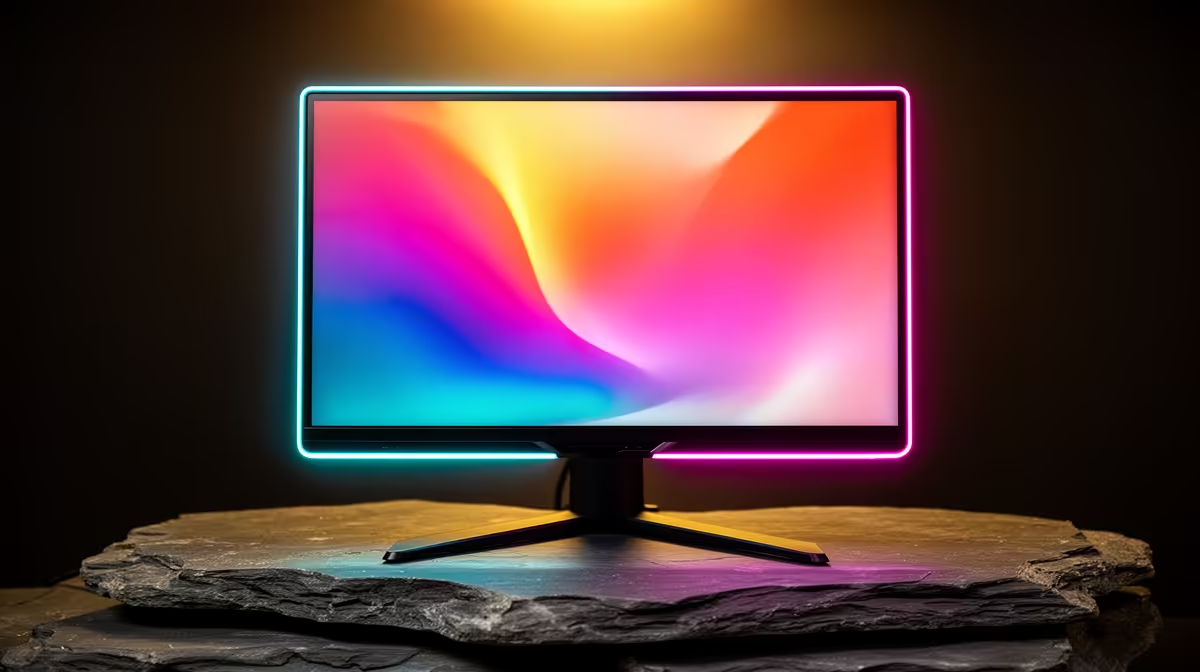
Match the monitor to your frame rate Once the refresh is set correctly, shortlist Evetech panels whose refresh matches what your GPU delivers so you pay for frames you will actually see. Treat it as the anchor of the whole check, not an afterthought.