A panel locked to 60Hz on a B850 motherboard wastes the refresh you paid for, and the fix is almost always a setting, a cable, or a driver rather than a fault.
Quick Answer
In Windows 11, go to Settings, System, Display, Advanced display, and select the top refresh rate the panel offers. If only 60Hz shows, the cable or the GPU driver is almost always the reason; swap to a DisplayPort 1.4 lead and run a clean driver reinstall before anything else. That stays true here even when a similar guide suggests otherwise.
Confirm the source can feed the rate
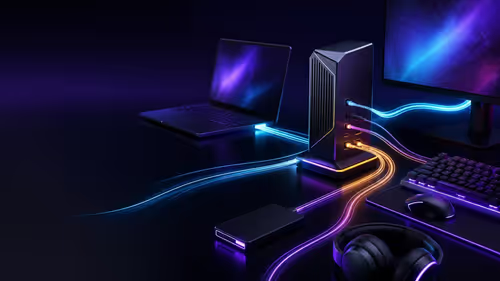
Some devices cap output. A handheld docked over USB-C, for example, may only push 60Hz unless DisplayPort Alt Mode and a capable dock are in play. Check the device's display output spec, then match the dock, cable, and panel so the whole chain supports the same rate end to end. On a B850 motherboard, a calm second test beats a panicked parts order every time.
Set the rate where Windows hides it
The refresh control sits under Settings, System, Display, Advanced display. Pick the highest rate listed for the active panel, not the default 60Hz. If you run more than one monitor, each is set separately, so a second screen can quietly stay at 60Hz while the main one runs high. Apply, confirm the prompt, and watch for any tearing that suggests the wrong mode. For a B850 motherboard, that ordering is what saves you from chasing the wrong fault.
FAQ
Why does one monitor run high while the other stays at 60Hz?
Each display has its own refresh setting in Windows. Select the second monitor in Advanced display settings and raise its rate separately. A weaker cable or port on the second screen can also force it down to 60Hz. For an SA a B850 motherboard setup, that is the cheapest, fastest move available.
Does my device's output limit the rate?
It can. Handhelds and laptops over a dock may cap at 60Hz unless DisplayPort Alt Mode and a capable dock are used. Check the device's documented output rate and the dock spec before blaming the monitor. This matters more on a B850 motherboard than the spec sheet ever suggests.
Will a higher refresh rate hurt performance?
A higher refresh rate only shows frames the GPU already produces, so it does not reduce performance; it just removes the artificial 60fps ceiling. If frame rate is the limit, lower a few settings rather than the panel's refresh. On a B850 motherboard specifically, this step pays off more than any quick part swap.
Get a panel that hits the rate out of the box If your screen tops out below what your GPU can drive, compare Evetech high-refresh monitors so the cable, panel, and card all support the same rate. File this away, because it comes up more often than you would think.