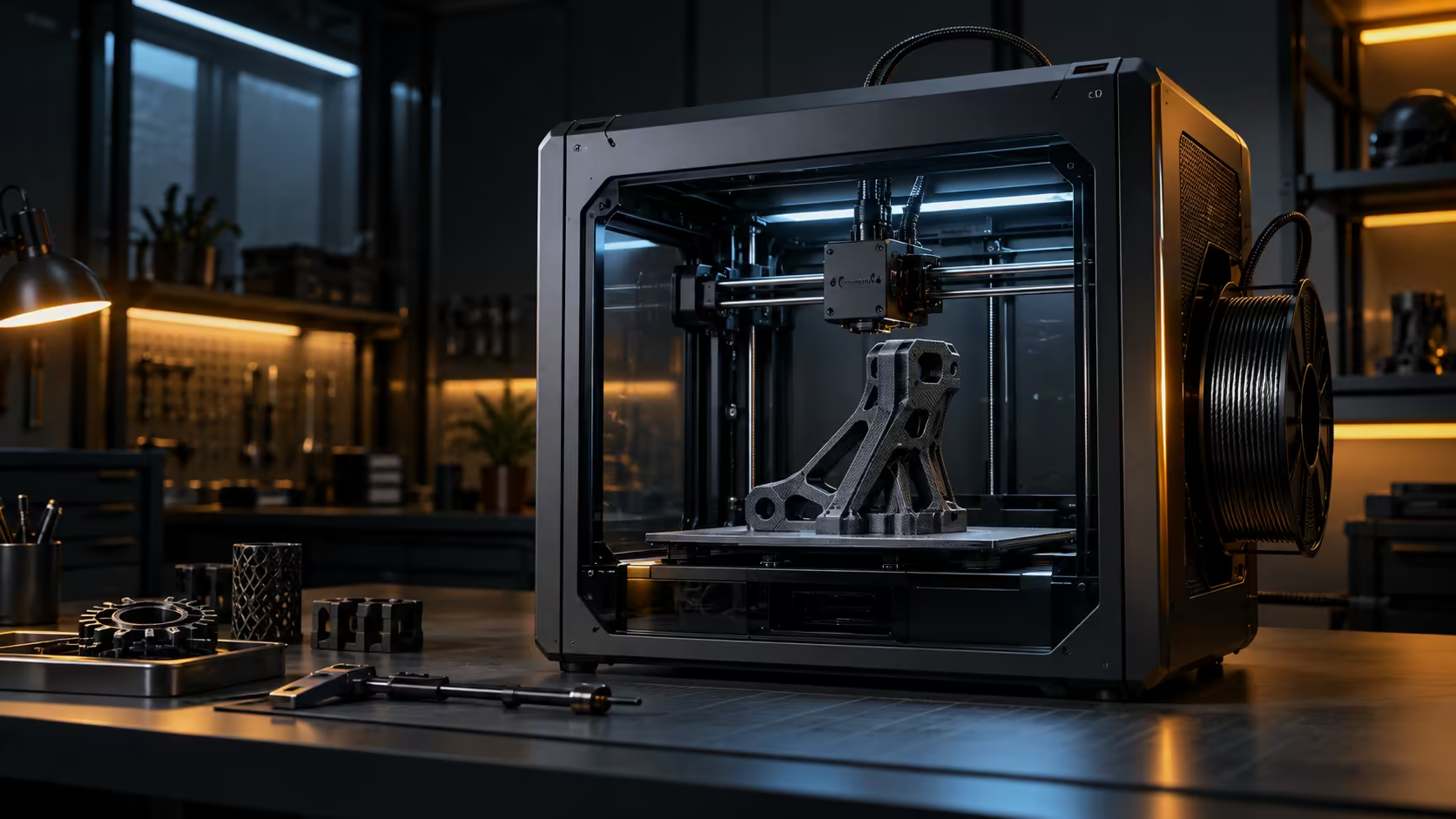
Loading a spool of carbon-fibre filament and running your usual PLA profile is the fastest way to grind a nozzle down and never figure out why. Printing carbon fibre reinforced filament needs three specific changes before the first layer even starts, not just a higher temperature.
Quick Answer
Swap to a hardened nozzle first, since chopped fibre is abrasive and wears a standard brass tip out of round within a few hundred grams of filament. Raise the nozzle temperature toward the material's upper range rather than its lower one, and slow the first layer down to give it a proper chance to bond. The Creality K1C lists a tri-metal nozzle rated to 300C and carbon-fibre capability as standard, and costs R12,599.
🔩 Step one: the nozzle, before anything else
This is the step people skip because it feels optional, and it is the one that ruins a print budget fastest. Chopped carbon fibre suspended in the filament acts like fine sandpaper passing through the nozzle on every layer, and a standard 0.4mm brass orifice widens measurably within just 200 to 500g, throwing off extrusion width on every print after that point.
Fit the hardened nozzle before loading the spool, not after noticing the first sign of drift. There is no partial-measure version of this step that works.
🌡️ Step two: temperature toward the top of the range
Carbon-fibre filament typically prints 10 to 20C hotter than the base material it is blended with, since the fibre itself needs the surrounding plastic to be properly molten to flow around it cleanly. Running too cool leads to poor layer bonding and a rougher, weaker part than the material is actually capable of producing.
Check the specific filament's recommended range and start near the top of it rather than the middle, adjusting down only if stringing becomes a problem.
🐌 Step three: a slower, drier first layer
Slow the first layer down more than you would for a standard material, since carbon-fibre blends can be less forgiving of a rushed bond to the plate. Dry the spool before printing too; carbon-fibre filament tends to absorb moisture readily, and a damp spool produces the same popping and rough surface that any other material shows when wet, layered on top of whatever the fibre itself is doing.
Keep a spare hardened nozzle on hand from the start, since this is a wear part on any abrasive-filament project regardless of how carefully you print. Browse carbon-fibre and other filament options before starting a project, checking each spool's recommended settings against what your printer can actually deliver.
🧭 Orienting the part before you even open the slicer
Carbon-fibre parts are noticeably stronger along the direction their layers run than across them, since the chopped fibre aligns mostly within each layer rather than bonding strongly between one layer and the next. Before slicing, identify the main direction of force the finished part will actually carry, a bracket bearing a downward load, a bar taking a bending force, and orient the model so those layer lines run along that direction rather than across it.
This single decision often matters more for real-world strength than any single print setting, since a correctly oriented part in a middling profile regularly outperforms a badly oriented part printed with otherwise perfect settings. Sketch the expected load path on paper first if it is not obvious from the model alone, and browse the 3D printer range with an eye on build volume large enough to print the part in its strongest orientation without needing to split it.
Frequently Asked Questions
Can I print carbon-fibre filament on a standard brass nozzle just once?
Technically yes for a single small print, but the wear starts immediately and compounds with every gram of abrasive filament that passes through.
Does carbon-fibre filament need a heated enclosure?
It benefits from one for larger parts, since consistent chamber temperature helps with layer adhesion, though small parts often print fine without it.
Why does my carbon-fibre filament string more than PLA does?
Carbon-fibre blends often run hotter, and running too hot for the specific spool increases stringing; try slightly lower within the recommended range.
Is a heavier direct drive extruder necessary for carbon fibre?
A strong, consistent feed helps, since fibre-reinforced filament can be stiffer than standard spools and benefits from a drive that will not slip under load.
Does part orientation really matter more than print settings?
Often yes, since a well-oriented part in average settings can outperform a badly oriented one printed with otherwise ideal settings, because the fibre alignment within each layer decides most of the final strength.
How do I know which direction my finished part will actually load?
Think through how the part gets used in practice, a bracket usually bears weight downward, a handle usually bears force along its length, and orient the print so its layer lines follow that same direction.
Ready to print your first carbon-fibre part?
Fit the hardened nozzle, dry the spool and slow the first layer down before you start.