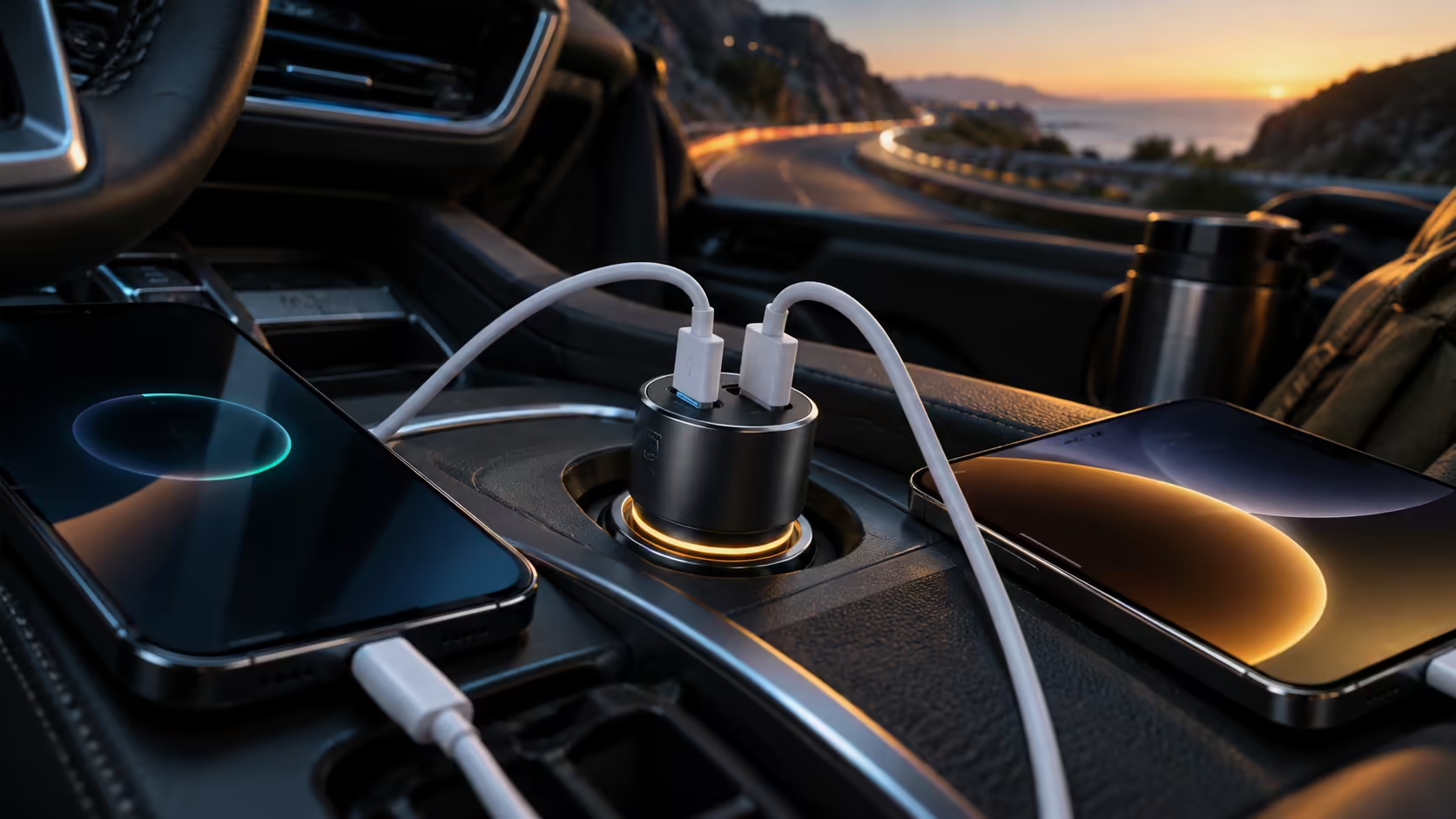
Keeping a phone powered through a South African commute comes down to three things working together: a port with genuine headroom over what navigation actually draws, a cable that can carry it, and a mount that keeps the phone cool enough to accept a fast charge in the first place.
Quick Answer
A commute kit needs a real Power Delivery port, a properly rated cable, and a mount that keeps the phone out of direct sun. On a Gauteng commute the phone typically runs maps, calls and mobile data all at once, a heavier combined load than an old 5V socket was ever built to outpace. The two-port Anker charger, 30W USB-C PPS plus 22.5W USB-A, costs R349 and covers both the driver's phone and a passenger's device.
🧭 What navigation and calls actually draw from a phone
Route guidance keeps the display lit for the entire drive, holds the GPS radio active throughout, and typically pulls live traffic updates over the cellular network the whole time. Layer a hands-free call on top of that and the combined draw climbs well past what the same phone uses sitting quietly in a pocket, because none of these tasks are taking turns; they run concurrently.
A basic 5V socket predating any of this, still common in older cars on the road here, was sized around a far gentler era of phone use than what a modern commute actually demands. Ask that kind of socket to keep pace with the full combined load and the battery percentage can genuinely fall across the drive rather than climb.
⚡ Why the port needs real headroom, not just adequate wattage
A 30W USB-C PPS port has enough headroom over the navigation-and-calls load for most current phones that the drive ends up adding charge rather than losing it. That margin earns its keep specifically because Gauteng peak-hour traffic stretches an otherwise short commute into a much longer one, extending the window navigation and calls have to keep running well past what a weaker charger could comfortably cover.
PPS contributes a second, separate advantage here: the closer voltage matching it performs generates less warmth inside the phone through the demanding stretch of a fast charge, a benefit that becomes more noticeable the longer and more stop-start the commute gets.
🔌 The cable and the mount complete the kit
None of the port's capability matters if a worn or thin cable caps the real-world current below what the port and phone actually agree to. A cable rated for the current a 30W port pushes, and replaced periodically as it shows wear, closes that gap. A USB hub solves a similar problem at a desk, worth knowing if the same charging setup question comes up away from the car.
A mount that keeps the phone in moving air, rather than resting flat against a hot dashboard in direct sun, rounds out the kit. A phone that has heat-soaked before a charge even starts has less thermal headroom than a cool one, and no amount of charger capability fully compensates for starting a session already warm.
🔋 What to add for the gap the charger cannot cover
A car charger only ever runs while the ignition is on, which leaves a gap for anyone who steps away from the vehicle mid-commute, at a park-and-ride stop or a coffee break before work. A power bank charged up overnight covers exactly that stretch, carrying a phone through the walk or wait without needing the car's own supply at all.
Keeping one topped up specifically for that gap, rather than assuming the car alone handles the whole commute every day, closes the one scenario a fitted charger genuinely cannot reach on its own.
Frequently Asked Questions
Does a shorter commute still benefit from a proper PD charger?
Yes, though the shorter the trip the less noticeable the advantage over an old-style socket ends up being, purely because there is less driving time for it to add up.
Does a heavy commute load actually need a dedicated charger, or will any port do?
For most phones a proper PD port comfortably wins out over the combined navigation-and-call load, though a route with constant rerouting through busy streets draws noticeably more than a settled, simpler highway stretch.
Does the mount really matter as much as the charger and cable?
It matters more than people expect, since a heat-soaked phone starts any charging session with less thermal headroom regardless of how capable the charger itself is.
Should I replace my commute cable regularly?
Checking it periodically for wear and replacing it when frayed or loose at the connector is a reasonable habit, given how much a degraded cable can quietly undercut an otherwise capable charger.
Ready to build a proper commute charging kit?
Have a look at the car charger range and pair it with a cable and mount built for daily use.