



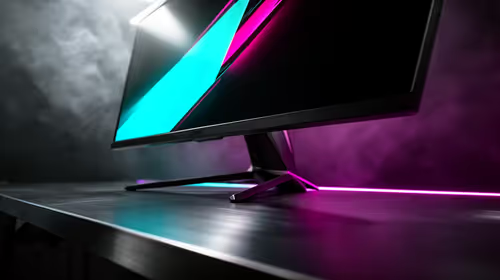
Fix Monitor stuck at 60Hz checks on DDR5 build
Monitor stuck at 60Hz on DDR5 build needs careful display-chain checks, not a single-part blame. Test the screen, cable, port, scaling, drivers, and setup context before replacing hardware.
Read moreRoute the 24-pin extension into the curve you want first, then slide the combs in to hold it. A comb fitted early locks a shape you have not chosen. Working in that order is what makes four sleeved leads look deliberate behind glass.
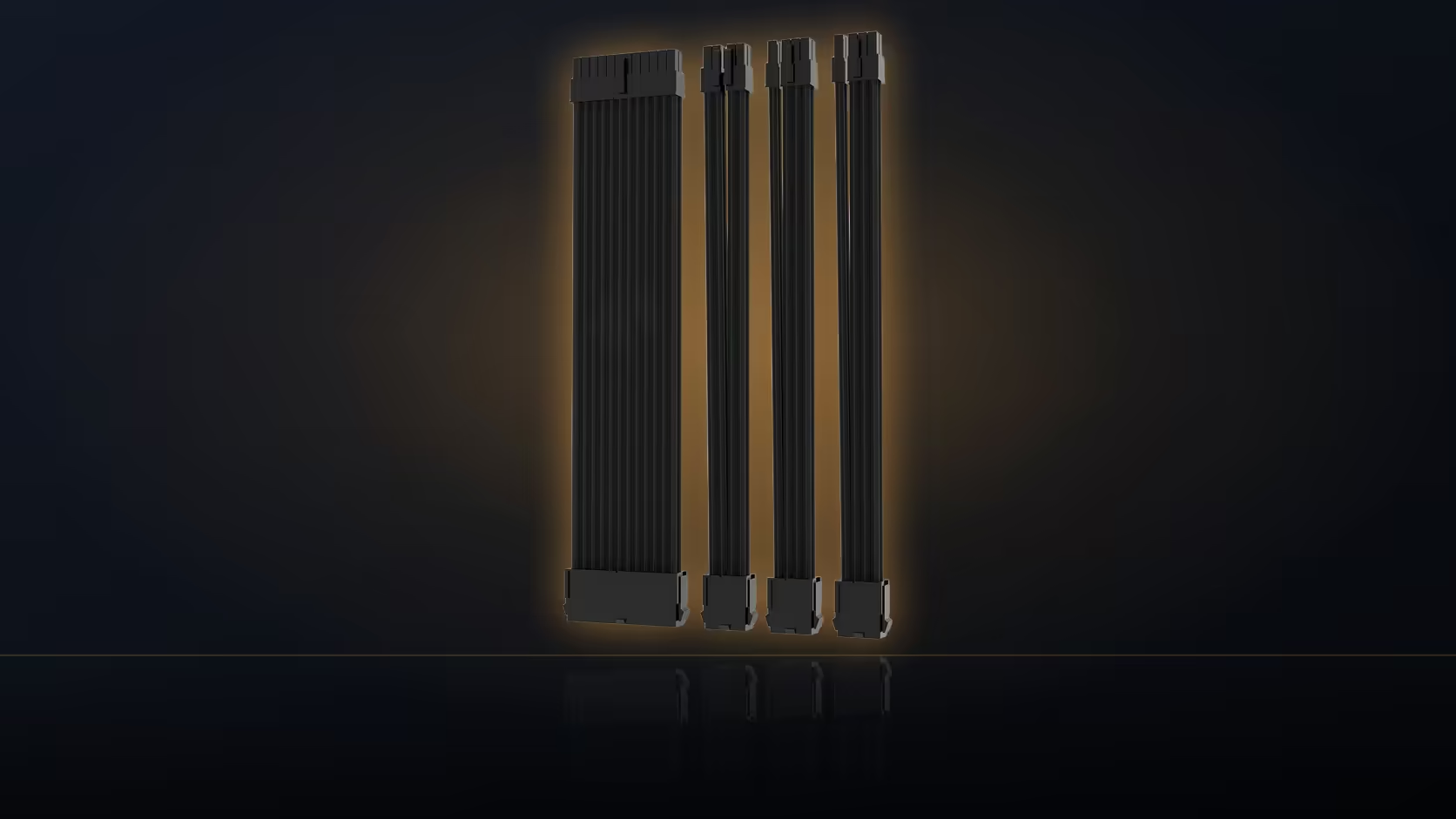
Fixing a comb in place feels like the finishing touch on a sleeved lead, which is exactly why doing it too early ruins the result. The 24-pin extension is the widest, stiffest piece in the kit, and it needs a deliberate curve chosen before anything gets clamped down around it.
Route the 24-pin extension into the curve you want first, then slide the combs in to hold it. A comb fitted early locks a shape you have not chosen. Working in that order is what makes four sleeved leads look deliberate behind glass.
A comb's whole job is to hold the individual strands at a fixed spacing once you are happy with how they sit. Fit one before the route is settled, and every adjustment afterwards fights against a spacing that is already locked in - the comb resists the very curve you are trying to work into the cable. Route the lead loosely into its intended shape first, checking it against the window and the socket it is heading toward, and only then slide the combs on to hold that shape permanently.
The bend has to stay gentle enough that the strands remain roughly parallel all the way through it. A tight, sharp bend fans the outer strands away from the inner ones, and no comb fitted afterwards will fully undo that - the unevenness gets built in at the bend itself, not fixed at the ends. Because the 24-pin lead is the widest and stiffest of the four pieces in the kit, it asks for the most patience: work the bend in gradually over several small adjustments rather than forcing the whole curve into place in one motion.
Most 24-pin runs suit one comb near each end of the exposed section, with a third added in the middle if the length is enough to sag visibly between the two outer ones. Because the combs are designed to slide freely along the sleeved section, there is no need to get the position exactly right on the first try - settle the overall route, then walk each comb along the cable to wherever the spacing looks most even. Where more than one lead is visible through the window, aligning the combs at a similar height across the different cables is one of the cheapest ways to make the whole set of runs read as planned rather than accidental.
If the curve still looks wrong once the combs are on, the fault is almost never the comb itself - it is usually the strand order underneath. Pull the combs off, straighten the individual strands by hand along the entire visible length, and refit. That single step resolves the great majority of cases where a sleeved lead looks bunched or twisted despite the combs being correctly positioned.
Before shaping anything, look at where the 24-pin run has to travel from its grommet to the socket, and note any obstacle along that path - a fan, a radiator hose, or a shroud edge - that the curve needs to clear. A curve planned around those obstacles from the start avoids the frustrating situation of shaping a nice bend only to discover it presses against a fan blade once the cooler goes back in. Cable solutions is where the rest of this range lives, and a curve that genuinely will not sit right at 30cm is a good reason to check what a made-to-length set from individually sleeved premium cables would cost instead.
A comb holds the strands at a set spacing. Once fitted, adjusting the curve fights against it, so the shape has to be chosen before the comb goes on.
Gentle enough that the strands stay parallel through the bend. A tight bend fans the outer strands and no comb will fully tidy that.
Usually one near each end of the exposed section, with a third in the middle if the run is long enough to sag between them.
Yes, that is the point of leaving it loose at first. Settle the route, then walk each comb to where the spacing looks even.
It is the widest and stiffest piece in the kit, so it needs the most patience. Work the bend in gradually rather than forcing it in one go.
Aligning them at a similar height reads as deliberate through the window and is one of the cheapest ways to make the run look planned.
Pull the combs off, straighten the strands by hand along the whole length, then refit. The fault is nearly always strand order, not the comb.
Getting ready to dress your build's ATX run? Have a look at Evetech's power supply range for extensions that pair well with a curved cable layout.
A comb holds the strands at a set spacing. Once fitted, adjusting the curve fights against it, so the shape has to be chosen before the comb goes on.
Gentle enough that the strands stay parallel through the bend. A tight bend fans the outer strands and no comb will fully tidy that.
Usually one near each end of the exposed section, with a third in the middle if the run is long enough to sag between them.
Yes, that is the point of leaving it loose at first. Settle the route, then walk each comb to where the spacing looks even.
It is the widest and stiffest piece in the kit, so it needs the most patience. Work the bend in gradually rather than forcing it in one go.
Aligning them at a similar height reads as deliberate through the window and is one of the cheapest ways to make the run look planned.
Pull the combs off, straighten the strands by hand along the whole length, then refit. The fault is nearly always strand order, not the comb.
Monitor stuck at 60Hz on DDR5 build needs careful display-chain checks, not a single-part blame. Test the screen, cable, port, scaling, drivers, and setup context before replacing hardware.
Read more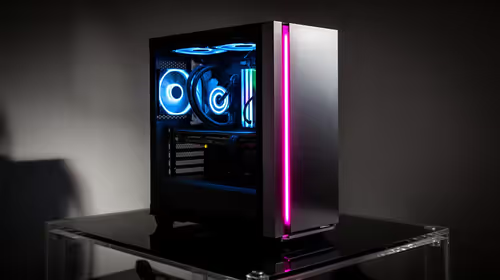
Recommended build for Genshin Impact at R60 000 should justify the spend with high-end parts that help beyond one title. SA buyers should prioritise GPU headroom, large SSD space, reliable power and quiet cooling for long-term use.
Read more
Atomic Heart stuttering on RX 9070 XT points to frame pacing, driver, or settings issues first. Check display mode, shader cache, overlays, background load, and thermals before replacing parts.
Read more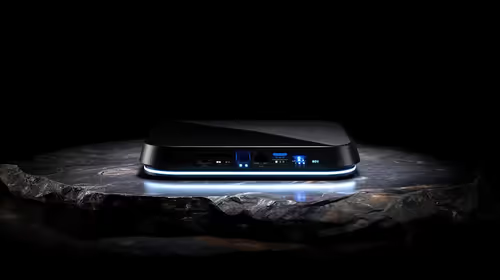
Cell C Fibre Polokwane packet loss can come from Wi-Fi, drivers, router settings, Ethernet, line faults, or game-server routing. Start with local checks before replacing parts or escalating support.
Read more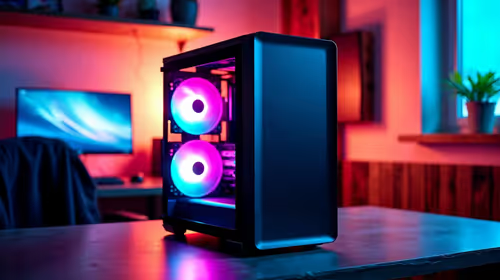
University of Cape Town residence: compact should be shortlisted around the job it must do. South African buyers should compare wattage, efficiency, protection, and connector support, warranty path, and upgrade room before treating any pick as best.
Read more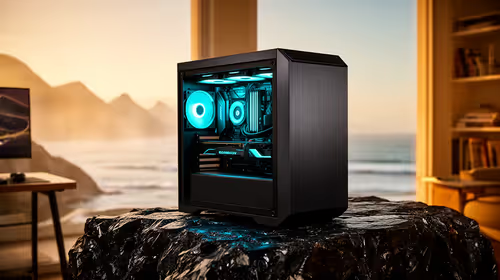
Setting up a running local LLMs rig in Hermanus should be shortlisted around the job it must do. South African buyers should compare fit, performance, compatibility, and upgrade room, warranty path, and upgrade room before treating any pick as best.
Read more
Windows 11 spatial sound greyed out needs an output-device check before a headset purchase. Select the intended playback device and look for Windows Sonic for Headphones. Speaker, HDMI and headphone routes can expose different spatial sound options.
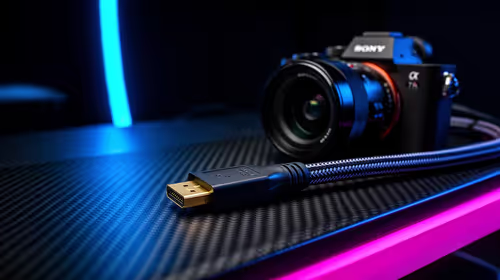
DisplayPort 2.1 vs DisplayPort 1.4 for aAA single-player gaming Difference explained is mostly about compatibility, budget, upgrade path, and setup fit. SA buyers should check device support and real needs before expecting a clear win from either.
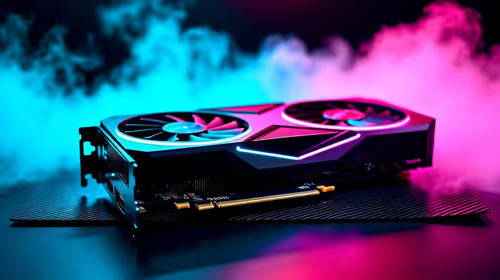
RTX 4080 too expensive? Cheaper SA alternatives should solve the exact workload without overbuying. Compare nearby options by GPU tier, VRAM, cooling, and PSU headroom, local warranty path, and total build balance before moving to a product page.
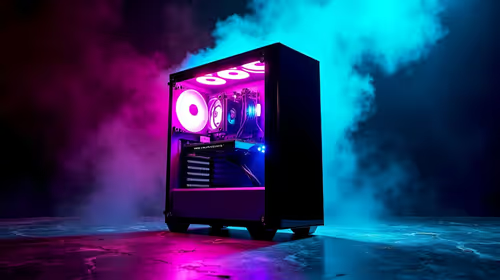
Recommended build for Hollow Knight Silksong at R100 000 SA buyer's guide frames a dream-class PC around more than one game. Balance flagship graphics, premium CPU, 32GB or more RAM, fast SSDs, quiet cooling and power quality.

Windows 11 Ethernet unidentified network needs a cable, router and PC comparison before a reset. Test a second device and run the network troubleshooter. Save adapter drivers and custom settings before using network reset as the final step.
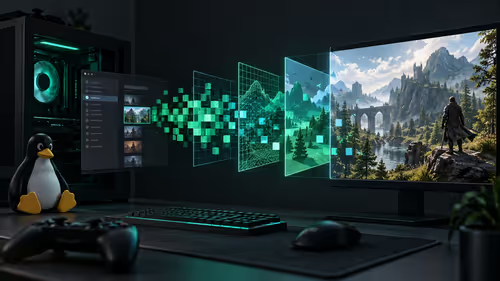
Steam processing Vulkan shaders is graphics preparation rather than a normal game download. On Linux, compare progress and repeat launches before deleting caches. A driver or game change can alter the work, so gather evidence before paying for a new GPU.

Steam discounts and events are moving towards personalised recommendations in early 2027. A firm start date is still pending. The change concerns promotional visibility, so compare the actual rand price and game requirements before making a purchase.

Windows 11 Bluetooth toggle missing can mean the radio is not being detected or enabled. Start with a complete power-off, then check the adapter and drivers. Pairing a new mouse cannot repair an absent Bluetooth control, so isolate the PC first.
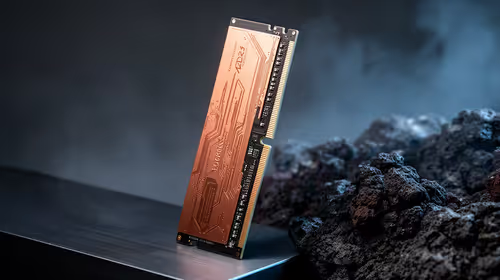
DDR5-6000 and AM5 Builds can affect SA PC builder decisions through cost, compatibility, stability, cooling, or upgrade planning. Use it as cautious context, not a fixed rule for every build.
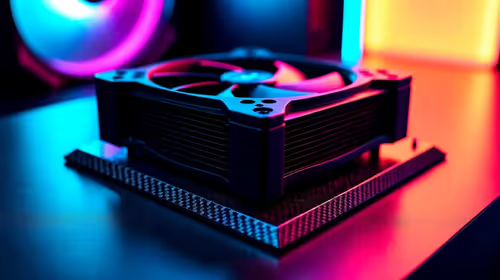
Where Johannesburg gamers buy a AIO liquid should be shortlisted around the job it must do. South African buyers should compare airflow, clearance, noise, and upgrade room, warranty path, and upgrade room before treating any pick as best.

Steam Deck can fit Kimberley gamers who want portable PC-style play without a full desk setup. SA buyers should compare game compatibility, storage, battery life, screen comfort, and docking needs before choosing.
Sandton RTX 5070 buyers should focus on GPU variant, monitor fit, cooling, and warranty cover. Compare power needs, case clearance, CPU balance, and SA delivery terms before choosing a card or complete desktop.