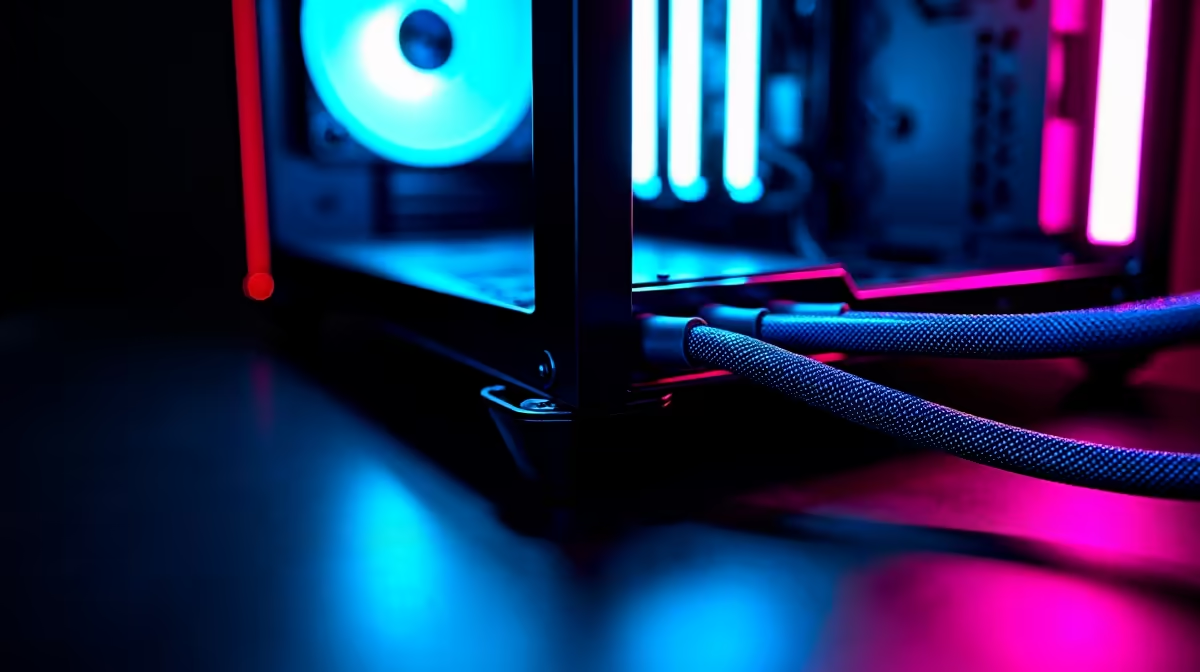
You’ve just unboxed your powerful new DeepSeek-powered rig. The components are top-tier, the performance is mind-blowing, but when you peek through the glass panel… it’s a mess. A chaotic nest of cables chokes the airflow and ruins the aesthetic. Sound familiar? Great PC cable management in South Africa isn’t just for show-offs; it’s a fundamental part of building a stable, cool, and easy-to-maintain machine. Let’s get those cables sorted. 🔧
Why Tidy PC Cables Matter More Than You Think
A tangled mess of wires isn't just ugly; it's a performance bottleneck waiting to happen. Proper PC cable management is one of the most satisfying final steps in any build, transforming your machine from a functional box into a piece of art. More importantly, it has practical benefits that every PC owner in South Africa should care about.
Better airflow is the number one advantage. When cables obstruct the path from your intake to your exhaust fans, you create hot spots. Your CPU and GPU have to work harder, and their fans spin faster (and louder!) to compensate. A clean interior allows for an unrestricted wind tunnel, keeping components cool and quiet, which is essential for powerful hardware like that found in high-end NVIDIA GeForce gaming PCs.
Secondly, think about future-you. Need to swap out a faulty RAM stick or add a new SSD? A well-managed case makes maintenance and upgrades a breeze. You won't have to wrestle with a dozen mystery wires to get to the component you need.
Your Essential Cable Management Toolkit
You don’t need a fancy workshop to achieve brilliant results. For most builds, a few simple tools will do the trick.
- Cable Ties (Zip Ties): The classic choice. They are cheap, effective, and perfect for permanently securing bundles of cables you won't need to touch often.
- Velcro Straps: Reusable and gentler on your cables. These are fantastic for bundling cables you might need to adjust later, like your main power supply lines.
- Side Cutters: Essential for snipping the ends of your zip ties flush. A clean cut looks professional and prevents sharp edges from snagging or scratching.
- Patience: The most critical tool! Rushing your cable management will only lead to frustration. Put on some music, take your time, and enjoy the process. ✨
Many modern PC cases come with built-in channels, tie-down points, and rubber grommets. These are your best friends—use them! They are designed to make achieving excellent PC cable management easier than ever.
The PSU Shroud Secret ⚡
Your power supply shroud isn't just for looks! It's the perfect place to hide all your excess cable length. Instead of trying to perfectly fold every wire behind the motherboard tray, gently coil the extra length and tuck it away in the shroud. This single trick can dramatically clean up your build's appearance.
A Step-by-Step Guide to Pro-Level Tidiness
Ready to tackle the beast? Follow these steps for a clean and organised build.
1. Plan Your Attack
Before you plug a single cable in, map out its path. Identify the main cable routing channels in your case. The goal is to run as many cables as possible behind the motherboard tray, only bringing them into the main chamber through the closest cutout to their destination port.
2. Start with the Big Cables
Route the thickest, most stubborn cables first. This usually means the 24-pin motherboard power, the 8-pin CPU power, and the PCIe power cables for your graphics card. Getting these foundational cables in place makes managing the smaller ones much easier. Whether you're powering a top-tier Radeon card in one of our AMD gaming PCs or a professional Quadro, this rule always applies.
3. Bundle and Secure as You Go
Don't wait until the end to start tying things down. As you route cables, group them together where they follow the same path. Use the tie-down points on the back of your motherboard tray to secure these bundles. This prevents a new "rat's nest" from forming on the back side of your build.
4. Tame the Small Wires
The thin, fiddly cables for front panel IO (USB, audio, power switch) and case fans are often the last step. These can be tricky, but the same principle applies: run them along the edges and corners of the case, hiding them as much as possible, before plugging them into the motherboard headers. This level of detail is just as important in a gaming rig as it is in high-performance workstation PCs where reliability is key. 🚀
Ready for a Clutter-Free Build? Mastering PC cable management elevates your rig from a collection of parts to a work of art. If you'd rather skip the hassle and get a professionally built system with immaculate cabling from day one, we've got you covered. Explore our expertly assembled Gaming PCs and experience the Evetech difference.