The power clicks back on. Eskom has blessed you. You rush to your PC, eager to jump back into your game… but wait. Hitting that power button instantly is one of the riskiest things you can do. That sudden jolt can cause a massive temperature surge in your CPU, a silent killer known as a thermal spike. Learning how to prevent thermal spikes after a power outage is crucial for every South African PC owner. Here’s your guide to proper PC restart safety.
Why Sudden Restarts Are a Threat ⚡
When the power cuts, your PC shuts down improperly. When it returns, your system tries to boot up instantly, loading the OS and background apps. This puts immediate strain on your CPU. The problem? Your cooling system—fans and AIO pumps—might not spin up to speed at the same instant.
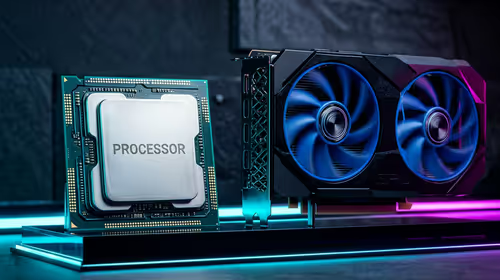
For a few critical seconds, your CPU's temperature can skyrocket without adequate cooling, potentially shortening its lifespan or causing instability. This is the thermal spike we need to avoid.
Your Guide to Safe PC Restarts After a Power Cut
Patience is your best friend here. Rushing to get back into a Valorant match could cost you your processor. Follow these simple steps for a safe reboot.
Step 1: Just Wait a Minute
Before you do anything, wait at least 60 seconds after the power has stabilised. This gives the electricity grid a moment to settle and protects your components from any follow-up surges or "brownouts" (low voltage).
Step 2: The Cold Boot Procedure
This is the professional's technique to ensure all components are properly reset.
- Flick the switch on your Power Supply Unit (PSU) to the 'Off' position.
- Press and hold your PC's power button for 10 seconds to discharge any residual electricity.
- Wait another 30 seconds.
- Flick the PSU switch back to 'On'.
- Now, you can safely press the power button to boot up.
Step 3: Monitor Your Temperatures 🌡️
Once you're booting up, head straight into your BIOS/UEFI or use a tool like HWMonitor on your desktop. Keep an eye on your CPU temperatures for the first few minutes to ensure everything is normal. If temps are unusually high, your cooler might not be working correctly.
Pro Tip: Check Your Fan Curves 🔧
After a safe restart, dive into your BIOS or motherboard software. Check that your fan curves are set to react quickly to temperature changes. A more aggressive fan curve ensures your cooling kicks in faster, providing a better buffer against potential thermal spikes during normal use and unexpected reboots.
The Best Defence is a Good Offence: Better Cooling
While procedure is important, the best way to prevent thermal spikes after a power outage is with a robust cooling system. A stock cooler might be fine for daily tasks, but it offers very little headroom for sudden temperature changes.
Upgrading your cooling is one of the most effective investments for your PC's longevity. For many builders, a powerful air cooler offers a fantastic balance of performance and value. They are reliable, easy to install, and can handle most gaming CPUs with ease.
For those pushing their hardware with overclocking or running high-core-count CPUs, an All-In-One (AIO) liquid cooler is the superior choice. These systems use liquid to transfer heat far more efficiently. High-performance options, like a 360mm radiator AIO, provide the thermal capacity to absorb sudden heat spikes without breaking a sweat. Reputable brands like Corsair offer a wide range of coolers known for their reliability and performance. A solid aftermarket cooler gives you peace of mind, knowing your rig is protected. If you're unsure where to start, browsing a full range of CPU coolers can help you find the perfect fit for your build and budget.
Ready to Shield Your Rig? 🛡️
CPU damage can be avoided. A quality cooler is your PC's best defence against thermal spikes. Explore our massive range of CPU coolers and give your machine the protection it deserves.