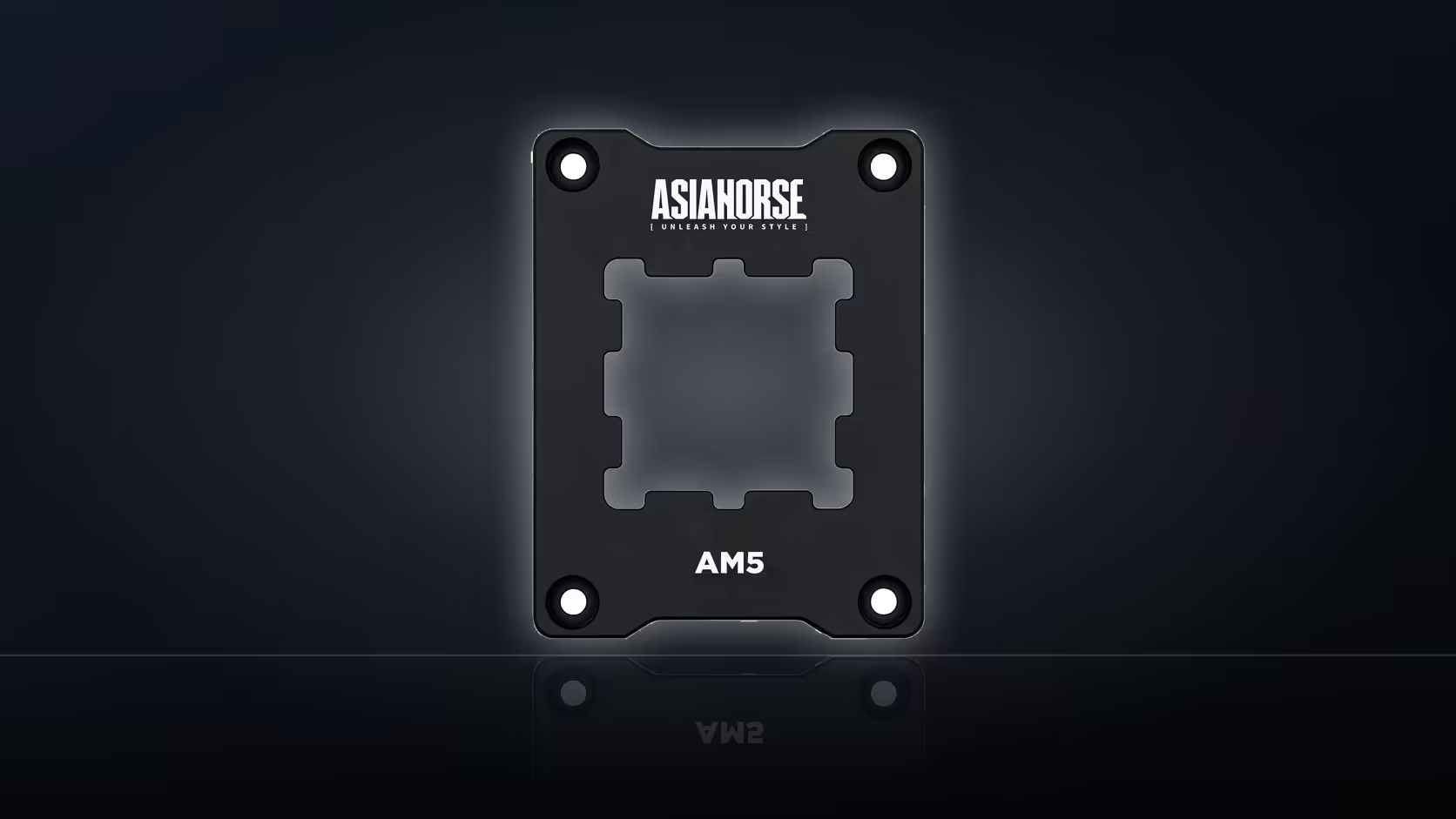
Blaming a contact frame for throttling the moment it appears is jumping to a conclusion before the evidence actually exists. A proper workload and temperature record taken before pointing at the AsiaHorse Pulsar frame tells you far more about the real cause than a guess made in the moment ever will.
Quick Answer
Before attributing throttling to cooler contact, record which specific workload triggers it and how temperatures behave over time - the shape of that pattern is itself diagnostic evidence. A rise that appears only under sustained load behaves very differently from one that appears the instant a workload starts, and the two point toward genuinely different causes. The R299 Pulsar frame addresses one specific cause among several, and confirming which one you actually have first saves fitting a part that was never going to help.
📊 What the record should actually hold
Note the workload itself - gaming, rendering, a synthetic benchmark - along with how quickly temperatures climb from idle, where they eventually settle, and the ambient room temperature at the time of the test. All four of these together build a picture that a single peak temperature reading on its own cannot provide.
Why the pattern itself is evidence
A sudden temperature spike and a slow, steady climb suggest genuinely different underlying causes, so the shape of the curve over time carries information in itself - it is not just a number to compare against a spec sheet, it is a clue about what is actually happening physically inside the case.
🔥 Reading uneven cooler contact from the pattern
Uneven contact between the cooler and the processor typically shows up as a fast temperature rise under load, since heat generated by the chip is not transferring efficiently into the cooler from the very start of the workload, rather than building gradually as the whole system warms up. This is the specific symptom the Pulsar frame is designed to address, by spreading mounting pressure evenly across the chip on X670, B650, and A620 boards.
An airflow problem, by contrast, tends to present as a slower climb as the whole case gradually warms up, with temperatures settling higher than they normally would rather than spiking sharply at the start of a workload - a meaningfully different pattern worth distinguishing before reaching for a hardware fix.
📋 What the frame does and does not promise
The Pulsar frame's description claims consistent cooler contact across the chip, without quoting any specific measured temperature reduction - it is a mounting pressure fix, not a guaranteed number of degrees. Worth ruling out first, since they are considerably cheaper to check than fitting a frame requires: thermal paste condition and age, whether the cooler's mounting screws are actually tightened to spec, established fan curves, and dust accumulation inside the case. Better airflow starts with hardware from the case accessories category; once cables are tidied via the cable solutions range, those same air paths stay clear too.
How long should a test workload run
Long enough for temperatures to genuinely settle rather than just peak - a short burst of load shows only a momentary spike, while a sustained run over ten to fifteen minutes reveals the behaviour that actually matters for day-to-day use.
What fitting the frame actually involves
The Pulsar frame ships with its own screws and a hex wrench, and it replaces the stock AM5 retention arms directly rather than working alongside them - but it does not include thermal paste, so budget for a separate tube before starting the swap. Since the fix is purely mechanical, reapplying paste properly during the same session is worth doing regardless of whether uneven contact turns out to be the actual cause, simply because the cooler is already off and old paste should not go back on unchanged.
Frequently Asked Questions
Which figures should a proper temperature record hold?
The workload, how quickly temperatures rise, where they eventually settle, and the ambient room temperature at the time of the test.
Why does the shape of the temperature pattern matter?
Because a sudden rise and a slow climb suggest different underlying causes, so the curve itself carries diagnostic information, not just a peak number.
How would uneven cooler contact typically present?
Usually as a fast temperature rise right from the start of a load, since heat is not transferring efficiently into the cooler from the beginning.
And how would an airflow problem present instead?
A slower climb as the whole case warms up, with temperatures settling higher than usual rather than spiking immediately.
Does the contact frame guarantee a specific temperature drop?
No - the description claims consistent contact across the processor without quoting a measured reduction figure.
What else is worth ruling out before fitting a frame?
Thermal paste condition, cooler mounting tightness, established fan curves, and dust buildup - all cheaper to check than fitting new hardware.
How long should a test run to be meaningful?
Long enough for temperatures to genuinely settle, since a short burst only shows a momentary peak rather than sustained behaviour.
Investigating throttling before reaching for a hardware fix?
Browse cooling accessories in the case accessories range and cable solutions for airflow-friendly routing while you test.