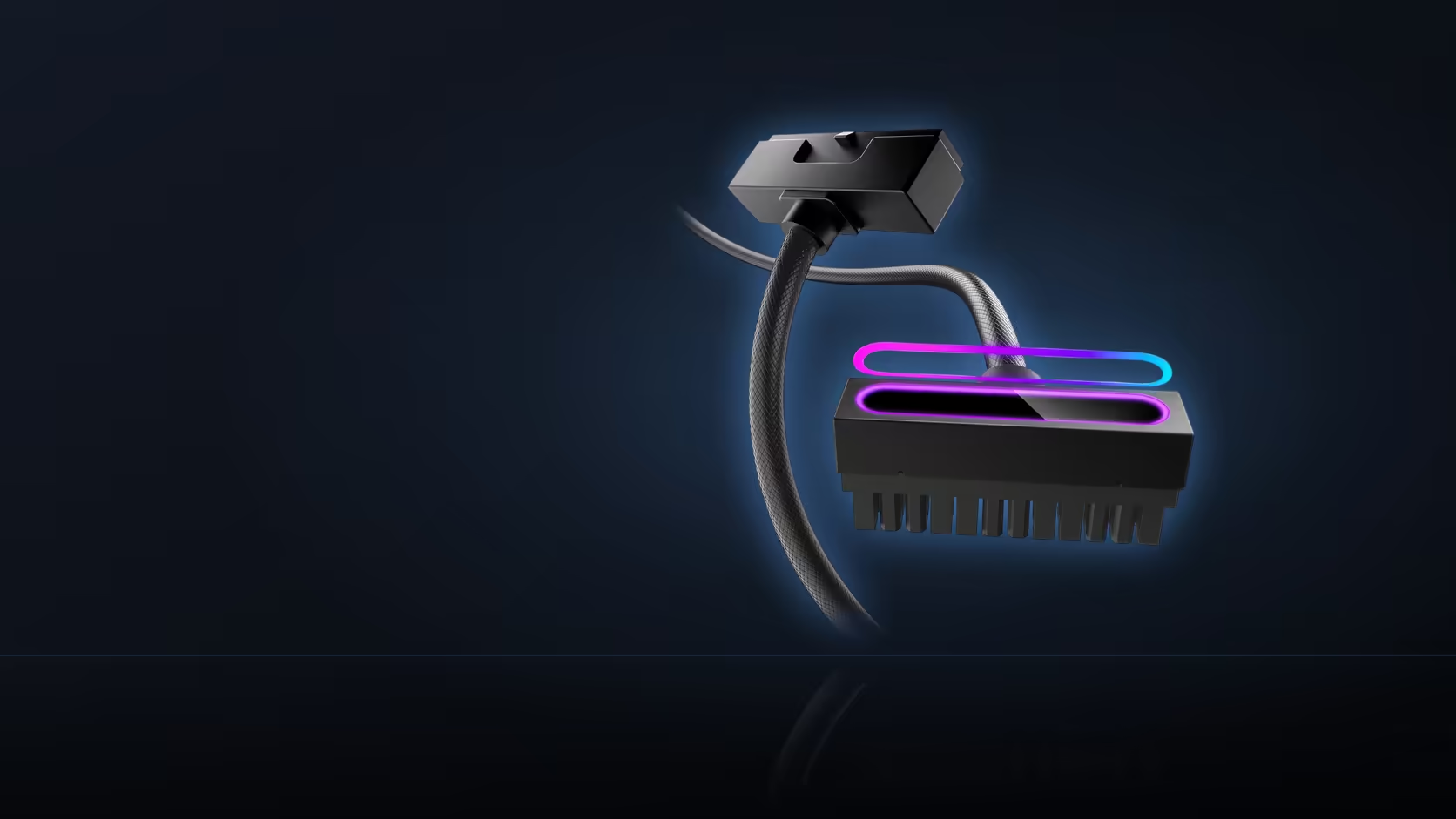
A thin lighting lead and a heavy power cable sharing the exact same routing path inside a case is a combination that works fine right up until the lighting lead actually needs to be reached again. At that point, the thin one is trapped, and moving the heavy one to free it turns a two-minute job into something considerably more involved.
Quick Answer
Route the thin 5V 3-pin lead separately from the heavy power run, rather than letting the two share a path. A trapped lighting lead is awkward to free later. Keeping them apart also means either can be reseated without disturbing the other.
⚖️ Why sharing a path becomes a problem
The main power cable carries real physical weight and bulk, while the 5V 3-pin lighting lead is considerably thinner and lighter by comparison - and anything pinned or trapped underneath that heavier run becomes genuinely hard to move without first lifting the entire power cable out of position. What seems like a harmless shortcut at the routing stage turns into a real inconvenience the moment either component needs servicing later.
🛤️ Where the lighting lead should actually go
Route it along its own short, independent path toward the nearest suitable addressable header, ideally tucked in against a case edge or tray fold where it stays genuinely out of sight while remaining reachable without disturbing anything else nearby. A dedicated path, however brief, is worth the extra minute of planning compared with simply letting it follow whatever route the power cable happens to be taking.
🪢 How much slack the lead genuinely needs
A small amount of slack matters here, enough that the connector at the header end can be unplugged without any real tension pulling against it - a lead left pulled taut against its header tends to work loose from vibration and handling over time considerably more readily than one with a little give built into the route.
👁️ Whether the lead shows in the finished build
It can become visible if routed carelessly across open space within the case - keeping it close against the board edge, or tucked behind the tray wherever the case design allows, keeps the lit connector head itself as the only genuinely visible lighting element, letting the cable's routing disappear entirely from view rather than distracting from the single accent point it exists to support.
🔒 What actually happens if it does get trapped, and how to secure it properly
Nothing goes electrically wrong if the lead ends up trapped under the power cable - it still functions normally - but reaching it later for any reason means moving the power cable out of the way first, turning what should be a small, quick job into a considerably larger one involving disturbing an already-dressed run. A single light cable tie at one point along the lead's path stops it drifting out of position over time, provided that tie is never pulled tight enough to actually press against or pinch the thin cable itself. This particular consideration applies to both the ATX and EPS versions of the Hydrus family, and arguably matters even more on the EPS cable specifically, since its lighting lead typically has to navigate through a considerably more crowded area at the top of the board where cooler components and other cabling already compete for the same limited space. The wider range this lead belongs to is at cable solutions, and hub or extension options for a lead that falls short of its header sit at NZXT case lighting.
Frequently Asked Questions
Why not run the two together?
Because the power cable is heavy and the lighting lead is not. Anything pinned under it becomes hard to move without lifting the whole run.
Where should the lighting lead go?
Along its own short path towards the nearest suitable header, ideally tucked against an edge where it is out of sight but reachable.
Does the lead need slack?
A little, so the connector can be removed without tension. A lead pulled tight against a header works loose more easily over time.
Is the lead visible in the finished build?
It can be if routed across open space. Keeping it close to the board edge or behind the tray keeps the lit head as the only visible element.
What happens if it is trapped?
Nothing electrically, but reaching it later means moving the power cable first, which turns a small job into a larger one.
Should it be tied down?
A light tie at one point stops it drifting, provided the tie is not pulled tight enough to press on the thin cable.
Does this matter on both the ATX and EPS versions?
Both carry their own sync lead, and the EPS one runs through a more crowded area, so it matters at least as much there.
Routing a lighting lead without trapping it?
Browse Evetech's power supply range and plan a dedicated path for your sync lead before dressing the power cable.