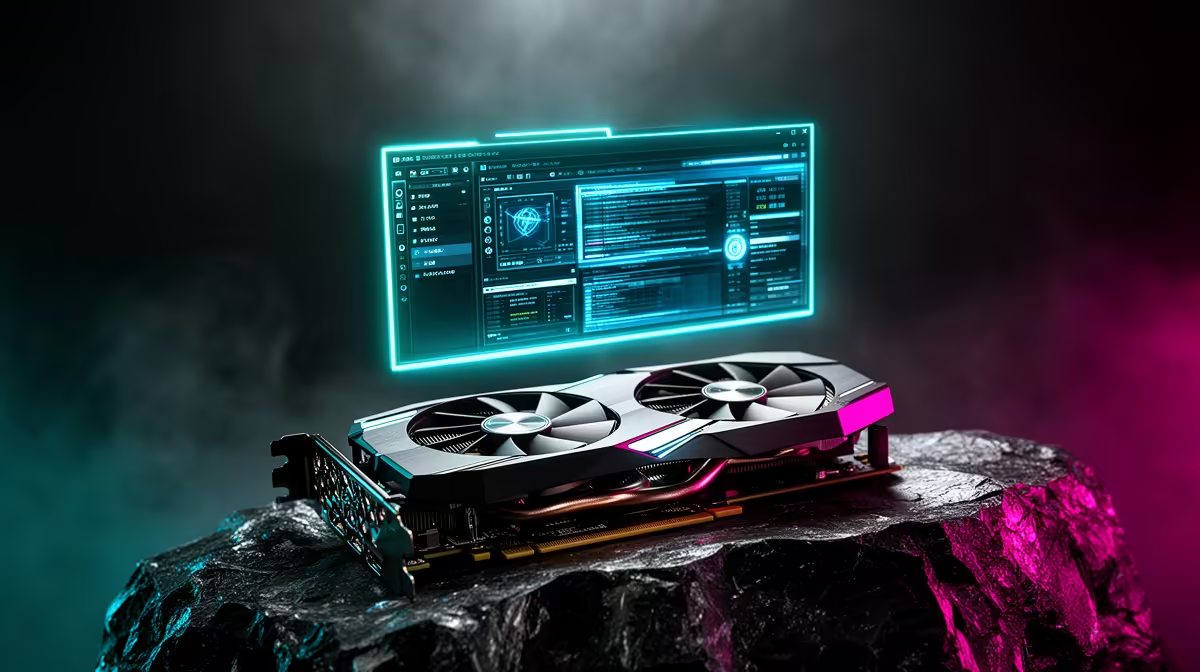
Instant Replay keeps a rolling encoded buffer and saves it only when you press the hotkey. NVIDIA and AMD software can include game audio and a microphone when those sources are enabled. The feature has a small but real cost in encode, memory or storage activity, so test it in the hardest game you clip.
Quick Answer
Update the supported NVIDIA app or AMD Software package, open its recording controls and enable Instant Replay. Start with a two-to-five-minute buffer, a hardware codec accepted by your editor and a dedicated clips folder with free space. Set the microphone source and push-to-talk or always-on behaviour deliberately, then make a private test clip.
Evetech's streaming essentials range helps improve microphone and capture quality. The webcam selection covers the camera side when a highlight should include more than gameplay.
Pick the Buffer Around the Moment
Two minutes can catch a short round or boss finish. Five minutes covers the lead-up to many highlights without creating a huge file. A racing stint or strategy play may need longer.
Buffer length multiplies with bitrate. Estimate the saved file size and check the recording drive. Do not send clips to a nearly full Windows SSD.
Start short and extend only after you repeatedly miss the beginning of a useful moment.
Choose Codec and Quality
Use the GPU's supported hardware encoder. H.264 is easy to edit and share. HEVC or AV1 can improve quality per bit, though your editor and upload path must support them.
Set resolution and frame rate to the game or your intended final clip. A 4K 120 FPS buffer needs far more storage and processing than 1080p 60 FPS.
Make one clip with fast movement, dark detail and on-screen text. Inspect it on another player before trusting the profile.
Configure Audio and Microphone
Choose the correct game or system audio device. Set microphone level below clipping and decide whether it is always recorded, push-to-talk or excluded.
Instant Replay can capture private room conversation whenever the buffer runs. Use a visible status indicator and a microphone control you understand.
Keep game and microphone on separate tracks where the software and editor support it. Test that both survive the saved clip.
Protect Game Performance
Run the most demanding scene with replay off, then on. Log frame time, GPU use and recording errors. A dedicated encoder helps, while a GPU pinned by the game can still starve capture or composition.
Cap unused frames and lower recording resolution before blaming the whole feature. Save clips to a healthy SSD that is not busy with a game download.
Avoid running NVIDIA or AMD replay, Windows background capture and another recorder together.
Set Hotkeys That Do Not Conflict
Choose a save hotkey outside normal game controls and overlay shortcuts. Test it in fullscreen and borderless modes. The overlay needs permission to capture the game.
Use a clear clips folder with subfolders by game. Rename important clips after the session so the next save does not get lost among timestamps.
Plan Storage and Retention
Point replay files to an SSD with enough free space and a clear backup rule. The rolling buffer may use memory or temporary storage according to the software and settings, while each saved clip becomes a normal file that remains until you delete it.
Review the folder every week. Keep finished highlights, move valuable footage into your backup plan and remove failed tests. Do not let a capture folder fill the system drive and then diagnose the resulting stutter as a GPU fault.
Check the encoded file's bitrate and duration to estimate how many clips the drive can hold. Leave normal SSD free-space headroom.
Troubleshoot a Missing Highlight
Confirm the replay feature was active before the moment occurred. Driver updates and application restarts can turn it off. Check the overlay status and save hotkey before a session.
If the hotkey does nothing, test for a conflict with the game, accessibility shortcut or another overlay. Run the recording software through its supported permission path and confirm the game is capturable in its current fullscreen mode.
A black clip can come from protected video, display-capture selection or a driver fault. Test a normal game and desktop source separately.
Edit Without Re-encoding Twice
Import the clip into an editor that supports its codec, frame rate and audio tracks. Trim on a matching timeline and export once to the platform's delivery format.
Variable frame rate can cause sync trouble in some editors. Use the capture software's supported constant-frame-rate option when available, or transcode a copy through a trusted workflow while keeping the original.
Listen to the full clip before sharing. A clean highlight can still contain private voice chat, a notification sound or another person's conversation.
FAQ
What does Instant Replay record?
It saves the recent gameplay buffer and the audio sources you enabled when you press the save hotkey.
Is the performance cost zero?
No. Hardware encoding keeps it modest on supported GPUs, but capture, storage and full GPU load can still affect frame time.
Is five minutes the best buffer?
It is a practical starting point. Match the length to the game moment and available storage.
Start with a short replay buffer, record a private busy-game clip and confirm frame time, audio privacy and edit compatibility before extending it.