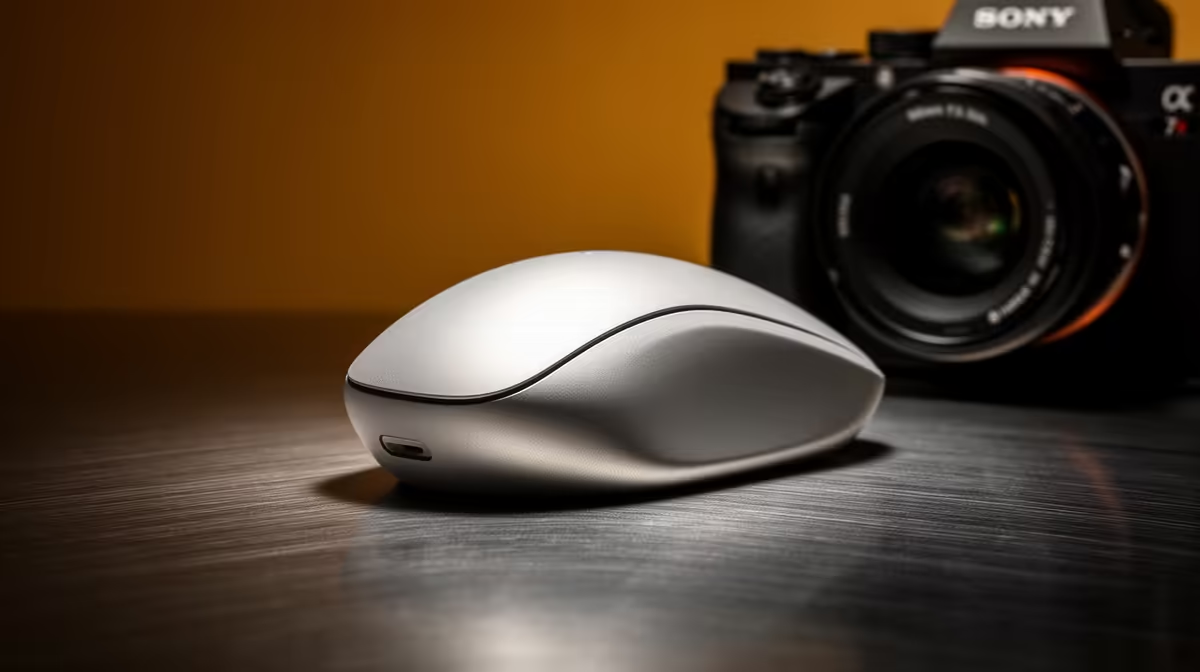
A great sensor inside the wrong shell can leave your hand tense and your aim inconsistent. Mouse fit for hand size starts with length, width, hump position and the grip you keep during a real session.
Quick Answer
Mouse fit comes from the relationship between your hand, grip, button reach, and shell dimensions. Small hands do not always need the lightest mouse, and large hands do not always need a tall palm-filling shape. Measure, compare with a mouse you know, and test through a full session.
Shortlist dimensions in the gaming mouse deals, then see which shapes recur in the mouse best sellers. Price follows fit; a costly sensor in the wrong shell remains uncomfortable.
Measure hand and current mouse
Measure hand length from the base crease at your palm up to the longest fingertip, then measure across the broadest part. Record the current mouse length, width, and height. Note where it supports or rubs the hand.
These figures narrow the field rather than prescribe a model. Finger length, thumb position, joint mobility, and preference change fit. Use sizing charts as a starting point and test when possible.
Mark whether you hold the mouse with most of the palm down, the hand arched, fingertips leading, or a mix that changes by task. Do not force your grip into a marketing category if it feels natural and causes no strain.
Compare shell contact points
Palm grip often benefits from support through more of the hand, while fingertip users may prefer a shorter shell that moves without touching the palm. Claw users can care about the hump position and rear flare.
Width affects ring and little-finger placement. A narrow mouse can make them drag or pinch; a wide one can stretch the hand. Side-wall shape and coating influence how hard you squeeze.
Button reach matters. The front click area, wheel, DPI button, and side buttons should be usable without shifting grip. A second side button placed too far back can be worse than having one dependable control.
Treat weight as one variable
Lower mass can reduce effort during repeated fast movements. More weight can feel controlled to another user. Balance decides whether the mouse tips or drags during lift and reset.
A small hand may still prefer a solid heavier shell, and a large hand may enjoy a light broad mouse. Do not infer fit from grams. Compare the same training route and note stop control, fatigue, and grip pressure.
Adjust sensitivity only after the shape test. A new lighter mouse can feel too fast because your movement changed. Keep DPI and in-game settings stable for the first comparison.
Check connection and pad together
Wired mice need a flexible clear cable path. Wireless models need a supported receiver position, battery plan, and current platform support. Place the receiver near the desk rather than behind a metal tower where the maker provides an extension.
Use a pad large enough for the chosen sensitivity. Surface speed and stopping feel interact with skates and mouse mass. Clean both according to their guidance.
Test slow tracking, quick turns, lift-off, clicks, wheel steps, and side buttons. Then work or play for an hour. Hot spots, numbness, pain, or growing grip force are stronger warnings than a short aim score.
Persistent hand symptoms deserve assessment from a qualified health professional. Hardware selection is not treatment.
Read the shape from more than three dimensions
Two mice can share length, width, and height while feeling different. One may place its hump near the rear and fill the palm; another may rise near the middle and leave more movement at the wrist. Side walls can taper inward, flare out, or stay flat.
Look at top and side profiles. Check whether the main buttons sit low or high and whether grooves force a finger position. An asymmetric right-handed shell can support the thumb differently from a symmetrical shape. Left-handed users need the side buttons and software to support their actual grip side.
Coating matters in a warm room. Smooth plastic, rubberised sections, and textured sides can change grip pressure as hands become warm. Cleanability and wear should be checked for the exact finish.
Use a simple return-window test
When the current written purchase terms allow a proper trial, use the mouse for normal work, one slow-aim exercise, one tracking exercise, and a full game session. Keep sensitivity fixed and compare against the old model.
Note where the hand contacts the shell, whether side buttons require a grip change, and whether lift-and-reset feels controlled. Check that the wheel is reachable without pulling the palm forward. A high score on the first run can come from novelty; comfort across several sessions is stronger evidence.
Keep packaging and accessories while evaluating. Do not modify skates, apply grip tape, or damage seals before you understand the applicable terms.
FAQ
Do small hands need a lightweight mouse?
No. Smaller dimensions may help button reach, while preferred mass and balance vary. Test shape, width, hump, and weight as separate factors.
How do I compare mouse size online?
Measure your hand and a familiar mouse, then compare exact length, width, height, hump position, and button placement. Use reviews with dimension overlays when available.
Can the wrong mouse hurt aim?
A poor fit can cause extra grip force, missed buttons, or awkward movement, which harms consistency. Technique, sensitivity, pad, and practice still matter.
Measure your hand and current mouse, compare shell contact points, and choose the shape you can control for a full session without forcing your grip.