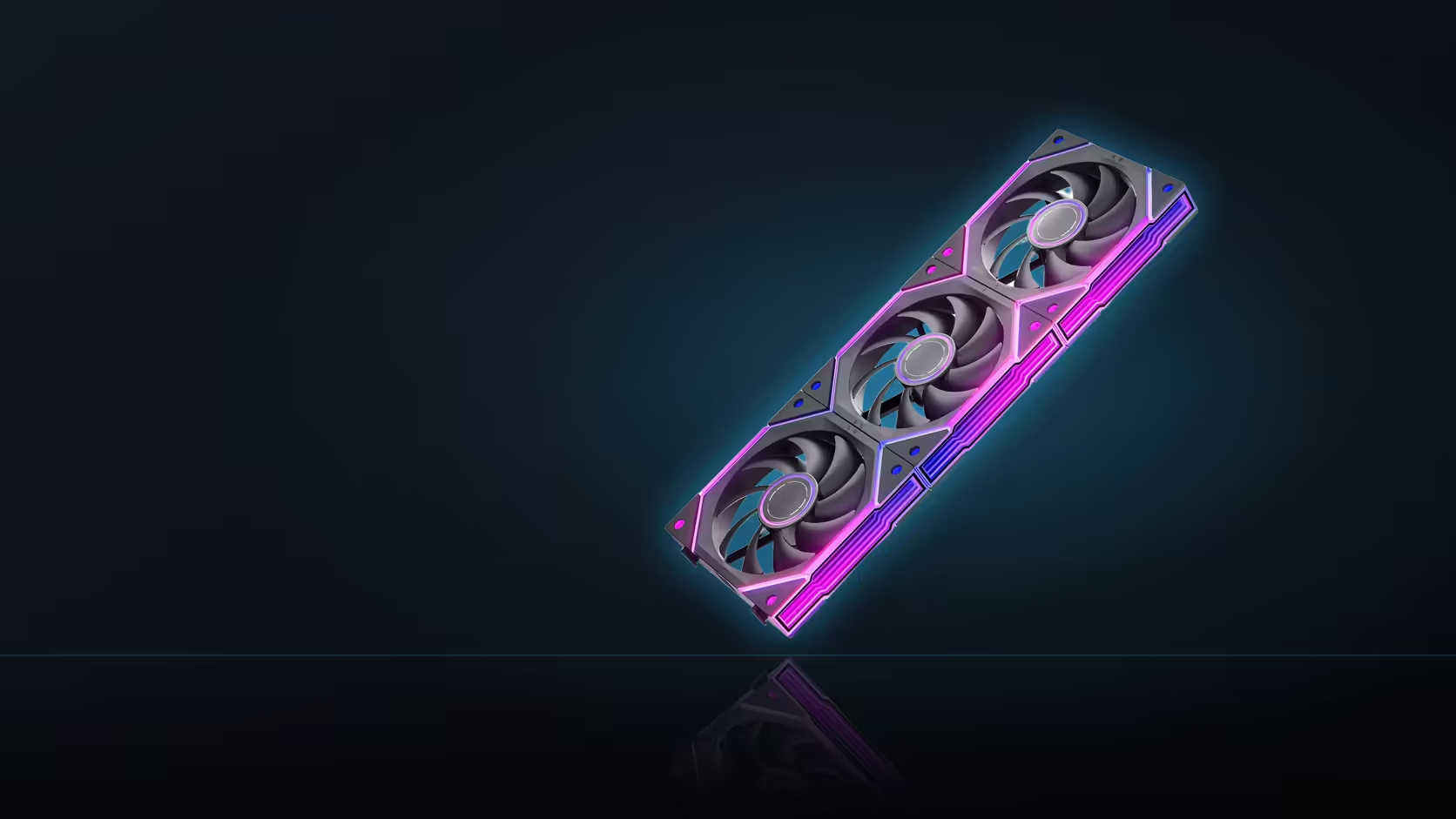
Four fans across two different roles rarely arrive as a single tidy order, and working out what to actually buy before checking out saves a return trip once the parcel is open. Three intake positions and one exhaust is a common enough layout that it is worth walking through exactly how a Nyota Ultra order for it usually breaks down.
Quick Answer
Three visible intake positions plus one rear exhaust typically means ordering a reverse three-pack at R649 for the intake row, alongside a forward single at R249 for the exhaust, coming to R898 total. Keeping the boxes separate on arrival matters, since forward and reverse Ultra fans are easy to confuse once unpacked.
🧾 Working out what a typical mixed order looks like
For a layout with three intake fans seen through a window and one exhaust that faces away from it, a reverse three-pack covers the visible row at R649, while a forward single handles the exhaust at R249. That combination totals R898 and matches each position to the blade direction its own sightline actually needs, rather than defaulting the whole order to one direction.
📦 Why the boxes deserve to stay intact until installation
The product name on each box states the blade direction plainly, which is the clearest identification available. Once fans are unpacked and sitting loose together, working out which is which by eye becomes noticeably harder, particularly across four units that look near-identical from most angles. Keeping the packaging until the moment of installation avoids that guesswork entirely.
🚪 Whether the exhaust position actually needs reverse blades
Usually not. A rear exhaust fan typically shows its front face to the interior of the case and to any window nearby, which is the same orientation a standard forward fan already presents. Reverse blades solve a specific problem, a fan showing its rear face outward, and an exhaust position rarely has that problem to begin with.
🏷️ Keeping a mixed order sorted through installation
A small piece of tape on each fan during unpacking, noting its intended position, is a cheap safeguard particularly useful where an order arrives across more than one delivery. If a position does turn out to need the opposite direction once mounted, correcting it with a single fan at R249 costs less than a second three-pack and avoids ending up with spare fans that have no home. Neither direction costs more than the other, R249 as a single or R649 as a three-pack regardless of orientation, so a mixed order costs exactly the same as an unmixed one. Both directions are stocked in the case fan range, and case accessories carries labelling tape and cabling extras for a split order.
🔀 Handling deliveries that arrive split
Larger orders sometimes ship across two or more parcels rather than arriving together, and a mixed pack-plus-single order is exactly the kind of purchase where that can happen. Noting which delivery is expected to carry which fans, alongside the position plan itself, means a partial arrival does not get mistaken for a wrong or incomplete order. It also means installation of the exhaust single, for instance, does not need to wait on the intake pack if the two ship separately.
💬 Confirming the fit before committing to a full order
Where any doubt remains about whether a position genuinely needs reverse blades, mounting a single test fan there first, rather than committing to the full three-pack sight unseen, is a low-cost way to confirm the sightline before the larger purchase. A single fan at R249 is a modest outlay to settle the question properly, and the same fan simply joins the row later once the right direction is confirmed rather than becoming wasted spend.
🔌 Cabling for a split intake-and-exhaust order
A reverse three-pack and a forward single don't need to share a single cable run, since the exhaust fan sits on its own side of the case and usually finds its own nearby header anyway. Running the intake row as one daisy-chained group and connecting the exhaust single independently keeps the two runs short rather than stretching one long chain across the whole interior. Both routes still need their own fan header for PWM speed control and, separately, an addressable header for the ARGB side, whether the fans in question are chained together or wired individually.
Frequently Asked Questions
What does a typical three-intake, one-exhaust order look like?
A reverse three-pack at R649 for the intake row and a forward single at R249 for the exhaust, totalling R898.
Why does keeping the boxes matter so much?
Because the product name is the clearest way to identify blade direction, and that becomes harder to judge once fans are unpacked.
Does the exhaust position generally need reverse blades?
Usually not, since a rear exhaust typically shows its front face to the case interior already.
Is there a cheap way to keep unpacked fans sorted?
Tape with a written position note on each fan during unpacking works well, especially for orders arriving over multiple deliveries.
What if one position ends up wrong after mounting?
A single fan in the correct direction fixes it for R249, cheaper than buying an entire second three-pack.
Does mixing directions in one order cost more overall?
No. Both directions are priced identically, so a mixed order costs the same as one running a single direction throughout.
Ready to sort a mixed fan order before it arrives?
Browse Evetech's case fan range for both directions and plan which position needs which.