Is your new CPU running hotter than a Durban summer? You've spent a fortune on the best parts, but high temps are throttling your performance. The culprit is often a tiny, overlooked detail: your thermal paste application. Getting this right is one of the easiest and cheapest ways to unlock your PC's true power. This guide will show you the best technique to ensure your rig runs cool and quiet, even during the most intense gaming sessions. 🚀
Why Your Thermal Paste Application Matters
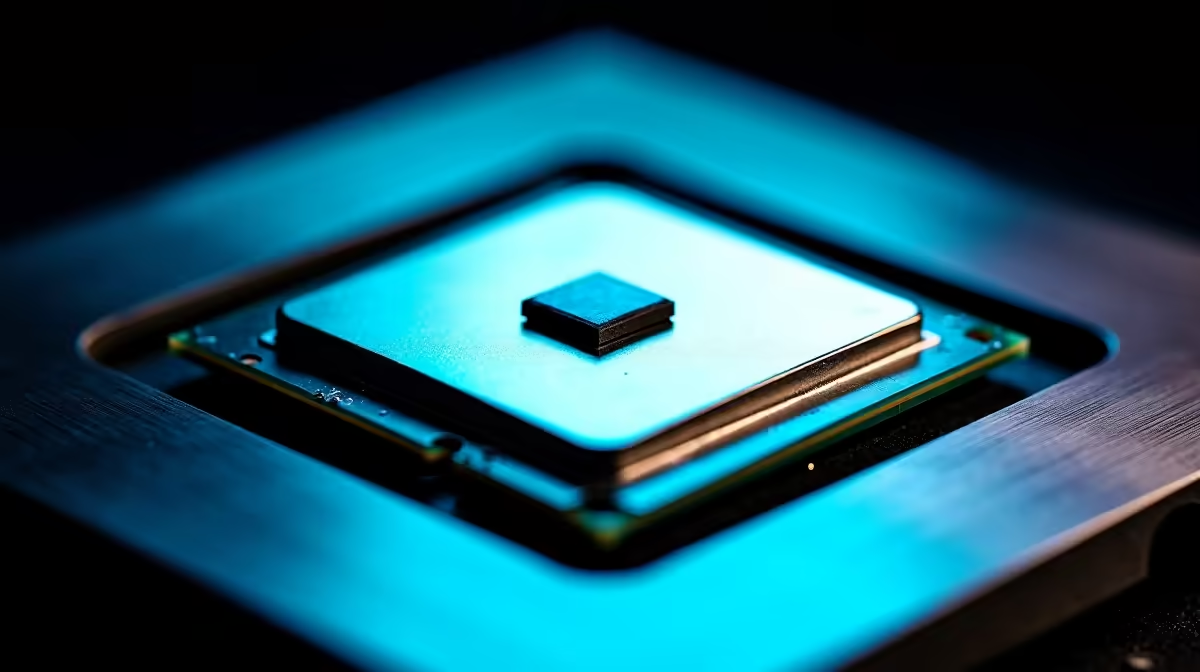
Think of thermal paste as the crucial handshake between your CPU and its cooler. The metal surfaces of your processor's Integrated Heat Spreader (IHS) and your cooler's baseplate might look perfectly smooth, but on a microscopic level, they're full of tiny imperfections. These imperfections trap air, which is a terrible conductor of heat.
Thermal paste is a thermally conductive compound that fills these gaps, ensuring a seamless transfer of heat from your CPU to your heatsink. A good thermal paste application means lower temperatures, higher boost clocks, and a longer lifespan for your components. Whether you're building a new PC or just doing some maintenance, mastering this simple skill is essential. It's the foundation upon which all other cooling efforts, from basic fans to high-end CPU coolers, are built.
The Best Thermal Paste Application Techniques 🔧
For years, PC builders have debated the "best" method. The truth? Most modern techniques work well if you use the right amount of paste. The goal is to achieve a thin, even layer covering the entire CPU die area under the IHS after the cooler is mounted. Here are the most reliable methods for 2026.
The Classic Pea Method
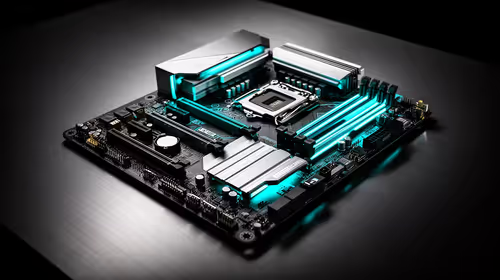
This is the go-to technique for most builders. It's simple, clean, and highly effective for square CPUs like AMD's AM5 and most of Intel's LGA sockets.
- Clean: Gently wipe both the CPU and cooler surfaces with a lint-free cloth and a small amount of isopropyl alcohol.
- Apply: Squeeze a small, pea-sized dot (about 4-5mm in diameter) of thermal paste directly onto the centre of the CPU.
- Mount: Carefully place the cooler straight down onto the CPU. The mounting pressure will spread the paste evenly across the surface. Secure the cooler, and you're done!
This method minimises the risk of trapping air bubbles, which is why it's so popular. It works brilliantly with both traditional Air Coolers and the pumps on AIOs.
The Line or 'X' Method for Larger CPUs
Modern high-end CPUs, especially those with a rectangular shape like AMD's Threadripper or Intel's high-end desktop chips, have a larger surface area. For these, a single pea might not provide enough coverage.
- Single Line: Apply a thin line of paste down the middle of the CPU, parallel to the longest side.
- 'X' Method: Apply two thin lines diagonally from corner to corner, forming an 'X'.
Both techniques ensure the paste spreads out to the corners of these larger heat spreaders. When you're investing in a powerful CPU that needs a hefty cooling solution, like a Liquid Cooler (AIO), getting the thermal paste application technique right is non-negotiable.
Pro Cleaning Tip 🌡️
Always use 90%+ isopropyl alcohol and a microfibre cloth or coffee filter to clean your CPU and cooler before applying new paste. Old paste residue can create an uneven surface and seriously hamper thermal performance. A clean start is a cool start!
Common Mistakes to Avoid
Even the best thermal paste won't help if it's applied incorrectly. Here are a few common blunders we see all the time in the Build Lab:
- Too Much Paste: More is not better! Excessive paste will squeeze out the sides, making a mess on your motherboard socket. It can also be less efficient at transferring heat than a thinner layer.
- Too Little Paste: This is the bigger crime. If you don't use enough paste, you'll leave hot spots on the CPU die that aren't making contact with the cooler, leading to thermal throttling.
- The "Credit Card" Spread: Manually spreading the paste with a card or spatula seems like a good idea, but it often introduces tiny air bubbles into the layer, which compromises thermal conductivity. Let the cooler's pressure do the work for you. For processors that demand the absolute best cooling, like those paired with a beefy 360mm Radiator, avoiding these bubbles is critical.
Don't Forget Airflow: Your Case Matters ✨
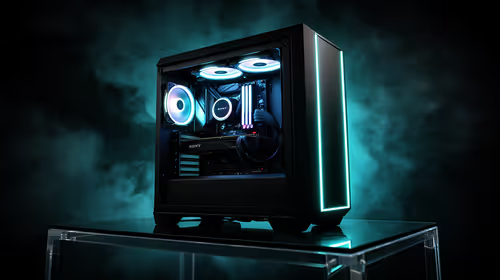
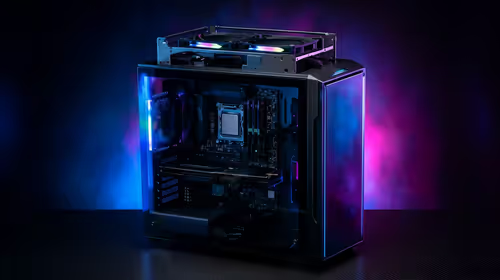
A perfect thermal paste application is just one part of the cooling puzzle. If your PC case has poor airflow, that hot air has nowhere to go. All your hard work will be for nothing as the ambient temperature inside your chassis climbs.
Ensure you have one of the best computer cases you can afford, with good ventilation and a smart fan layout (typically intake at the front, exhaust at the back and top). Brands known for excellent airflow and build quality, such as our own Evetech gaming cases or popular options from Corsair, Deepcool, and Gamdias, can make a massive difference to your overall CPU temperatures.
Ultimately, the best thermal paste application guide is one that reminds you to be clean, use a sensible amount of paste, and let the mounting pressure do the spreading. Nail this, and you're well on your way to a cooler, faster, and happier gaming PC.
Ready to Beat the Heat?
A perfect thermal paste application is the first step to unlocking your PC's true potential. Now, pair it with the right hardware. Explore our massive range of PC components and find the perfect cooling solution to conquer those temps.