Budget vlogging gear rarely fails because it is cheap. It fails because cheap and wrong are treated as the same thing. A R1,000 lighting setup is enough for clean, professional-looking footage if you put the money in the right place. The key is understanding that light quality matters more than light quantity, and that your room is already doing some of the work for free. Building a vlogging lighting setup under R1,000 using battery-powered LEDs is entirely practical, as long as you buy one good thing instead of two mediocre ones.
Quick Answer
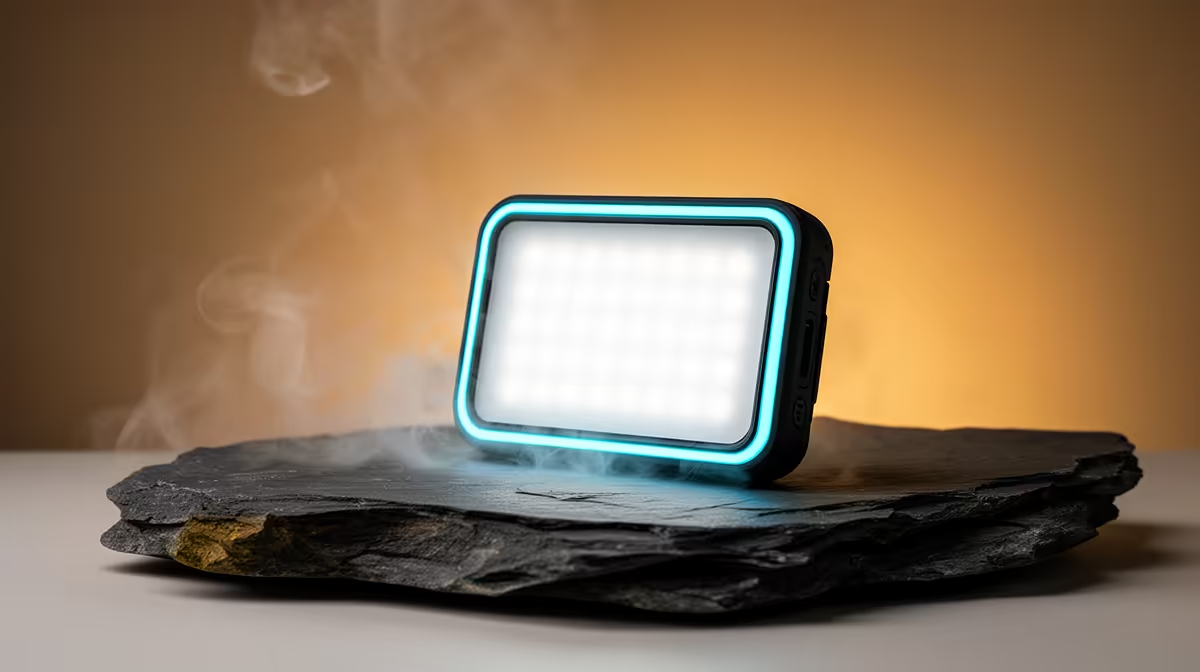
Spend the budget on one compact bi-colour battery LED panel as your key light and use a white wall or a sheet of A4 card as free fill. A palm-sized 2000mAh panel on a desk clamp or clip mount handles a standard talking-head vlog shot with budget to spare.
💰 Where the Budget Should Actually Go
The R1,000 ceiling forces a decision that most starter guides try to avoid: you can have one good light or two bad ones. The one-good-light route wins every time for vlogging because a single softened key light with natural fill looks far better than two harsh bare panels fighting each other.
A compact bi-colour battery LED, priced between R400 and R600, anchors the entire setup. Look for one with at least 2000mAh built-in capacity and Kelvin adjustment between roughly 3200K and 6500K. That adjustment range is the feature that makes a budget panel useful across different rooms and times of day. A fixed-temperature cheaper panel saves R50 upfront and costs you far more in unusable footage when your room's ambient light does not match.
What the Remaining Budget Buys
After the panel, you have R400 to R600 left. A desk clamp or clip mount to hold the light costs around R100 to R200 and frees the panel from sitting on a surface where it cannot be angled properly. A compact light diffuser, either a silicone dome designed for the panel or a sheet of white fabric stretched across a small frame, runs another R100 to R150 and is the single best investment for improving how skin looks on camera.
The diffuser is worth prioritising over a stand. A light diffused at 45 degrees on a clamp reads cleaner than an undiffused panel on a proper tripod stand. Soft light hides skin texture, reduces harsh shadows, and makes the overall image look more expensive than it cost.
🔧 Setting Up the One-Light Look
Position the battery panel roughly 45 degrees from front-on and a little higher than your eyes, angled down. This creates a natural-looking shadow that falls on one side of the face, which the eye reads as three-dimensional rather than flat. The distance that works for most compact panels is about 50 to 80cm, close enough to be bright but far enough to spread across the face.
Set the Kelvin to match your room. In a daytime setup near a window, 5000K to 5600K avoids a colour clash with the incoming natural light. In an evening session with warm indoor lights, dial back toward 3200K to 3500K. A mismatch of more than 1000K between your panel and your ambient light creates a split-tone look that is difficult to correct later without dedicated editing software.
Getting Free Fill From the Room
The shadow side of your face will be darker than the lit side. For vlogging this looks natural. To soften that shadow, position yourself 50 to 80cm from a white wall and let the key light bounce off it. The spill is soft, directional, and free.
A sheet of A4 white card propped on the desk does the same job in a tighter space. Aim for a roughly 2:1 ratio between the lit and shadow side for natural depth without heavy contrast.
⚡ Battery Life and Session Planning
A 2000mAh built-in cell at half brightness typically runs around two hours. For most vloggers recording in short takes with pauses between clips, that is enough for a full session without recharging mid-shoot. The half-brightness caveat matters: running any compact LED at full power drops runtime significantly and rarely improves the footage because you are usually too close for full output to be useful.
Pro Tip ⚡
Charge the battery panel overnight before any shoot, not for an hour beforehand. A full cell starts at rated brightness, which means your white balance and exposure settings stay consistent from the first clip to the last. A partially charged battery can drift in output as it depletes and introduce subtle colour shifts across a session.
Keeping the panel at 50 to 60 percent output also keeps the diffuser cooler, which matters for silicone domes that can discolour at sustained high heat.
Frequently Asked Questions
How many lights do I genuinely need for a R1,000 vlogging setup?
One is enough. A single compact battery LED as a key light, combined with reflected spill from a white wall or a piece of A4 card on the shadow side, produces a clean talking-head image. Spending R1,000 on one good diffused panel produces better results than splitting the same budget across two cheaper, undiffused ones.
How long will a 2000mAh battery LED last per session?
At half power, around two hours, which covers most vlog sessions broken into short takes. Full output cuts runtime considerably and rarely improves the shot. A full overnight charge is more useful than buying a higher-capacity panel at the cost of size and budget.
What free technique replaces a second fill light?
A white wall 50 to 80cm to the side bounces key spill onto the shadow side at no cost. A sheet of A4 white card on the desk works in tighter spaces. Both are naturally soft and reduce facial contrast without another cable or battery.
Should I prioritise a diffuser or a stand with leftover budget?
A diffuser first. Soft light improves skin tone and makes a budget panel look more expensive than it cost. A desk clamp holds the light well enough for most setups; a full floor stand is rarely necessary unless you are shooting standing video.
Which Kelvin setting suits a typical South African home vlog setup?
Around 5000K to 5600K for daytime setups near windows, where the ambient light is cool and bright. In an evening session under warm indoor LEDs or downlights, dial back toward 3200K to 3500K to match the room. A bi-colour panel lets you shift between these without buying separate lights.
Ready to build a clean vlogging light for under R1,000?
Browse the compact battery LED range for South African creators and find a bi-colour panel that fits your desk, your bag, and your budget.