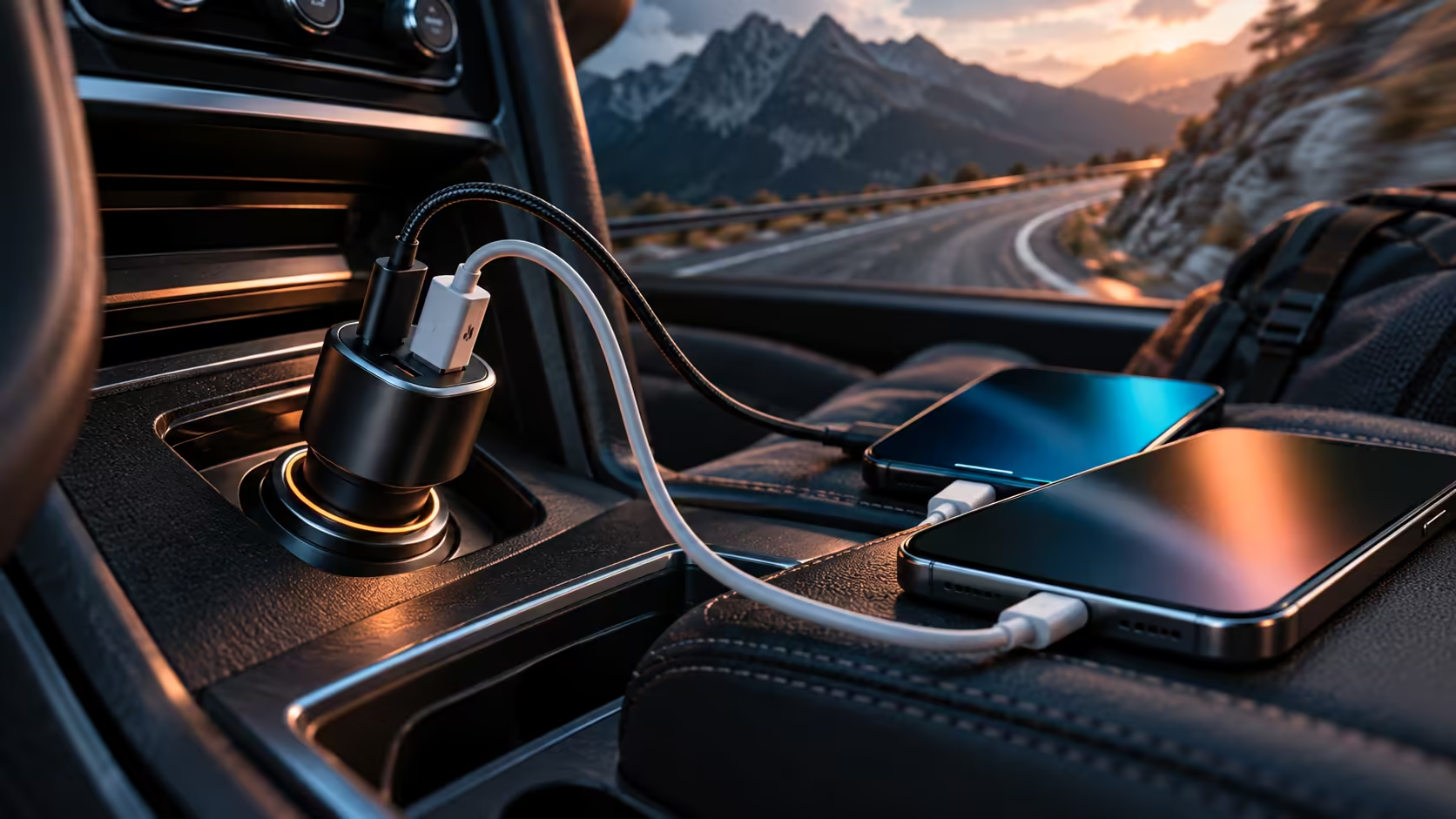
A checklist for a compact dual-port car charger only works if it checks the things that actually vary between models, not the things every charger claims regardless of quality. Here is the short list worth actually reading a listing carefully for.
Quick Answer
Look for genuine Power Delivery on the main port, ideally with PPS, a useful second output rather than a token one, and named safety circuitry rather than a vague safety claim. On Anker's two-port unit that reads 30W USB-C with PPS, 22.5W USB-A, PowerIQ 3.0 for device detection and MultiProtect stated to guard against over-voltage, over-current and overheating, at R349 with a local warranty. A charger missing any one of those items is usually cheaper for a specific reason, not by accident.
⚡ Protocol first: PD and, ideally, PPS
The single most consequential thing to check is whether the charger runs genuine USB Power Delivery, negotiating across 5V, 9V, 15V or 20V, not just a wattage figure printed in large type. A fixed-voltage charger can print an impressive-looking number while delivering nowhere near it to any modern phone, since the phone never gets the chance to negotiate for more.
PPS on top of standard PD is the next thing worth checking, since it is the difference between a phone running warm through a fast charge and one running noticeably cooler at the same wattage, particularly on a longer drive.
🔌 A second port worth actually using
Not every second port on a compact charger is equally useful. Check the stated wattage on the secondary output specifically, since some designs add a second port mostly for show, capped low enough that it barely improves on an old-style socket. A genuinely useful second output, 22.5W here, comfortably covers most phones' own fast-charging ceiling over USB-A rather than merely being present for the sake of a bullet point.
Also worth checking, though rarely stated clearly, is the combined figure both ports settle at when used together, since that number tells you more about real household use than either solo figure does on its own.
🛡️ Protections named, not implied
A listing that lists over-voltage, over-current and thermal protection by name is telling you something concrete about how the charger is built. A listing that only says "safe charging" without naming what it actually protects against is telling you nothing verifiable, and the difference matters more in a car's rougher 12V DC environment than it would for a device plugged into a steady 230V AC wall socket.
💰 Price against the full feature list, not price alone
Comparing chargers purely on price without checking whether each one actually offers the same protocol, second-port wattage and named protections is comparing different products as if they were interchangeable. Two nearly identically priced units can turn out to differ meaningfully once you actually read what each one states about itself, rather than trusting a similar sticker price to imply similar capability underneath.
A cable rated for the charger's stated current rounds out the purchase, since none of the above matters if the lead carrying the current cannot keep up with what the ports negotiate. Small accessories bought alongside benefit from the same scrutiny of their own listings.
Frequently Asked Questions
Is a higher wattage number always better?
Only if it is backed by genuine Power Delivery. A high wattage figure on a fixed-voltage charger is largely theoretical, since a phone can never negotiate up to claim it.
Does a cheaper charger always mean worse protection?
Not always, but a listing that avoids naming its specific protections is worth more scrutiny than one that states them plainly, regardless of price.
Is PowerIQ-style detection worth checking for specifically?
It matters if the charger will regularly serve a mix of device types, phones, older accessories, since it is what lets one charger handle several protocols correctly.
Should I buy based on the second port's wattage or the first?
Both matter, but check whether the second port's stated wattage is genuinely useful for a second phone rather than a token figure that undersells what a passenger's device could otherwise use.
Does the brand name on a charger matter as much as what it states about itself?
A track record helps, since it usually correlates with the protection circuitry actually working as described, but the listed details, checked line by line, remain the more reliable evidence for any single purchase.
Is it worth buying the exact same charger for every car in the household?
If every vehicle has the same style of socket, which is nearly always true locally, standardising on one model simplifies replacements and means a spare cable or charger works across every car without a second thought.
Should the checklist change for a car used mostly for short local trips?
Not much. Protocol, second-port usefulness and named protections all matter regardless of trip length, though the practical benefit of PPS specifically is felt less on consistently short drives.
Ready to compare chargers on what actually matters?
Have a look at the car charger range and read the full listing before deciding on price alone.