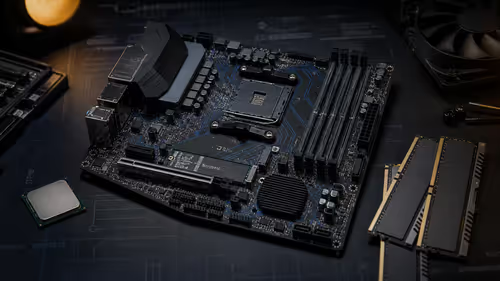
A Ryzen 9 9950X3D build that keeps crashing in SA conditions has a weak link the 16-core chip exposes, usually in memory, drivers, or power. Methodically isolate each rather than blaming the CPU.
Quick Answer
Crashing on a Ryzen 9 9950X3D build usually traces to an unstable EXPO profile, a GPU driver fault, or insufficient power for the high-core-count chip. Re-run memory training or drop one speed grade, clean-install the GPU driver, and confirm a quality PSU with headroom. Stable DDR5-6000 plus a current driver fixes most cases.
Stabilise memory on a 16-core chip
The 9950X3D works best with DDR5-6000, and a marginal EXPO profile crashes under heavy multi-core load. Clear CMOS, re-run training, and test; step down one speed grade or loosen timings if crashes continue. Run MemTest86 for four passes for a clean baseline, since memory faults on a high-core chip surface under exactly the workloads that stress it most.
Confirm power and clean the driver
A 16-core CPU plus a high-end GPU draws serious power, so confirm a quality PSU with real headroom and seated EPS and PCIe cables. Then clean-install the GPU driver to clear corrupt files. Crashes under all-core productivity loads point more at CPU power and cooling, while crashes under gaming load point more at the GPU side.
FAQ
Does the 9950X3D need more power than a smaller chip?
Under all-core loads it draws more, so a quality PSU with headroom matters. Confirm the EPS cable is seated and the unit exceeds your combined draw.
Why test memory for a CPU crash?
Marginal DDR5 crashes under the heavy loads a 16-core chip generates. A MemTest86 pass confirms whether memory is the cause before you replace anything.
Do crashes differ by workload?
Yes. All-core productivity crashes point at CPU power or cooling; gaming-load crashes point at the GPU. Note when crashes happen to narrow the cause.
Pro Tip
Re-run EXPO training and confirm PSU headroom, then clean-install the driver; that sequence resolves most Ryzen 9 9950X3D crashing in SA builds.