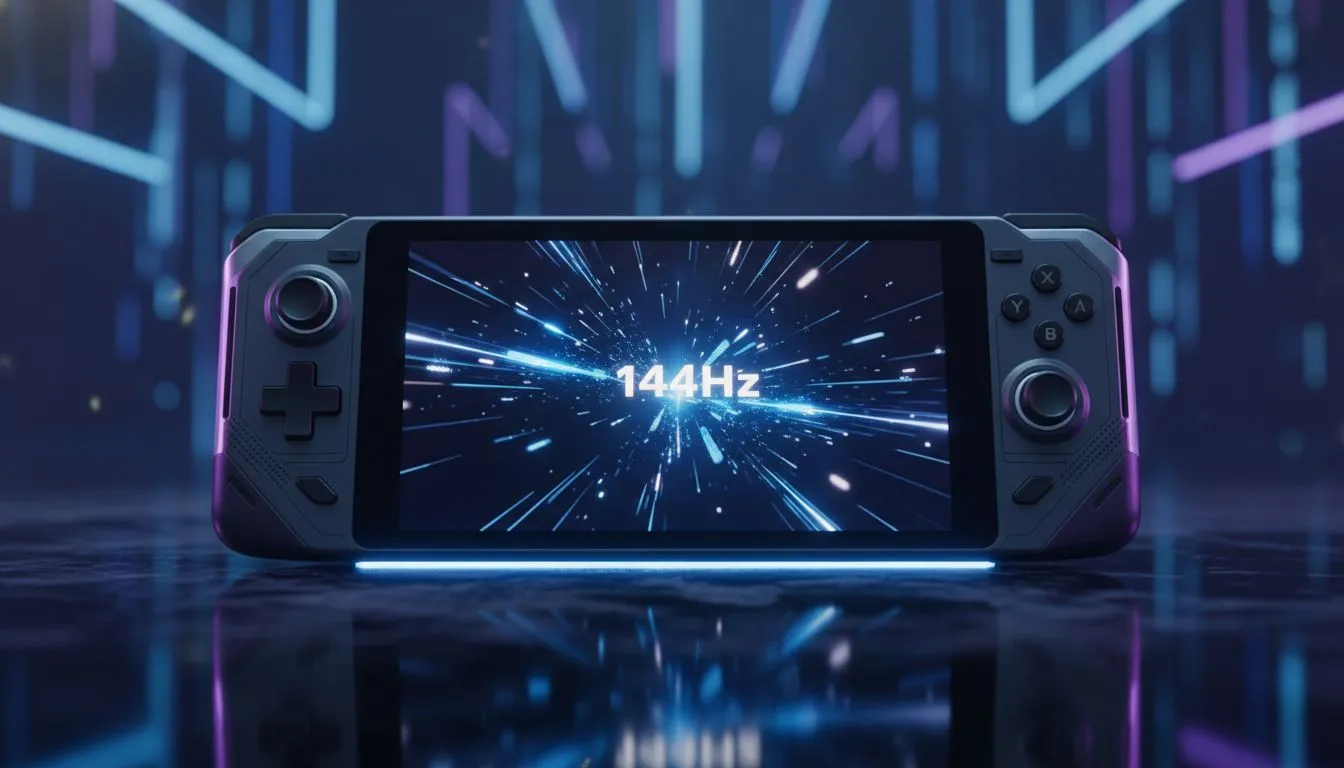
Remember when 60Hz was the gold standard? Those days are gone. If you’re tired of motion blur ruining your kill streaks in Apex Legends, it’s time to look at 144Hz handheld gaming PCs. Whether you’re chilling in Cape Town or commuting in Joburg, high refresh rate screens are redefining portable play. Let’s break down why high FPS matters in the palm of your hand. 🚀
The Refresh Rate Revolution Explained
For years, portable gaming meant compromising on performance. You played for the story, not the competitive edge. However, the evolution of handheld gaming consoles has bridged the gap between desktop power and pocket portability.
But what does 144Hz actually mean for you? Simply put, the screen refreshes the image 144 times per second. This results in significantly smoother motion and, more importantly, reduced input lag. In fast-paced shooters or racing titles, that split-second difference allows you to track targets with precision that a standard 60Hz panel just can't match.
Why Speed Matters on Small Screens
You might wonder if high FPS is noticeable on a 7-inch or 8-inch display. The answer is a resounding yes. Because you hold the device closer to your face than a typical monitor, screen tearing and stuttering are actually more obvious.
Leading manufacturers have recognised this. The ASUS ROG Ally series pushed boundaries by introducing 120Hz VRR (Variable Refresh Rate) screens, ensuring that even if your frame rate dips, the gameplay remains butter-smooth without tearing. This fluidity makes the interface feel snappier and the gameplay more immersive.
Screen Real Estate and Immersion
High refresh rates often come paired with better resolutions and larger panels. If you prefer a larger canvas for your games, the massive screen real estate found on Lenovo Legion Go units offers a stunning 144Hz refresh rate.
This creates a "window" effect where you stop looking at a screen and start looking into the game world. For South African gamers who travel or deal with power outages, having a high-fidelity experience that runs off a battery is invaluable.
Battery vs. Smoothness ⚡
High refresh rates can drain your battery faster. When playing slower-paced RPGs or indie titles, lock your screen to 60Hz or use the built-in command centre software to limit FPS. You’ll squeeze out an extra 30–45 minutes of playtime during load shedding.
The Ergonomics of Performance
It isn't just about the glass; it's about the engine driving it. To hit 120FPS or 144FPS, the internal components need to be robust. We are seeing impressive thermal management and silicon innovations from MSI's Claw lineup, which utilises Intel Core Ultra processors to drive those high frame rates without turning the device into a hotplate.
When buying, remember that a 144Hz screen is only as good as the GPU driving it. Look for devices that support upscaling technologies like FSR (FidelityFX Super Resolution) or XeSS, which help boost frame rates to match your screen's capabilities without sacrificing too much visual quality. ✨
Verdict: Is 144Hz Necessary?
If you play turn-based strategy games, 60Hz is fine. But for anyone playing Call of Duty, Fortnite, or Rocket League, the jump to high refresh rates is hard to come back from. It offers a competitive advantage and a level of visual comfort that reduces eye strain during long sessions.
Level Up Your Portable Play
Don't let low frame rates hold you back. Experience the fluidity and precision of the latest handheld tech. Shop our full range of Handheld Gaming PCs and take desktop-class performance wherever you go.