


PCIe 5.0 vs PCIe 4.0 for Video editing in 4k in SA
PCIe 5.0 vs PCIe 4.0 for video editing in 4k is mainly about fit, features, compatibility, cost, and upgrade path, not one automatic winner. SA buyers should match the choice to the setup.
Read moreA head-to-head look at Wi-Fi 7: real-world performance, ZAR pricing and which option delivers better value for SA builders. The clear answer — no fluff.
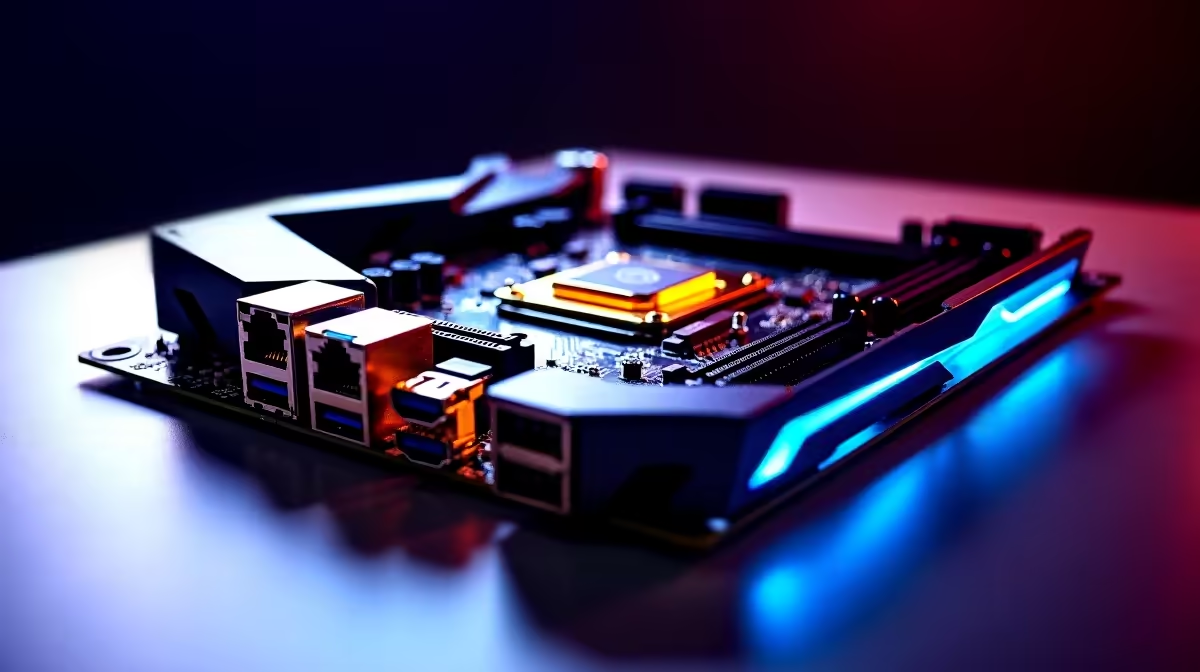
Lag is the ultimate enemy of any South African gamer. Holding an angle in Counter-Strike 2 requires perfect ping. Downloading a massive update on your fibre line demands speed. Upgrading your rig brings up a serious debate... 2.5Gb LAN vs Wi-Fi 7 on a motherboard. Which connection actually delivers the best performance in a local home setup? Let us dive in.
When comparing 2.5Gb LAN vs Wi-Fi 7 on a motherboard, wired connections remain the gold standard. A physical Ethernet cable guarantees zero packet loss. It provides the absolute lowest ping possible. If you play ranked lobbies during load shedding on a UPS, stability is everything. You will find that most modern options feature this tech. When you browse the latest motherboards, 2.5 Gigabit ports come standard. This gives you massive headroom for local file transfers. Moving large video files across your home network becomes incredibly fast. It also future-proofs your PC for ultra-fast fibre upgrades.
Wi-Fi 7 is completely rewriting the rules of wireless connectivity. It uses ultra-wide 320MHz channels to deliver incredible speeds. These speeds easily rival physical cables. If your router sits in the lounge but your PC is elsewhere, Wi-Fi 7 is brilliant. It dramatically reduces latency by connecting to multiple bands simultaneously. You can easily find this tech on premium ASUS Intel motherboards. AMD fans are certainly not left out either. Top-tier ASUS AMD motherboards also feature Wi-Fi 7. This keeps your setup cable-free and incredibly fast.
If you choose the wired route, ensure you buy a Cat6 Ethernet cable. Older Cat5e cables handle 2.5Gbps over short distances... but Cat6 guarantees maximum speed and shielding against interference.
Local internet infrastructure has improved massively. Many South African homes now have access to gigabit fibre lines. Choosing between 2.5Gb LAN vs Wi-Fi 7 on a motherboard ensures you are ready for future speed boosts. Even if you only have a 100Mbps line right now, local network speeds matter. Streaming gameplay to a smart TV or moving files to a local server requires serious bandwidth. High-end networking stops local bottlenecks from ruining your experience.
So... which connection should you use at home? If your PC sits right next to your router, plug in that cable. It costs nothing extra and delivers rock-solid reliability. However, running cables might mean drilling holes through your walls. In that case, Wi-Fi 7 is the perfect alternative.
Remember that your network is only one part of the equation. To truly eliminate stuttering, your system needs fast hardware. Upgrading your PC memory kits ensures your processor handles network data instantly. Do you want a complete rig that balances elite networking with raw power? Checking out the best gaming PC deals can save you thousands of ZAR. A balanced system means your high-speed internet never goes to waste.
Ready to Upgrade Your Connection? Whether you demand the wired perfection of 2.5Gb LAN or the wireless magic of Wi-Fi 7, your motherboard is the heart of your system. Explore our massive range of PC components and find the perfect foundation to conquer your games.
Wi-Fi 7 is available at Evetech.co.za with local SA warranty, Rand pricing and nationwide delivery. Stock and pricing is updated in real time on the product page.
It depends on your workload and budget. We break down the key performance differences, SA pricing gap and the scenarios where each one is the smarter buy.
Real-world gaming performance varies by title and settings. The article covers head-to-head FPS benchmarks and the resolutions where the gap actually shows up.
We compare current Rand pricing from trusted SA retailers and show which option delivers more performance per Rand for your build tier.
Each option has clear wins and compromises covered in the article — from power draw and thermals to platform cost, upgrade path and feature set.
PCIe 5.0 vs PCIe 4.0 for video editing in 4k is mainly about fit, features, compatibility, cost, and upgrade path, not one automatic winner. SA buyers should match the choice to the setup.
Read more
Wi-Fi 7 vs Wi-Fi 6e for competitive esports comes down to router support, latency goals, device compatibility, and coverage. SA buyers should match the choice to the real network setup.
Read more
ATX 3.1 vs ATX 3.0 for mMO and live-service games buyers - what changes is mostly about compatibility, budget, upgrade path, and setup fit. SA buyers should check device support and real needs before expecting a clear win from either option.
Read more
LGA 1851 vs LGA 1700 can affect Twitch and YouTube streaming when gaming and encoding share CPU resources. For SA creators, the real-world difference depends on encoder choice, memory support, motherboard cost, thermals, and upgrade plans.
Read more
X870E vs X670E for aaa single-player gaming is mainly about fit, features, compatibility, cost, and upgrade path, not one automatic winner. SA buyers should match the choice to the setup.
Read more
Hall Effect switches vs Mechanical switches for mMO and live-service games is mostly about compatibility, budget, upgrade path, and setup fit. SA buyers should check device support and real needs before expecting a clear win from either option.
Read more
A fake 113GB GTA VI ISO reportedly used empty padding around a small malware payload. SA gamers should delete unofficial builds, keep Windows security active and wait for official channels.
Wi-Fi 6E vs Wi-Fi 6 matters for 4K video editing when files move across a network. The real-world difference between Wi-Fi 6E and Wi-Fi 6 for video editing in 4K depends on NAS access, cloud uploads, router range, and SA creator workflows.

The difference between PCIe 5.0 and PCIe 4.0 for SA gamers is mostly bandwidth headroom. Compare GPU slot needs, NVMe speed, motherboard support, and upgrade timing before paying extra for a newer platform.

Gaming PC stuck pixel checks in South Africa should confirm the monitor fault first. Use colour tests, screenshot comparison, cable swaps, display menu checks, and clear photos before deciding on support.

Shokz OpenFit Air 2 earbuds weigh 7.2g each and use a redesigned dual-driver open-ear layout. SA buyers should choose them for comfort and awareness, not maximum isolation.

AMD's current driver now lists a Radeon RX 9050 4GB, while product coverage details a narrowed memory system. SA buyers should weigh the low VRAM ceiling against current local Radeon options.

Samsung Display has demonstrated a 16-inch 2.5K OLED laptop panel running at 300Hz. SA buyers should wait for a named notebook, full panel specifications and a local price before planning an upgrade.

Microsoft says some Windows 11 game crashes after recent updates are linked to RGB-related drivers. Affected SA gamers should confirm the update and driver before using the published registry workaround.

Minisforum's M2 Pro pairs Core Ultra X7, Arc B390 graphics and 32GB onboard memory in 1.8 litres. SA buyers should weigh its fixed memory and $1,439 launch offer against local mini PCs.

Smart monitors can add apps and convenience, but they also add privacy settings and unwanted-software risk. SA buyers should audit the operating system before paying for extras.

Lenovo says Legion Go failures linked to BIOS N3CN42WW are not user error. Affected SA owners should stop retrying the update, preserve proof and open a support case.
The ROG Gjallar gaming soundbar is now listed in the US at $599.99. SA buyers should compare its 2.1.2 audio, wireless bass and built-in chat controls with simpler local options.