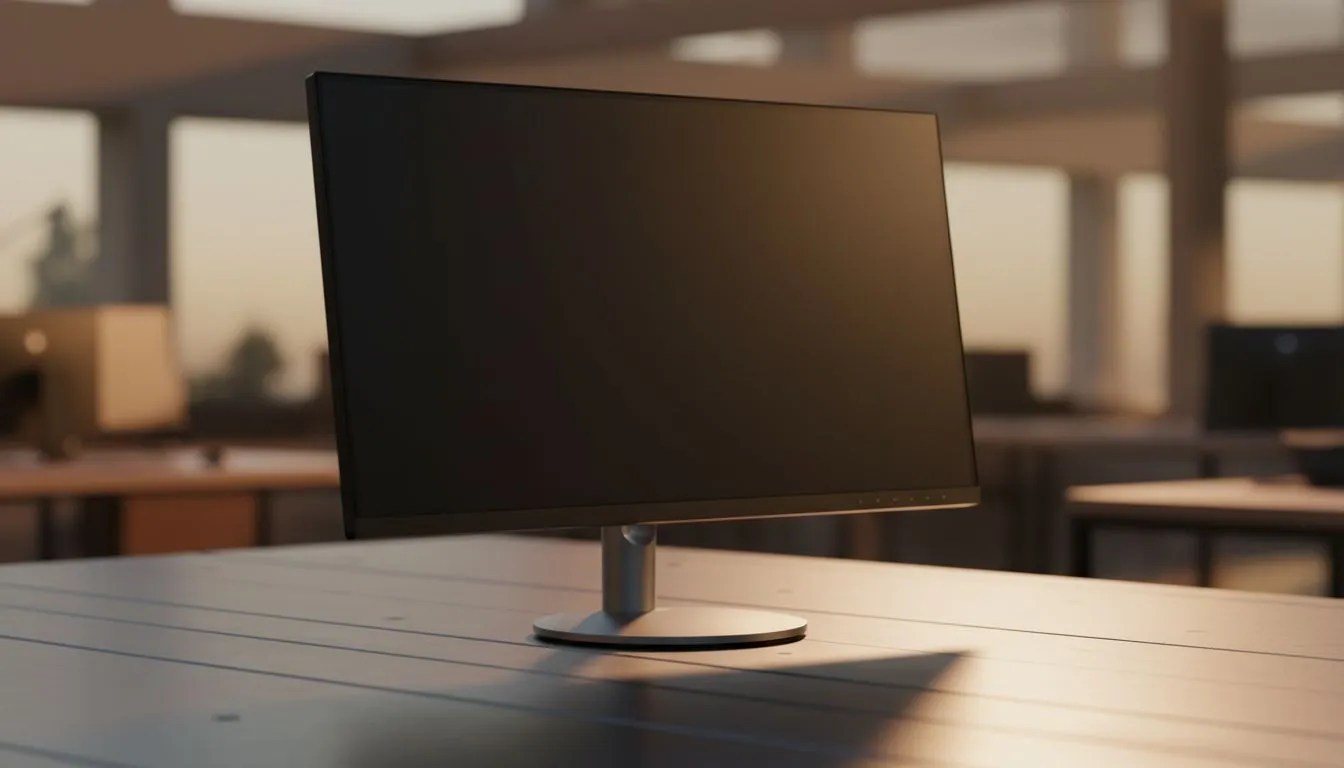
Why the 24-inch monitor for business remains the gold standard
Walk into any corporate office in Sandton or a home studio in Cape Town, and you’ll likely see a 24-inch monitor staring back at you. While massive ultrawides grab the headlines, the humble 24-inch screen remains the backbone of the South African workforce. But in an era of 4K and 32-inch beasts, is the 24-inch monitor for business still the actual standard?
For many, the answer is a resounding yes. The 24-inch form factor offers a "Goldilocks" zone for productivity. It is large enough to display two documents side-by-side without squinting, yet small enough to fit on a standard South African office desk without requiring a complete furniture overhaul. When you browse a comprehensive range of PC monitors, you'll notice that this size remains one of the most populated categories for a reason.
Ergonomics and Desk Real Estate 🔧
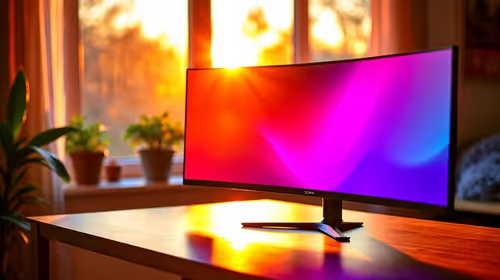
Space is a premium, especially for those working from home in smaller apartments. A 24-inch display provides ample room for multitasking without dominating your visual field. If you prefer a classic look, traditional flat screen monitors provide a distortion-free viewing experience that is perfect for spreadsheets and data entry. However, some users are moving toward curved monitor options even at this size to reduce eye strain by keeping the edges of the screen at a more consistent distance from the eyes.
Productivity Pro Tip ⚡
If you find yourself juggling multiple Excel sheets, consider a dual 24-inch setup. It often provides more screen real estate than a single 32-inch 4K display at a much lower price point in ZAR. Use a dual-monitor arm to clear up desk space and keep your screens at eye level to avoid neck strain.
Technical Specs That Matter for Professionals
When selecting a 24-inch monitor for business, the panel type is arguably the most important factor. For professional work where colour accuracy and wide viewing angles are non-negotiable, IPS panel technology is the industry favourite. It ensures that your presentation looks the same to your colleague standing next to you as it does to you... avoiding that annoying "wash out" effect seen on older screens.
Smooth Performance for Hybrid Work ⚡
Modern business monitors are increasingly borrowing features from the gaming world to improve the user experience. Even if you aren't hitting the latest esports titles, having Adaptive Sync technology can reduce screen tearing and stuttering during video playback or high-speed scrolling through long PDF documents.
For those using laptops with dedicated GPUs, you might look for AMD FreeSync support or ensure the display is NVIDIA G-Sync compatible. These features help smooth out the visual experience... making long hours in front of the screen much more comfortable on the eyes.
Value and Longevity in South Africa 🇿🇦
Budget is always a concern for local businesses. The cost-to-performance ratio of a 24-inch screen is hard to beat. You can often find high-quality 1080p displays for under R3,000, allowing companies to kit out entire departments without breaking the bank. Because the 1080p resolution is native to this size, text remains crisp and clear without needing to mess with Windows scaling settings.
Is it still the standard? For the majority of office tasks... from accounting to general administration... the 24-inch monitor for business is likely to remain the king of the cubicle for years to come. It strikes the perfect balance between price, performance, and physical footprint. 🚀
Ready to Upgrade Your Workspace? Whether you need a crisp IPS display for design or a reliable flat-screen for the office, we have the best deals in South Africa. Explore our massive range of monitor specials and find the perfect screen to boost your productivity.