Quick Answer
For gaming PCs running a Ryzen 7 9800X3D or Core Ultra 7 265K, a 360mm AIO radiator typically delivers 5 to 10 degrees Celsius lower CPU temperatures than an equivalent-budget high-airflow fan layout with a quality air cooler. For more budget-conscious builds, a high-airflow mesh case with a large air cooler often delivers better value per rand.
360mm Radiator Cooling: Performance and Requirements 💧
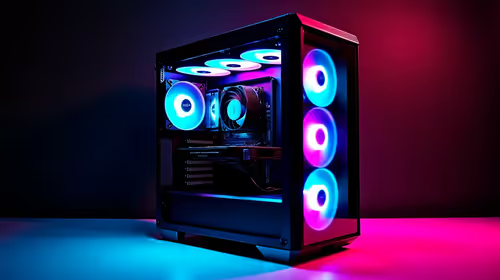
A 360mm all-in-one liquid cooler uses three 120mm fans and a full-length aluminium or copper radiator to dissipate CPU heat through the liquid loop. Under sustained workloads like Cinebench or Blender, a 360mm AIO keeps processors like the Ryzen 9 9950X below 80 degrees Celsius where an air cooler begins to throttle. The requirements are: a case with a 360mm top or front mount, clearance for the AIO tubing to reach the CPU socket, and two available fan headers or a splitter. In South Africa, quality 360mm AIOs from Corsair, DeepCool, and Lian Li range from R2,200 to R5,500. The pump also adds a noise floor that some builders dislike during silent sessions.
High-Airflow Fan Layouts: Cases and Coolers That Compete 🌬️
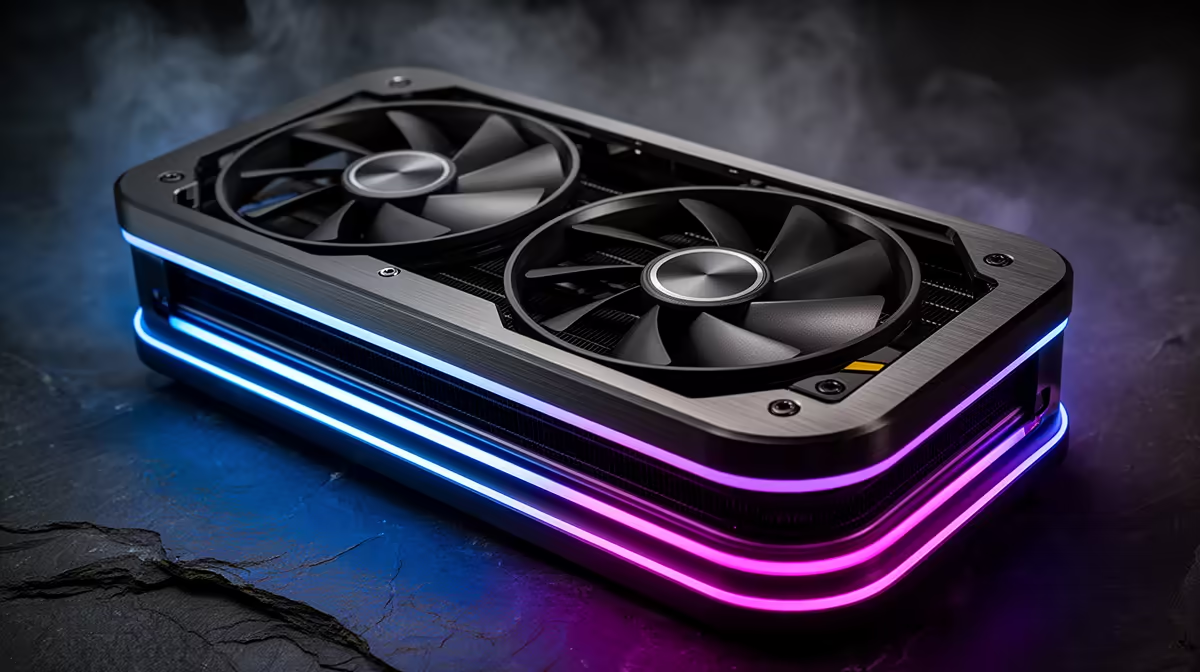
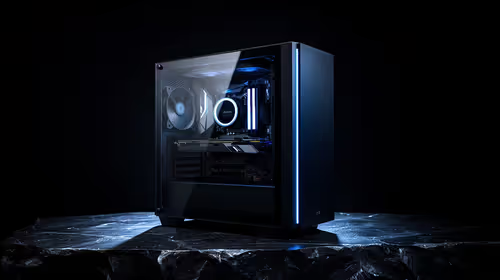
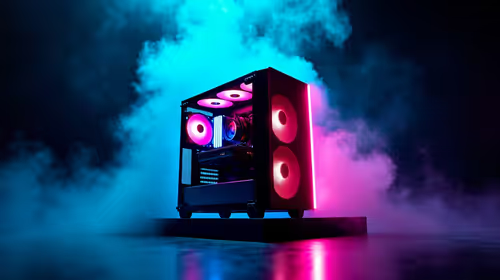
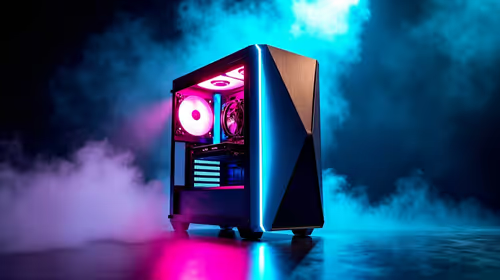
A high-airflow build pairs a mesh-front case with five to seven quality 120mm or 140mm fans and a dual-tower air cooler like the Noctua NH-D15 or be quiet! Dark Rock Pro 5. The NH-D15 is rated for 250W TDP and keeps even overclocked Ryzen 9 chips below 85 degrees Celsius at 1,500 RPM, nearly silently. The case itself (R1,800 to R3,000 for a quality mesh mid-tower) contributes significantly to this: a mesh front with unrestricted airflow can match a 240mm AIO on identical CPUs in side-by-side tests. The high-airflow approach has no pump failure risk, no tubing leak risk, and no maintenance beyond annual dust cleaning.
Which Makes More Sense for Your SA Build 💰
For a gaming-primary build at R15,000 to R25,000 featuring a mid-range CPU that does not run sustained workloads, a mesh case with a quality dual-tower air cooler at R800 to R1,800 is the better value choice. The savings versus a 360mm AIO (R1,500 to R3,000 difference) can go toward a GPU upgrade. For a content creation or streaming build at R30,000 or more where the CPU runs sustained renders while you game, the 360mm AIO's temperature advantage during peak loads justifies the investment.
Fan Layout Matters as Much as Fan Quality ⚡
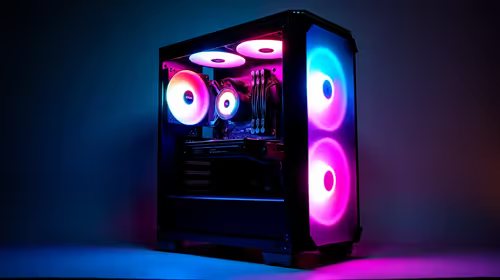
front intakes exhausting through one rear and two top positions is more effective than six fans in a poor arrangement. Map your airflow path before buying fans: cool air enters front, flows over CPU and GPU, exits rear and top. Matching a quality fan layout to a mesh case can deliver AIO-competitive results at significantly lower cost.
FAQ
Will a 360mm AIO void my CPU warranty if it leaks?
CPU warranties in South Africa cover manufacturing defects, not liquid damage. A cooler leak that damages a CPU is typically not covered. Use a cooler from a reputable brand with a multi-year warranty and check that local warranty claims are supported.
Is air cooling still relevant for high-end CPUs in 2026?
Absolutely. The Noctua NH-D15G2 and Thermalright Peerless Assassin 120 SE are benchmarked against 360mm AIOs and win or match at lower noise levels for standard gaming loads. Air cooling is not obsolete; it is the most reliable thermal solution available.
Does ambient temperature in SA affect the AIO vs air decision?
Yes. In Johannesburg summer with a 32-degree ambient room, both solutions see elevated temperatures proportionally. An AIO does not provide a relative advantage over air cooling at high ambient temperatures; both scale linearly with room temperature.
Not sure whether to go AIO or air for your build?
Evetech stocks 360mm AIO coolers, dual-tower air coolers, and mesh cases for every budget, all available with fast delivery or in-store collection across South Africa.