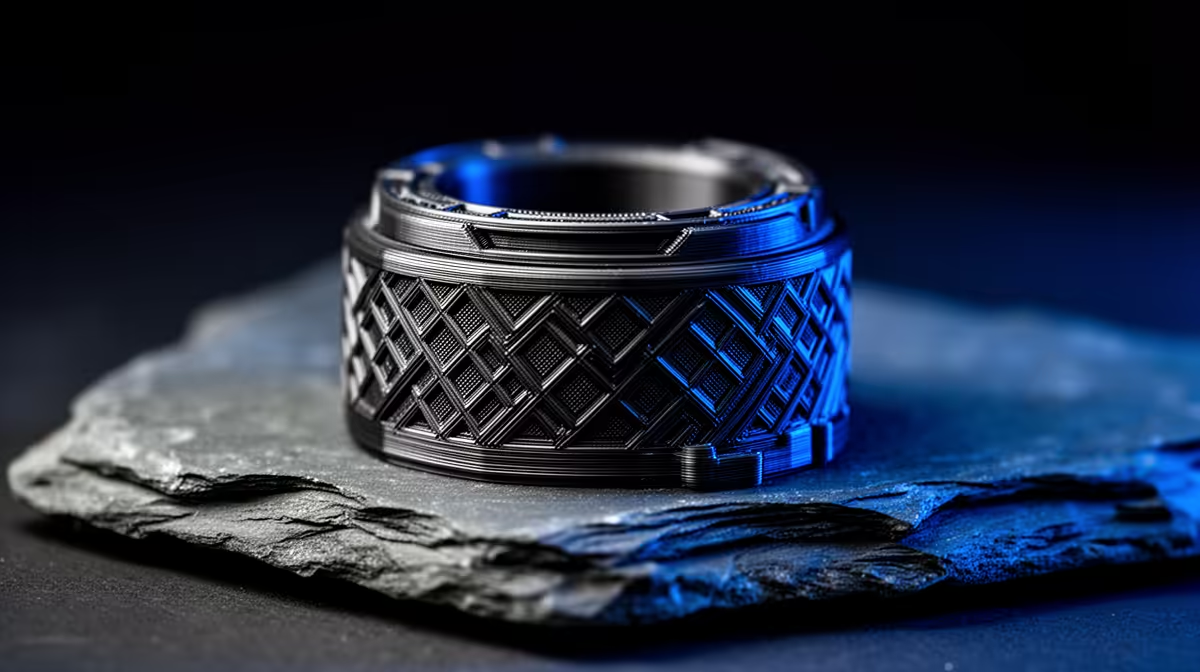
Two options around 405nm resin standard 3D printer can look close until prototype runs exposes the weaker fit. Start with 405nm resin compatibility, then ask which route keeps more predictable curing easier.
Quick Answer
For 405nm Resin versus Standard Resin Types, shortlist around 405nm resin compatibility, standard filament diameter and diameter tolerance check. In prototype runs, those details shape more predictable curing and reduce the chance of layer shift.
Compare 405nm Resin versus Standard Resin Types In Real Use
Treat 405nm Resin versus Standard Resin Types as part of a setup rather than a loose accessory. 405nm resin compatibility tells you whether the headline feature can help, while standard filament diameter shows how well it fits the main device. In prototype runs, diameter tolerance check matters because small friction becomes daily irritation. A buyer who wants more predictable curing should keep the shortlist tight until these checks are clear.
Trade-Offs Buyers Should Not Ignore For Prototype Runs For 405nm Resin versus Standard Resin Types
Do not separate comfort from compatibility when judging 405nm Resin versus Standard Resin Types. A product can list 405nm resin compatibility and still feel wrong if standard filament diameter is awkward on your device or if diameter tolerance check adds friction to long prints. If layer shift is the concern, check diameter tolerance check on 405nm resin standard 3D printer in the storage pass. The useful sign for 405nm resin standard 3D printer is repeatable more predictable curing after the signal pass.
Which Choice Fits Long-Session Comfort For 405nm Resin versus Standard Resin Types
Move up to a stronger 3D printer only when 405nm Resin versus Standard Resin Types has a problem the basic option cannot solve. That might be 405nm resin compatibility for timing, standard filament diameter for compatibility or diameter tolerance check for daily handling. If prototype runs already feels smooth, the sensible choice may be a simpler model with clearer support. Avoid paying attention to a feature that leaves layer shift untouched.
Compare 405nm Resin versus Standard Resin Types on your main device or desk before choosing. Diameter tolerance check should support 405nm Resin Standard in prototype runs.
FAQ
What should I confirm first for 405nm Resin versus Standard Resin Types during Prototype Runs in Travel use?
Use standard filament diameter as the day-one pass tie-breaker for 405nm resin standard 3D printer. That gives 405nm Resin versus Standard Resin Types a practical test before style.
When is 405nm Resin versus Standard Resin Types worth stepping up for Long-session Comfort in Travel use?
Step up when the stronger option improves more predictable curing or reduces layer shift. The useful sign for 405nm resin standard 3D printer is repeatable more predictable curing after the cable pass.
What is the easiest mistake with 405nm Resin versus Standard Resin Types in Long Prints for Travel buyers?
Use standard filament diameter as the upgrade pass tie-breaker for 405nm resin standard 3D printer. 405nm Resin versus Standard Resin Types should fit long prints as well as the main use case.