512-Bit vs 256-Bit Memory Bus: GPU Bandwidth Explained (and why you should care in SA)
If you’ve ever watched your FPS dip right when a match gets chaotic, you’re not imagining things… the GPU has to move data fast enough to keep frames smooth. In South Africa, where every rand counts, it helps to understand specs that actually affect performance.
Today we’re breaking down 512-Bit vs 256-Bit Memory Bus: GPU Bandwidth Explained in plain language. We’ll translate “bus width” into real-world meaning, show you what to check before you buy, and point you to the right Evetech GPU options for your build. 🚀
Understanding the GPU Memory Bus (512-bit vs 256-bit)
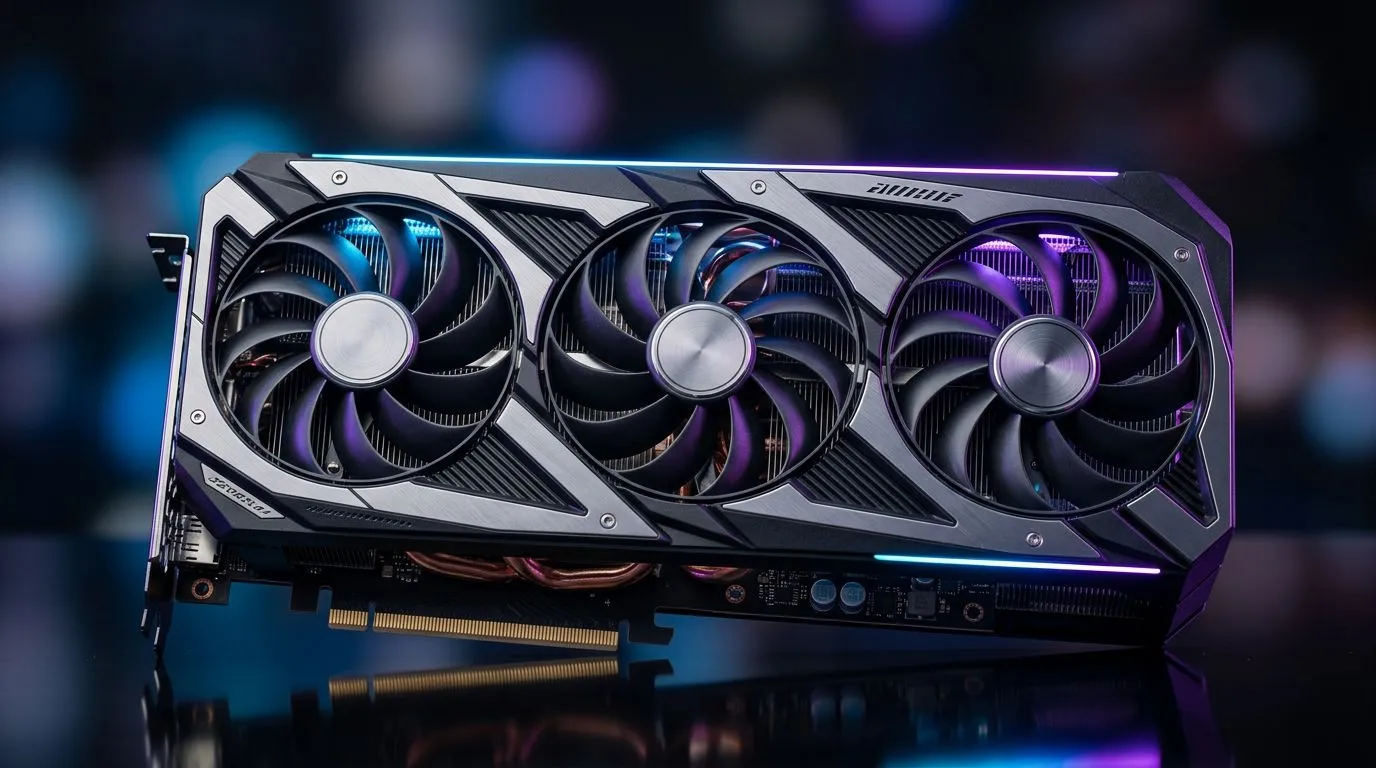
A GPU “memory bus” is the pathway between the GPU and its VRAM. Think of it like a delivery road. A wider road can move more data per second, assuming the VRAM speed and other parts of the pipeline keep up.
That’s why people compare:
- 256-bit buses: narrower “roads”
- 512-bit buses: wider “roads”
But here’s the key… bandwidth is not just bus width. Real bandwidth depends on multiple factors:
- Memory bus width
- VRAM type and speed
- Effective transfer rate (how many transfers happen per clock)
- Plus the GPU’s overall architecture and how efficiently it uses that bandwidth
So, “512-bit is always faster” is not automatically true. It can be faster, but only when the rest of the card and workload can take advantage of that extra capacity.
512-Bit vs 256-Bit Memory Bus: GPU Bandwidth Explained with real examples
A practical way to think about bandwidth is this simplified idea:
Bandwidth ≈ (Bus width) × (VRAM speed factor)
In the real world, two cards can show very different behaviour depending on the workload:
- At higher resolutions (especially 1440p and 4K), the GPU needs to fetch more textures and frame data constantly.
- With heavy ray tracing or high texture settings, the demand on memory bandwidth climbs.
- In lighter esports titles with lower texture demands, bandwidth might not be the bottleneck.
That means for many South African gamers, the “bus width” question matters most when:
- you play at ultrawide resolutions,
- you crank texture quality and view distance, or
- you’re planning a card that will last through future games.
What to look for beyond the bus (so you don’t get trapped)
When comparing GPUs, don’t stop at bit width. Also check:
- Memory size (GB): helps with texture swapping and high-res assets
- Memory speed (often listed as a data rate in specs)
- The card’s target tier: some GPUs just perform differently per watt and per architecture
If you want to sanity-check what a specific model is offering, use Evetech listings to compare model-level specs rather than general assumptions.
How to buy smart in 2026: bandwidth vs your actual games 🔧
Let’s bring it back to buying decisions. Suppose you’re choosing between cards where one has a wider memory bus. Ask yourself:
- Are you mostly playing 4K or 1440p?
- Are you using high texture packs or heavy modded games?
- Do you stream while playing?
If yes, bandwidth can become more important because the GPU is constantly pulling assets. If you mostly play competitive shooters at lower settings, you might get better value by prioritising other performance factors like GPU compute, cache behaviour, and raw FPS per rand.
Also remember power and thermals. A card might have strong theoretical bandwidth, but if cooling is poor, performance can throttle during long sessions.
Productivity Pro Tip ✨
If you’re testing a GPU upgrade, run the same benchmark sequence after every driver update and keep settings identical. In-game “auto” settings can silently change texture quality and resolution scaling, which makes memory bandwidth differences look bigger (or smaller) than they really are.
Where to find GPUs that match your needs on Evetech
Ready to move from theory to an actual purchase decision? Here are some solid starting points depending on what you’re targeting:
Explore MSI graphics options in the Evetech listings:
MSI GPUs on Evetech
Looking specifically at Radeon cards for your build goals?
Browse Radeon Graphics Cards
If you want to browse broadly across current GPU models:
Shop Nvidia and ATI graphics cards on Evetech
Prefer GeForce models?
Browse GeForce Graphics Cards
Ready to Find Your Perfect Match?
The Mac vs Windows debate is complex, but for maximum power, choice, and value in South Africa, Windows is hard to beat. Explore our massive range of laptop specials and find the perfect machine to conquer your world.