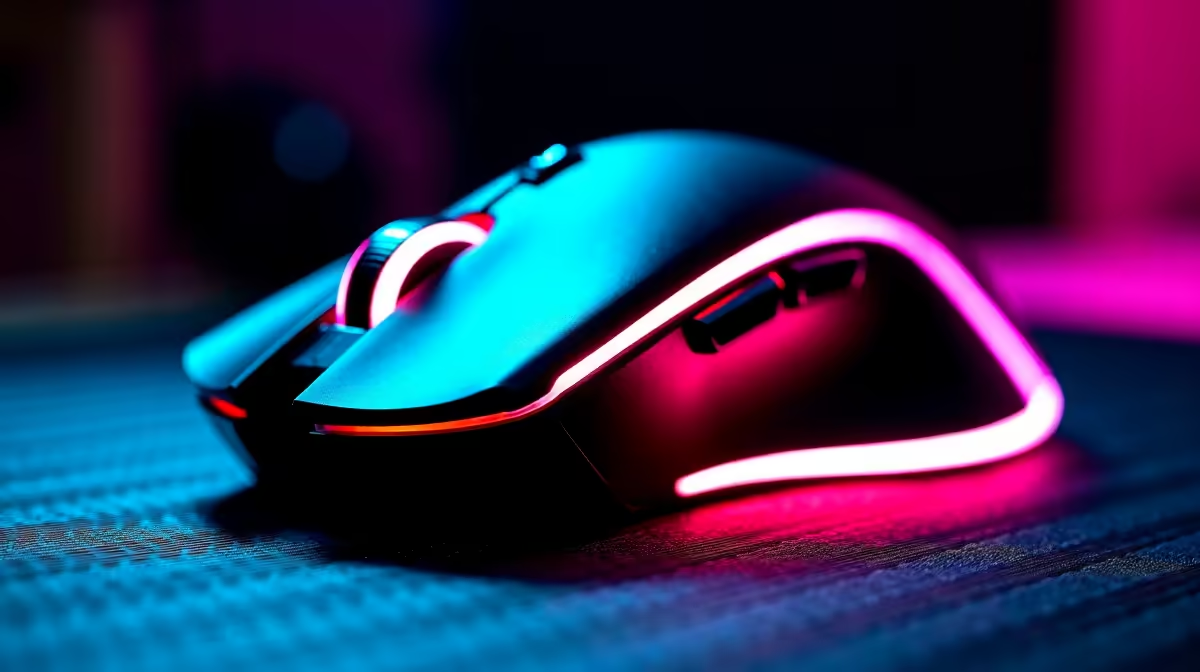
For South African buyers eyeing an 8000Hz mouse, the real question is whether your monitor refresh and battery tolerance justify the extra polling.
Quick Answer
Yes, 8000Hz polling helps if you run a 240Hz or faster monitor, with mice from R1,800 to R3,000. Below that refresh, the difference is hard to feel and the faster polling cuts battery life noticeably. Keep your proof of purchase handy in case a warranty claim is ever needed. A quick comparison of two or three options usually surfaces the best value for your budget. Local delivery and collection timing can shift with stock, so check the live listing.
Who Actually Needs It
Competitive players on 240Hz-plus monitors with a capable CPU benefit most. Casual gamers and anyone on a 60 to 165Hz display are better served by a lighter, longer-lasting 1000Hz mouse for less money.
The Case For 8000Hz
At 8000Hz the cursor updates every 0.125ms, which reduces micro-stutter on high-refresh monitors and can feel smoother in fast aim duels. On a 240Hz or 360Hz panel, the extra polling pairs naturally with the higher frame cadence.
The Trade-Offs
The higher polling drains the battery faster, often cutting runtime by 30 to 50 percent, and it adds a small CPU load that low-end systems may notice. On a 144Hz or 165Hz monitor, the benefit over 1000Hz is minimal for most players.
FAQ
Do I need a strong PC for 8000Hz?
The higher polling adds a small CPU overhead. Modern mid-range and high-end systems handle it easily, but very old CPUs may see a minor frame-time cost.
Does 8000Hz polling improve aim?
It can feel smoother on 240Hz-plus monitors by reducing motion latency, but the gain is subtle. On lower-refresh displays most players will not notice a difference.
Does 8000Hz hurt battery life?
Yes, it typically cuts wireless runtime by 30 to 50 percent. Many mice let you drop to 1000Hz to extend battery when you do not need the extra polling.
Compare high-polling mice
Browse 8000Hz and 1000Hz wireless mice at Evetech and match the polling rate to your monitor.