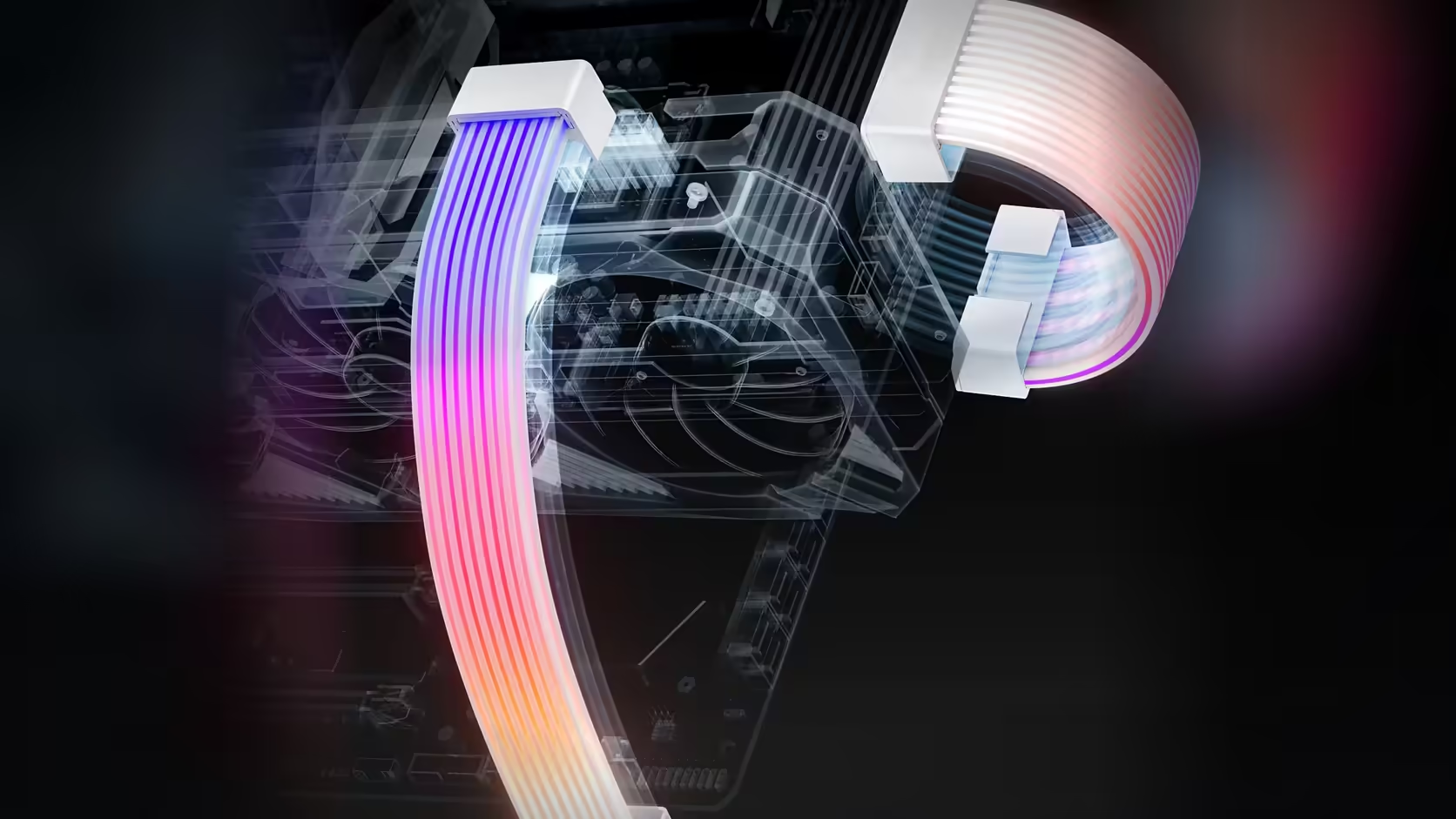
Two lighting products can use identical hardware - the same 5V 3-pin header, the same addressable protocol - and still produce completely different visual results, simply because of where each one chooses to put its light. AsiaHorse's Aurora ARGB cover kit spreads its glow along a length of cable crossing the case; a Hydrus power cable, by comparison, concentrates its effect right at the board socket instead. The gap between the two is one of shape, not of underlying technology.
Quick Answer
The Aurora kit spreads light along two cable spans that physically cross the case interior, while Hydrus cables concentrate their glow at the connector points beside the motherboard instead. That's a difference in shape rather than in brightness or LED technology, and it's genuinely easier to judge by looking at both in a case than by comparing specification sheets side by side.
🌐 How span lighting reads in a finished build
Light distributed along the length of a cable reads as lines crossing the case interior - and those lines can do real compositional work, giving a build a sense of direction it wouldn't otherwise have. Two well-placed spans, following the board and graphics power runs, can visually tie together areas of the case that might otherwise feel disconnected from each other.
📍 How point lighting reads by comparison
Concentrated lighting at a connector reads as a mark at a specific position rather than a line running anywhere - drawing attention to the board edge, or to wherever the connector happens to sit, without creating the same sense of a line crossing the space. It's a fundamentally different visual job.
🧩 Which suits a genuinely crowded interior better?
Point lighting tends to work better here. In a case already carrying several lit fans, a lit AIO, and possibly RGB strips, additional lines crossing the space from cable covers can compete for attention rather than adding anything distinct - a busy interior often reads more clearly with a single accent point than with further lines layered on top of what's already there.
🕳️ And a genuinely sparse interior?
Spans tend to be the stronger choice here. An otherwise empty-feeling case, without much else providing visual structure, benefits from the sense of direction that two lit cable runs can add - something a single lit connector, however bright, can't really provide on its own.
A case somewhere between the two extremes - a handful of lit fans but plenty of open space remaining - is really the one that rewards actually looking rather than defaulting to a rule of thumb. The honest test is standing back from the case with the side panel on and asking whether the eye is drawn around the whole interior or lands on one obvious focal point; whichever answer feels true for that specific build points fairly reliably towards span or point lighting as the better next addition, and that honest, in-person answer is genuinely worth trusting more than any general written rule offered here or anywhere else online.
Can both approaches be combined in one build?
Yes, and there's a reasonable case for it - though deciding which is the primary lighting element before adding the second tends to produce a more coherent result than letting both compete equally for attention. Treating one as the anchor and the other as a supporting accent generally reads better than layering them without any hierarchy at all.
🔌 Do span and point lighting need the same connection?
Both typically rely on 5V 3-pin addressable headers, so a build running both needs the motherboard's header count to genuinely support the combined load - worth checking against the board's own specification before assuming both will fit without a splitter somewhere in the mix.
🧭 Deciding by looking, not by specification
Photographs and product listings rarely settle this kind of choice on their own, since a listing shows a product isolated against a plain background rather than inside a real case. Where possible, looking at build photos or videos featuring each product fitted into a case reasonably similar to the one in question - roughly the same size, a similar panel style - gives a far more honest sense of how span lighting or point lighting will actually read than any description can. The visual difference between a line of light and a lit point is exactly the kind of thing that's obvious in a photo and genuinely hard to picture from a spec sheet alone.
📉 Which represents the smaller first step for a build?
A single Hydrus cable adds one lit connector point and changes very little else about the build. The Aurora kit, by contrast, changes two spans of cable at once, spread across a larger visible area - a bigger single change, even though the R699 price and the R599 for one Hydrus cable sit fairly close together.
For anyone weighing the two side by side, Evetech's cable management accessories and case lighting range both cover the relevant products directly, worth a browse before deciding which shape of lighting actually suits the build in question.
Frequently Asked Questions
How does span lighting typically read in a finished case?
As lines crossing the interior, which can give the build a sense of direction and tie separate areas of the case together visually.
And how does point lighting read by comparison?
As a mark at a specific position, drawing attention to the board edge without creating the same lines running across the space.
Which suits a genuinely crowded interior better?
Point lighting usually, since additional lines crossing a case already carrying lit fans and strips can compete rather than add anything distinct.
And which suits a sparser interior?
Spans tend to work better here, giving an otherwise empty-feeling case some structure a single lit point can't provide on its own.
Can both lighting shapes be used in the same build?
Yes, though deciding which is the primary element before adding the second usually produces a more coherent result overall.
Do both approaches need the same kind of connection?
Both typically use 5V 3-pin headers, so a build running both needs the board's header count to actually support the combined load.
Which is the smaller first step to take?
A single Hydrus cable adds one lit point with minimal change elsewhere, while the Aurora kit changes two spans at once - a bigger single step.
Deciding between span lighting and a lit connector point?
Browse Evetech's cable and case lighting accessories to see which shape suits your build.