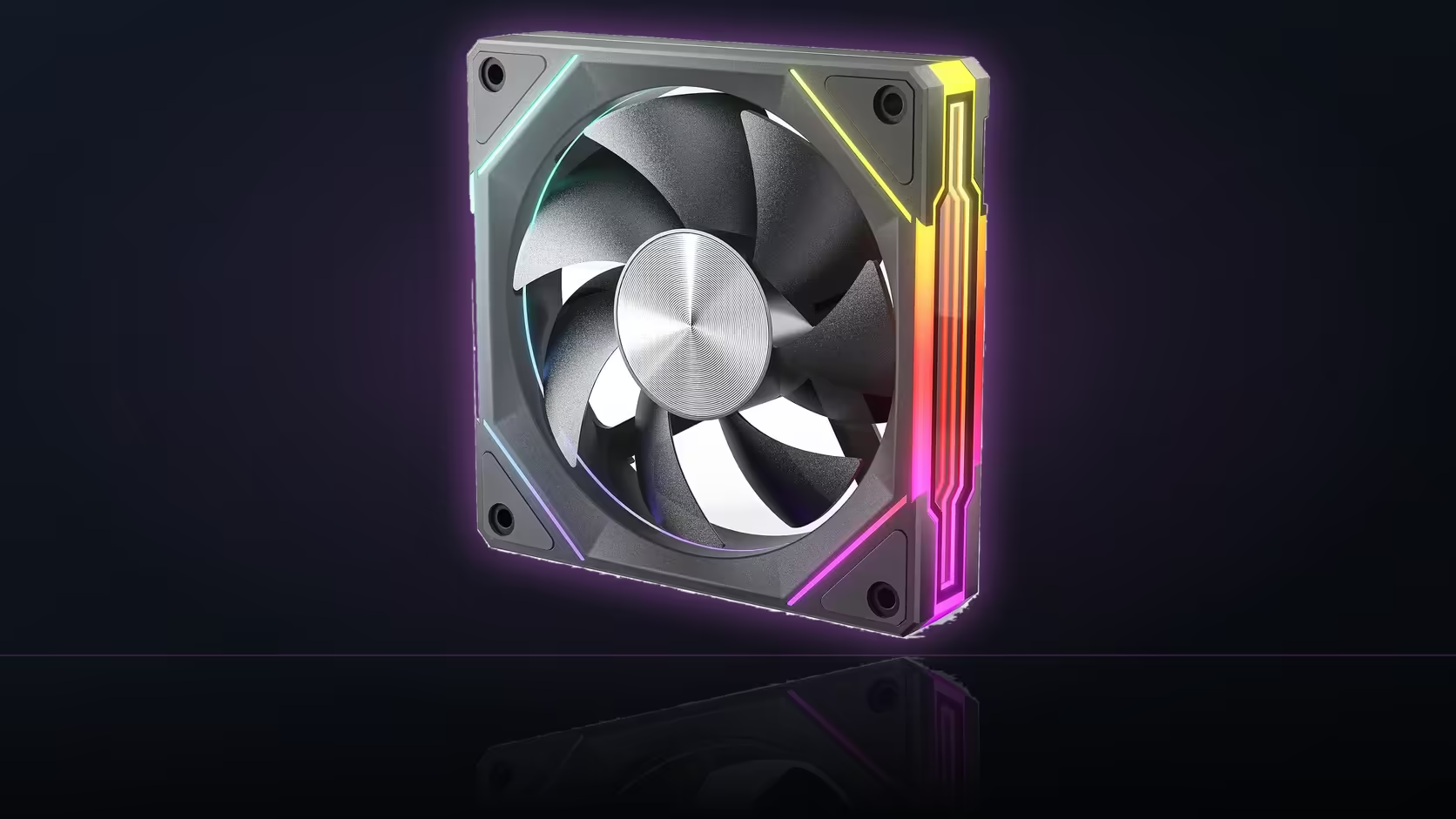
Tinted tempered glass looks similar from case to case, yet the amount of light it actually lets through varies enormously between manufacturers. That difference matters far more for a thin lit outline than for a broad glowing surface, which makes the choice between an Amici Pro ring and a fully luminous fan face genuinely dependent on the specific panel you own.
Quick Answer
Amici Pro lights a thin infinity mirror ring - sold as a 3-pack for R399 with VAT already included, though that figure is not fixed and can move - which can fall below what a heavily tinted panel lets through even while a larger lit blade face on another fan survives the same tint comfortably. The right choice depends on testing your own case's glass, not on a general rule.
🪞 Why tint punishes a thin ring more
A ring starts with less total light than a fully lit blade face, simply because there is less lit surface area to begin with. When a tinted panel cuts a proportion of whatever light reaches it, that proportional loss leaves a thin ring with far less remaining brightness than a broader light source loses from the same cut. The physics is the same as with mesh diffusion, just applied through absorption rather than scattering.
How dark do panels actually get?
Tint levels vary widely between case manufacturers and even between models from the same brand, which is exactly why a general rule cannot substitute for checking your own panel. Some tempered glass is barely tinted at all; other panels are dark enough to noticeably dim even strong lighting behind them.
🔬 The quickest way to test it
Place an existing lit component you already own behind the panel and compare how it looks with the panel on and off the case. That single comparison tells you more about how your specific glass behaves than any spec sheet, since tint is rarely quantified in a way that translates directly to visible brightness loss.
If brightness compensates, at a cost
Raising the ring's brightness through your motherboard's RGB software can partly offset a dark panel, though it comes at the expense of the restrained, understated character that draws people to a ring-only design in the first place. Pushing brightness to compensate for tint risks losing the exact quality that made the Amici Pro appealing to begin with.
🎨 Colour and positioning also matter
Warmer lighting colours often carry through dark tint more visibly than deep blues or purples, though this varies by panel and is worth testing alongside the brightness comparison. If your case pairs heavily tinted side glass with a different front or top panel, moving the fan row to a position seen from above rather than through the tinted side avoids the issue entirely - worth considering before assuming the fan itself is the problem.
A clear or lightly tinted panel changes the picture considerably, and the same fans can look quite different between two cases with otherwise similar layouts purely because of glass choice. Browse the case fans range to compare the Amici Pro against models with larger lit areas if your testing shows the ring struggles behind your specific glass, and case accessories for mounting hardware if repositioning the fan row.
🧪 Building a simple before-and-after test
Rather than guessing, mount one fan first and view it through the panel before committing an entire three-pack to a position that might not suit it. A single Amici Pro connected temporarily, run at a moderate brightness through your board's RGB software, gives an honest read of how the panel treats the ring specifically - far more useful than judging from memory or from photos taken on someone else's case with different glass. If the single fan reads clearly, the remaining two can follow with confidence; if it does not, better to know before three fans and their cabling are committed to a position.
Why a spec sheet cannot answer this for you
Tint percentage is rarely published on a case's own spec sheet in a form that translates to visible brightness loss, and even where a manufacturer does quote a light transmission figure, it says nothing about how a specific thin ring shape reads against it. This is one of the few genuine cases where a physical test beats reading any documentation - the interaction between a thin light source and a semi-opaque panel is not something a percentage figure captures well.
Both variants behave identically behind glass
Colour choice - black or white - has no bearing on how the panel treats the ring itself, since the tint affects the light passing through regardless of the fan body's own colour. Where colour does matter is what happens to the unlit fan body behind the same panel: a white fan stays visible as a shape even through moderately dark tint, while a black one tends to disappear into the background, which is a separate effect worth factoring in alongside the ring visibility test itself.
What a single fan's warranty covers during the test
Testing one fan before committing the full pack means living with an unfitted pair for a while, which is a fine trade given the 1 Year Local Warranty covers every fan in the set from the date it ships regardless of when it is actually installed. There is no requirement to fit all three at once for cover to apply, so a staged install used purely for testing purposes carries no downside on the reliability side of the decision.
Frequently Asked Questions
Why does tinted glass affect a ring more than a full fan face?
A ring starts with less total light, so the same proportional cut from tint leaves considerably less remaining brightness than a broader source loses.
How dark do case side panels typically get?
It varies widely between manufacturers and models, which is why testing your specific panel matters more than following a general rule.
What is the fastest way to test my panel's tint?
Put an existing lit component behind the panel and compare how it appears with the panel fitted versus removed.
Would raising brightness fix a dim ring behind tint?
It helps, though it also sacrifices the restrained look a ring-only design is usually chosen for in the first place.
Does lighting colour affect visibility through tint?
Often, with warmer colours sometimes carrying through dark tint more clearly than deep blues, though this varies by panel.
Should I move the fans if my side glass is heavily tinted?
Worth considering - a top row visible from above bypasses a tinted side panel entirely and may show the ring far more clearly.
Testing which lighting works best behind your case's glass?
Browse Evetech's case fan range to compare ring and full-face lighting styles.