


PCIe 5.0 vs PCIe 4.0 for Video editing in 4k in SA
PCIe 5.0 vs PCIe 4.0 for video editing in 4k is mainly about fit, features, compatibility, cost, and upgrade path, not one automatic winner. SA buyers should match the choice to the setup.
Read moreEvery spec on practical guide explained in plain English. What matters for gaming and creator work in 2026, what's marketing fluff, and how each number translates to real-world performance.

Remember the days when a single 1TB hard drive felt like limitless space? Those days are long gone. Modern gaming and 4K video editing chew through terabytes faster than a bakkie goes through petrol. If you are building a high-end rig, you might find yourself staring at a motherboard with a massive five M.2 slots. How do you actually use them all without wasting your hard-earned money?
Let's be honest... downloading a 150GB update for Warzone on a standard fibre connection takes time. You absolutely do not want your storage drive to be the bottleneck when you finally hit play. A practical guide to using five M.2 slots for gaming, editing and everyday storage starts with understanding data separation.
Physical separation of your data means your operating system isn't fighting for read and write speeds while you render a massive video project in Premiere Pro. If you are browsing the latest gaming PC deals for a custom build, choosing a high-end motherboard with maximum storage expansion is a brilliant long-term investment. It allows you to add capacity later without ripping out your old drives.
Having the slots is one thing. Knowing how to populate them efficiently is another entirely. Here is the ultimate breakdown for your rig:
Slot 1: The Boot Drive. Put your fastest Gen 4 or Gen 5 NVMe drive here. Keep it strictly for Windows and your essential daily apps. A clean OS drive keeps your system snappy.
Slot 2: The Gaming Vault. Dedicate a fast 2TB or larger drive purely to your Steam and Epic libraries. Keeping games away from your OS drive ensures smoother load times and fewer texture pop-ins.
Slot 3: The Active Editing Scratch Disk. If you edit video or work with massive 3D models, you need a dedicated drive for active project files. It prevents timeline stutter and speeds up export times dramatically. Need parts to set this up? You can often find great NVMe drives on our weekly specials page to keep your ZAR budget in check.
Always install your primary boot drive in the top M.2 slot closest to the CPU. This slot usually connects directly to the processor rather than the chipset, giving you the absolute lowest latency and fastest speeds for your operating system.
Slots 4 and 5: Everyday Storage and Archiving. You don't need expensive Gen 5 speeds for everything. Use cheaper Gen 3 or high-capacity Gen 4 drives for your media library, family photos, and completed work projects.
Packing five high-speed drives into one motherboard generates a serious amount of heat. Always ensure your motherboard's built-in heatsinks have their thermal pads properly applied. You also need to check your motherboard manual... sometimes populating that fifth slot might disable a SATA port or slightly reduce the bandwidth of a PCIe slot.
Not everyone needs a massive desktop tower to get great storage, though. If you prefer portability over extreme expansion, you can still find incredible power in modern portable machines. Just take a look at the latest laptops for sale in South Africa to see how far mobile storage has come. Many now support dual NVMe drives, giving you a taste of that desktop flexibility on the go.
Ready to Build Your Ultimate Storage Rig? Whether you are a hardcore gamer, a professional editor, or just someone who hates deleting files, Evetech has the hardware you need. Explore our massive range of PC components and start building a machine that handles your massive data demands with ease.
The SSDs, tools and accessories referenced in this article are stocked at Evetech.co.za with local SA warranty, ZAR pricing and nationwide delivery.
The article breaks down the real-world impact on gaming FPS, creator workflows and everyday responsiveness — not just raw spec numbers.
Only a handful of specs meaningfully change your experience. The guide ranks them by real impact so you spend on what counts.
We cover upgrade headroom, platform longevity and the specific features worth paying extra for if you plan to keep this build for several years.
The article includes a clear generational uplift summary so you can judge whether upgrading from your current hardware is worthwhile.
PCIe 5.0 vs PCIe 4.0 for video editing in 4k is mainly about fit, features, compatibility, cost, and upgrade path, not one automatic winner. SA buyers should match the choice to the setup.
Read more
Wi-Fi 7 vs Wi-Fi 6e for competitive esports comes down to router support, latency goals, device compatibility, and coverage. SA buyers should match the choice to the real network setup.
Read more
ATX 3.1 vs ATX 3.0 for mMO and live-service games buyers - what changes is mostly about compatibility, budget, upgrade path, and setup fit. SA buyers should check device support and real needs before expecting a clear win from either option.
Read more
LGA 1851 vs LGA 1700 can affect Twitch and YouTube streaming when gaming and encoding share CPU resources. For SA creators, the real-world difference depends on encoder choice, memory support, motherboard cost, thermals, and upgrade plans.
Read more
X870E vs X670E for aaa single-player gaming is mainly about fit, features, compatibility, cost, and upgrade path, not one automatic winner. SA buyers should match the choice to the setup.
Read more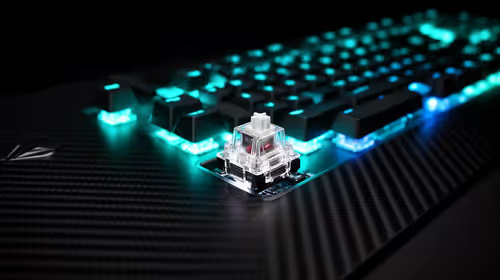
Hall Effect switches vs Mechanical switches for mMO and live-service games is mostly about compatibility, budget, upgrade path, and setup fit. SA buyers should check device support and real needs before expecting a clear win from either option.
Read more
A fake 113GB GTA VI ISO reportedly used empty padding around a small malware payload. SA gamers should delete unofficial builds, keep Windows security active and wait for official channels.

Wi-Fi 6E vs Wi-Fi 6 matters for 4K video editing when files move across a network. The real-world difference between Wi-Fi 6E and Wi-Fi 6 for video editing in 4K depends on NAS access, cloud uploads, router range, and SA creator workflows.

The difference between PCIe 5.0 and PCIe 4.0 for SA gamers is mostly bandwidth headroom. Compare GPU slot needs, NVMe speed, motherboard support, and upgrade timing before paying extra for a newer platform.

Gaming PC stuck pixel checks in South Africa should confirm the monitor fault first. Use colour tests, screenshot comparison, cable swaps, display menu checks, and clear photos before deciding on support.

Shokz OpenFit Air 2 earbuds weigh 7.2g each and use a redesigned dual-driver open-ear layout. SA buyers should choose them for comfort and awareness, not maximum isolation.

AMD's current driver now lists a Radeon RX 9050 4GB, while product coverage details a narrowed memory system. SA buyers should weigh the low VRAM ceiling against current local Radeon options.

Samsung Display has demonstrated a 16-inch 2.5K OLED laptop panel running at 300Hz. SA buyers should wait for a named notebook, full panel specifications and a local price before planning an upgrade.

Microsoft says some Windows 11 game crashes after recent updates are linked to RGB-related drivers. Affected SA gamers should confirm the update and driver before using the published registry workaround.

Minisforum's M2 Pro pairs Core Ultra X7, Arc B390 graphics and 32GB onboard memory in 1.8 litres. SA buyers should weigh its fixed memory and $1,439 launch offer against local mini PCs.

Smart monitors can add apps and convenience, but they also add privacy settings and unwanted-software risk. SA buyers should audit the operating system before paying for extras.

Lenovo says Legion Go failures linked to BIOS N3CN42WW are not user error. Affected SA owners should stop retrying the update, preserve proof and open a support case.
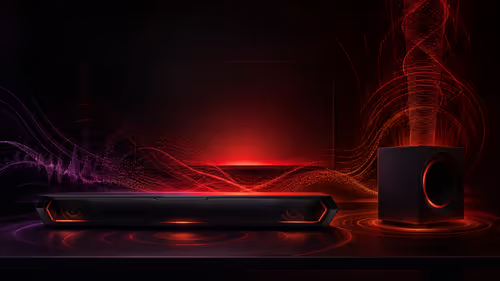
The ROG Gjallar gaming soundbar is now listed in the US at $599.99. SA buyers should compare its 2.1.2 audio, wireless bass and built-in chat controls with simpler local options.