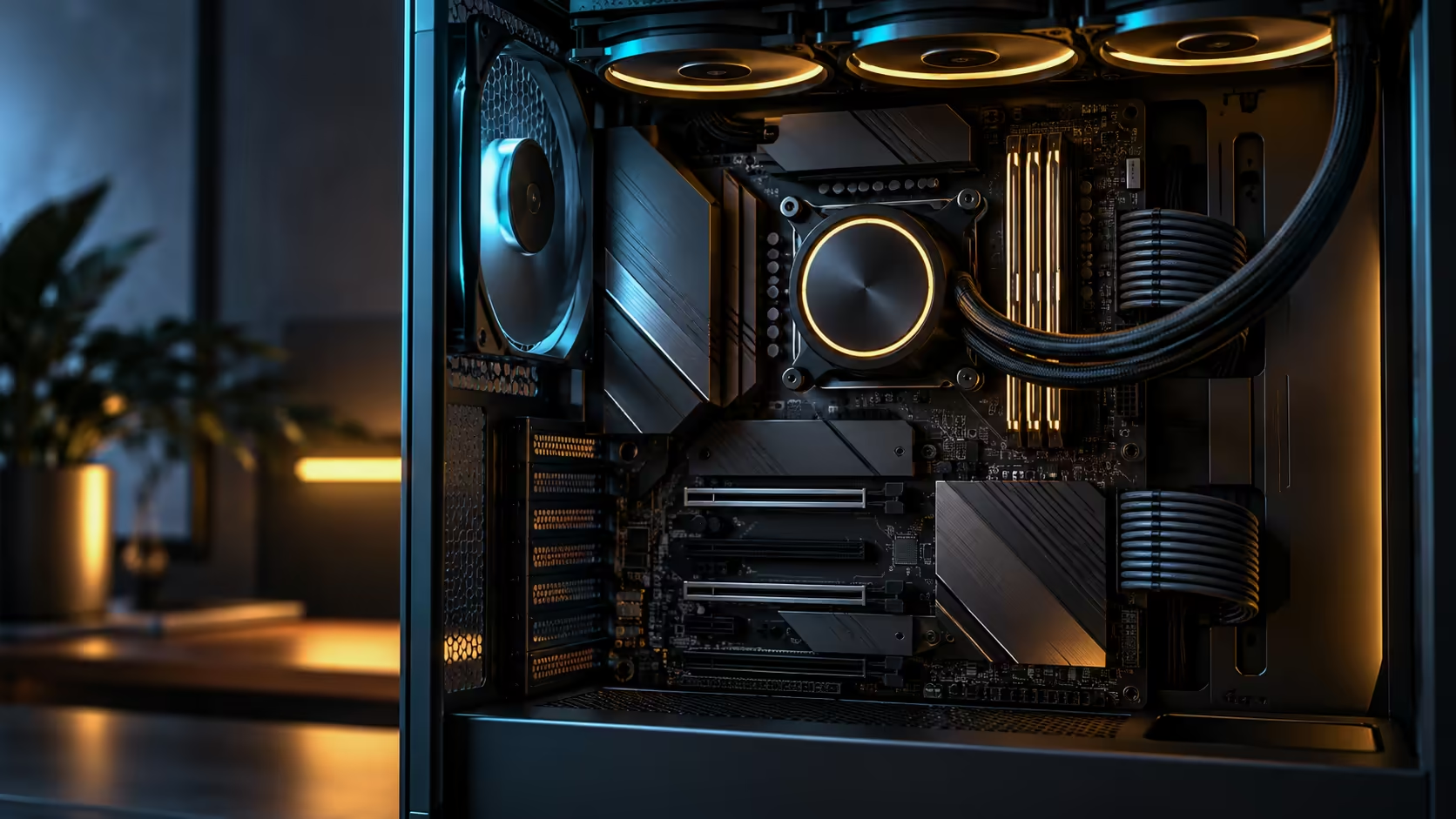
A 360mm cooler bought for a lab-tested temperature chart, matched to a board from the AMD motherboard range, behaves differently once it is sitting in a study that hits 32 degrees on a February afternoon with no aircon running, and that gap between the review and the room is the entire subject of this guide.
Quick Answer
A 360mm radiator buys real margin on a hot day, which matters directly in a study or office running warmer than the assumed ambient of most published reviews. Mount it in a full tower roof as exhaust, filter the case intake against dust, and remember the R54,999 ROG Crosshair X870E Edition 20 already includes a Ryujin 360 Edition 20 in the box, removing the separate cooler purchase and matching decision entirely for anyone buying that specific board.
🌡️ Why the margin matters more here than the review suggests
Most cooling reviews run in a controlled room close to 22-25 degrees, conditions a South African home office frequently exceeds by several degrees during summer without air conditioning running continuously. That gap quietly spends part of a cooler's stated headroom before the chip has been asked to do a single demanding thing, which is why a cooler that looked comfortable in a review can run noticeably warmer in an actual local room.
A 360mm radiator's larger total surface area gives it more margin to spend against that gap than a smaller radiator or an air cooler would have, which is precisely why it matters more here than in a market where every review room and every customer's room sit close to the same temperature. A room running 5-8 degrees above a review's assumed ambient is common enough locally in summer that it is worth planning for as the normal case, not the exception.
🏗️ Mounting position and why the roof usually wins
A roof-mounted radiator, running as exhaust, keeps warm air moving directly out of the case rather than recirculating past other components first, and it places the radiator above the pump, which is the correct orientation for keeping air out of the liquid loop over the long term. Front-mounted intake is the common alternative, and it can outperform a roof exhaust on raw CPU temperature in some case designs, at the cost of pushing warm radiator air across the rest of the build's internals instead of straight outside.
For most full tower cases paired with a high-core Ryzen chip, roof exhaust is the simpler, lower-risk choice, and it is the position most 360mm coolers, including the bundled Ryujin 360, are designed around by default. The few degrees a front-mount setup might claw back rarely justify the extra internal heat it pushes across the graphics card and motherboard components sitting in its path.
🌪️ Dust filtering, a genuinely local maintenance task
Dust accumulation on radiator fins reduces airflow over time, and inland South African conditions, particularly during dry, windy months, produce dust at a rate that a coastal or more humid climate simply does not match. A case with a filtered intake path, checked and cleaned every couple of months rather than left indefinitely, keeps a 360mm radiator performing close to its rated capacity for years rather than degrading quietly as dust builds up unnoticed.
This maintenance habit costs nothing beyond a few minutes with a can of compressed air, and it matters more for a liquid loop than most builders expect, since a radiator's dense fin spacing traps dust more readily than an open case fan does.
📦 What buying the bundled cooler actually saves you
Working through the liquid cooler range on your own to find a 360mm unit rated for a high-core Ryzen chip is a real budget line and a real research task, weighing pump noise, radiator thickness and mounting compatibility across several options. Buying the Crosshair X870E Edition 20 removes that entire process, since the Ryujin 360 Edition 20 arrives already matched, mounted and validated against this specific board, at R54,999 for the pair, with one local warranty covering both instead of two separate claims to track.
For anyone weighing this board against a separate board-and-cooler combination, comparing the total cost against browsing the CPU cooler range independently is the fairest way to judge whether the bundled approach genuinely saves money, rather than assuming it does.
There is also a compatibility risk the bundled route removes entirely. Buying a board and a 360mm cooler separately means confirming radiator thickness, pump block clearance around the socket area, and tubing length all line up, and getting any one of those wrong after the parts have arrived means a return or an awkward workaround. A cooler validated by the board's own maker against that exact board has already had those checks done, which is worth factoring into the total cost even when it is not stated as a line item on its own.
🔧 Fan curves worth setting once and forgetting
A cooler's default fan curve out of the box is usually tuned conservatively for a wide range of rooms and workloads, which means it is rarely the quietest or the most effective setting for your specific space. Spending ten minutes in the BIOS fan control panel, setting the radiator fans to stay low until a temperature threshold a few degrees above your room's typical ambient, then ramping more aggressively above that, tailors the curve to the room you actually have rather than a generic assumption.
That small adjustment matters more in a warmer local room than it would in a cooler review environment, since the default curve's assumptions about when to start ramping were built around a lower baseline temperature than many South African rooms sit at for a large part of the year.
Frequently Asked Questions
Does a hot South African room actually reduce a cooler's performance?
Yes. Most reviews test in conditions cooler than many local rooms reach in summer, so the real-world margin is often smaller than the published numbers suggest.
Should a 360mm radiator go in the roof or the front of the case?
Roof exhaust is the simpler, lower-risk default for most full tower builds, keeping warm air moving straight out rather than across other components.
How often should a radiator be cleaned in a dusty environment?
Roughly every couple of months in dry, dusty conditions, using compressed air on the intake filter and radiator fins.
Does buying a board with a bundled cooler actually save money?
Often, since it removes a separate cooler purchase and the research needed to match one correctly, though comparing the total cost against separate options confirms it for your specific case.
Is a 360mm cooler always the right choice for a high-core Ryzen chip?
For sustained, all-core workloads, yes, it generally holds a lower temperature than air cooling alone, particularly once local room temperature is factored in.
Ready to cool a high-end AM5 build for the room you actually have?
Mount the radiator as roof exhaust, keep the intake filtered, and factor local room temperature into the decision rather than a lab chart alone.