Most streaming mic upgrades in South Africa stall at the same point: a creator has outgrown their USB setup, has a rough budget in mind, and spends it in the wrong order. Allocating your ZAR budget for a pro streaming mic setup is a sequencing problem as much as a spending one. The gear that moves the needle most is not always the most exciting to buy, and the upgrades that feel impressive on a spec sheet often contribute the least to your actual recorded quality. A realistic pro jump sits close to R6,000 total. Here is how to spread that across the components that matter.
Quick Answer
Spend the largest share on the XLR microphone and audio interface together, since they set the ceiling for your entire signal chain. The boom arm and acoustic treatment take the remainder. A mid-range two-channel interface and a quality cardioid XLR mic together should account for roughly 65 to 70 percent of the total budget.
🎯 The Anchor Pair: Mic and Interface
The XLR microphone and the audio interface are the two components that determine everything else. Every other item in the chain, the arm, the cable, the headphones, serves these two. Spending too little on either one and then compensating with accessories is the most common money-wasting pattern in the South African creator upgrade market.
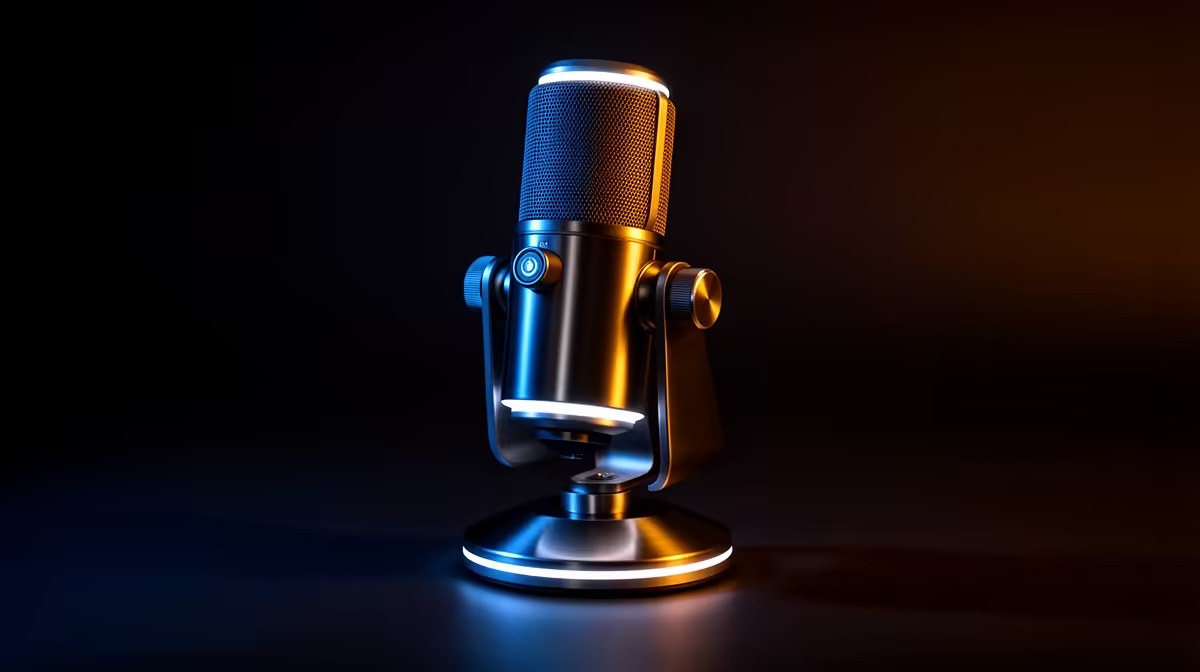
A quality cardioid XLR condenser or dynamic microphone for streaming sits in the R2,000 to R3,000 range. At that price point you are getting a capsule that delivers genuine professional character, solid off-axis rejection and a consistent frequency response. Under R1,500 the capsule quality becomes audible as harshness at the high end or inconsistency in the low-mid range. Over R4,000 you are paying for tonal character and build quality that most streaming audiences will not perceive.
The audio interface is the second half of the anchor pair, and it is where many upgraders underspend. Spending R1,500 to R2,000 on a two-channel interface gets you 60 to 65dB of clean gain, a preamp quiet enough for dynamic mics, and phantom power for condensers. Those are the figures that matter, not the input count.
The temptation is to buy a single-channel interface at R800 to save money. The problem is preamp quality, not input count. Cheap preamps add a noise floor that becomes audible when you push gain for a quiet dynamic mic. That noise does not go away without spending more, and the interface becomes the bottleneck in a setup where the mic itself is capable of better.
A realistic anchor allocation on a R6,000 budget puts R1,800 to R2,500 on the mic and R1,500 to R2,000 on the interface, for a combined spend of R3,300 to R4,500.
🔧 The Boom Arm: Necessary, Not Premium
A metal boom arm is non-negotiable in a pro setup, but it does not require a premium allocation. A steel arm rated to 1.5kg, which covers the weight of most XLR condenser mics, runs between R600 and R900 at most SA retailers. That range is the right spend. Anything below it risks plastic construction that sags over time. Anything significantly above it is paying for premium branding on functionality that a mid-range arm already delivers.
The arm purchase is a one-time decision. When the mic upgrades, the arm stays. When a second presenter joins the setup, a second arm matches the first. Spending R1,500 on a high-end arm when the same R600 to R900 unit holds the mic at the correct angle with the same isolation benefit is a misallocation on a tight total budget.
Check the clamp range before buying. Gaming desks with thick edges or under-desk cable management channels can reach 45 to 55mm, which exceeds some standard clamps. This is a minor detail that causes real frustration if overlooked.
Pro Tip ⚡
Before buying a boom arm at any price point, weigh your chosen XLR microphone on a kitchen scale or look up its documented weight. Then buy an arm with a rated capacity at least 200g above that figure. An arm at its weight limit drifts out of position over weeks. At 200g under the rated max it locks and holds for months without adjustment.
✨ Acoustic Treatment: The Overlooked Budget Line
Room treatment is the line item that almost every first-time upgrader forgets to budget for, and it is frequently the intervention with the highest return per Rand spent.
A bare room with hard walls, tiled floors or large windows produces echo that records as a smeared, hollow quality on the voice. No microphone fixes that. A R3,000 XLR mic in a bare Joburg flat will sound less clean than a R1,500 USB mic in a room with a rug, curtains and a bookshelf.
Acoustic foam panels in the R200 to R500 range, placed behind and beside the mic position, address the primary reflection surfaces. This is not studio construction. Four to six panels on the most reflective walls around the desk reduce high-frequency flutter noticeably. Combined with whatever soft furnishings the room already has, a modest foam budget brings the room into a range where the mic's quality becomes audible.
Budget allocation for room treatment on a R6,000 total: R300 to R600. Not more. Beyond that, the law of diminishing returns sets in quickly for a home streaming desk.
💰 Phasing the Upgrade: When You Cannot Spend It All at Once
The full pro upgrade does not have to happen in a single purchase. The most sensible phase order is the one that removes the biggest bottleneck first.
Start with the XLR mic and the interface together. Without both, neither delivers its value. A quality mic into a weak preamp and a strong interface with a poor mic are both compromised setups. The two components are meaningless apart and professional together.
Second phase: the metal boom arm. The mic can sit on a desk stand temporarily without catastrophic quality loss, provided the desk is stable and you minimise typing during recording. The arm is a meaningful improvement but not an emergency.
Third phase: acoustic treatment. This can start with zero spend if the room already has soft furnishings. Add foam panels once the signal chain is delivering quality worth preserving. Treating a room that is feeding into a weak interface and an entry-level mic is backwards. The room treatment is what turns a good chain into an excellent one.
Final phase: monitoring headphones. Closed-back headphones for session monitoring catch level problems in real time. They belong in the setup but are not the priority over the core signal chain.
Frequently Asked Questions
How much should a realistic pro streaming mic upgrade cost in South Africa?
A full professional upgrade, covering an XLR condenser or dynamic microphone, a two-channel audio interface, a metal boom arm and basic acoustic foam panels, sits close to R6,000 total. You can stretch that figure with premium versions of each component, but R5,500 to R6,500 covers all four categories at a level where professional audio quality is genuinely achievable.
What should take the largest share of the budget?
The microphone and audio interface combined. These two components set the ceiling for everything else in your signal chain. Together they should account for roughly 65 to 70 percent of the total spend. An R1,800 to R2,500 mic and an R1,500 to R2,000 interface is a realistic anchor allocation. Cutting either below these bands to spend more on accessories is a common mistake.
Is acoustic treatment worth including in the budget?
Yes, and it is frequently undervalued. A room with reflective hard surfaces produces echo that no microphone can compensate for. Allocating R300 to R600 for basic acoustic foam panels, placed at the primary reflection points near the mic, brings measurable improvement to the clarity and warmth of recordings. Combined with existing soft furnishings, this modest spend often lifts perceived quality more than a mic upgrade would.
Do I need a new boom arm when upgrading to an XLR mic?
Only if your current arm cannot hold the additional weight of an XLR condenser. Many USB mics weigh under 300g, while quality XLR condensers can reach 500 to 700g. A cheap plastic arm near its rated limit will sag. A steel arm rated to 1.5kg handles the load without issue and typically costs R600 to R900. If your existing arm is already steel and within its weight rating, keep it.
Where do upgraders most commonly overspend?
On the audio interface. At R1,500 to R2,000, a two-channel interface covers everything a solo streaming setup requires: gain up to 60 to 65dB, phantom power and a low noise floor. An eight-input professional interface at R5,000 adds routing complexity and inputs that a single-host stream will never use. Match the interface to the actual setup rather than to aspirational future scenarios.
Ready to build a professional streaming audio chain?
Browse the full microphone, audio interface and boom arm range and assemble a setup that delivers broadcast-quality audio from your South African studio.