Quick Answer
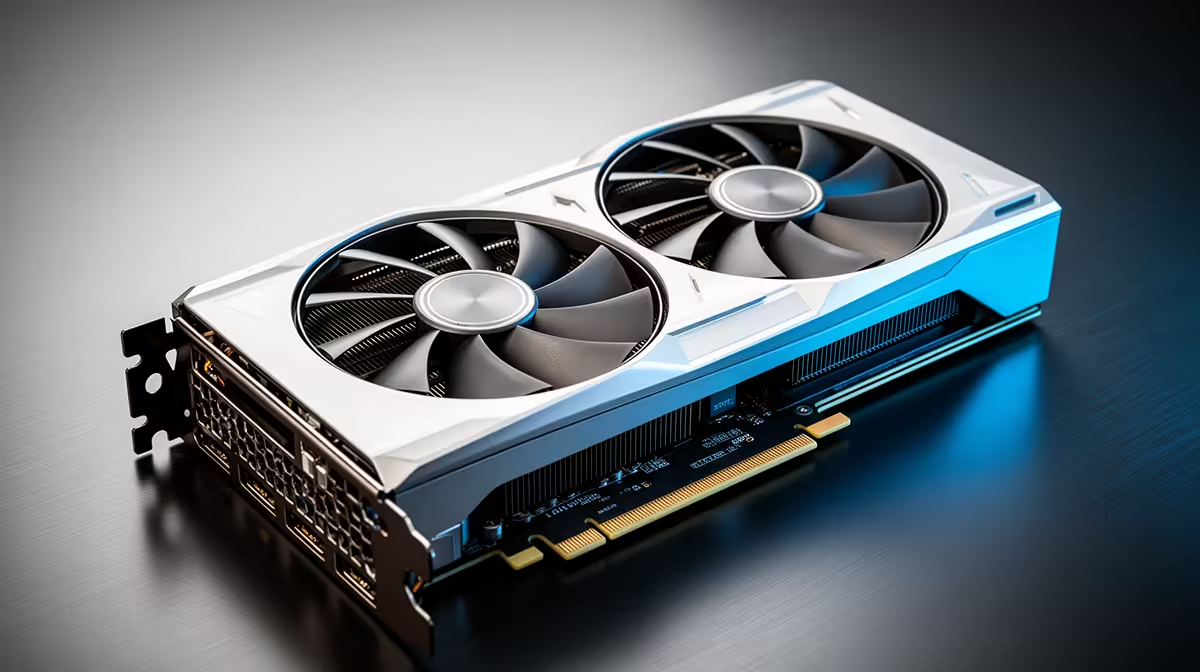
The best alternative is Radeon RX 7800 XT 16GB if it fits your budget and software needs; Radeon RX 9070 16GB and RTX 4070 Super 12GB are the next cards to compare. For local AI workloads, do not buy only by model number - compare VRAM, power draw, cooler size and the monitor you actually use. A cautious SA price band for this decision is R11,000-R22,000, with exact Evetech pricing checked at checkout.
Best Cards To Shortlist
Start with Radeon RX 7800 XT 16GB, then compare Radeon RX 9070 16GB and RTX 4070 Super 12GB. For local AI, VRAM is the limiter: 12GB handles small models, 16GB is more comfortable, and 24GB gives room for larger quantised workloads.
For SA buyers, shortlist cards with local warranty support. Use the R11,000-R22,000 band as a planning guide, then check the final basket because GPU pricing moves quickly.
Match The GPU To Local Ai Workloads
Local AI users should check model size before buying. A 7B model can run on smaller cards when quantised, but 13B-class experiments are far easier with 16GB or 24GB VRAM. For 4K TV use, check memory bandwidth, HDMI 2.1 and cooler noise.
What Not To Overpay For
Do not pay extra just because the card name sits one tier higher. Check PSU fit too: mid-range cards often suit quality 650W to 750W units, while high-end cards can need 850W or more.
FAQ
Which alternative should I compare first?
Compare Radeon RX 7800 XT 16GB first because it is the closest practical fit for local AI workloads. Then use Radeon RX 9070 16GB and RTX 4070 Super 12GB as the price and VRAM checks before committing.
Is more VRAM worth it for SA buyers?
Yes when the workload uses it. For 1440p gaming, creator apps, VR and local AI, 16GB or 24GB can age better than a faster 8GB or 12GB card.
Should I wait for a different GPU tier?
Wait only if your current PC still meets your monitor target. If you are below 60 fps, short on VRAM, or building a new machine now, choose the best stocked card in your realistic price band.
Buyer check
Before ordering, write down your monitor resolution, refresh rate, PSU wattage and case GPU clearance. If it clears those four checks, it is practical.