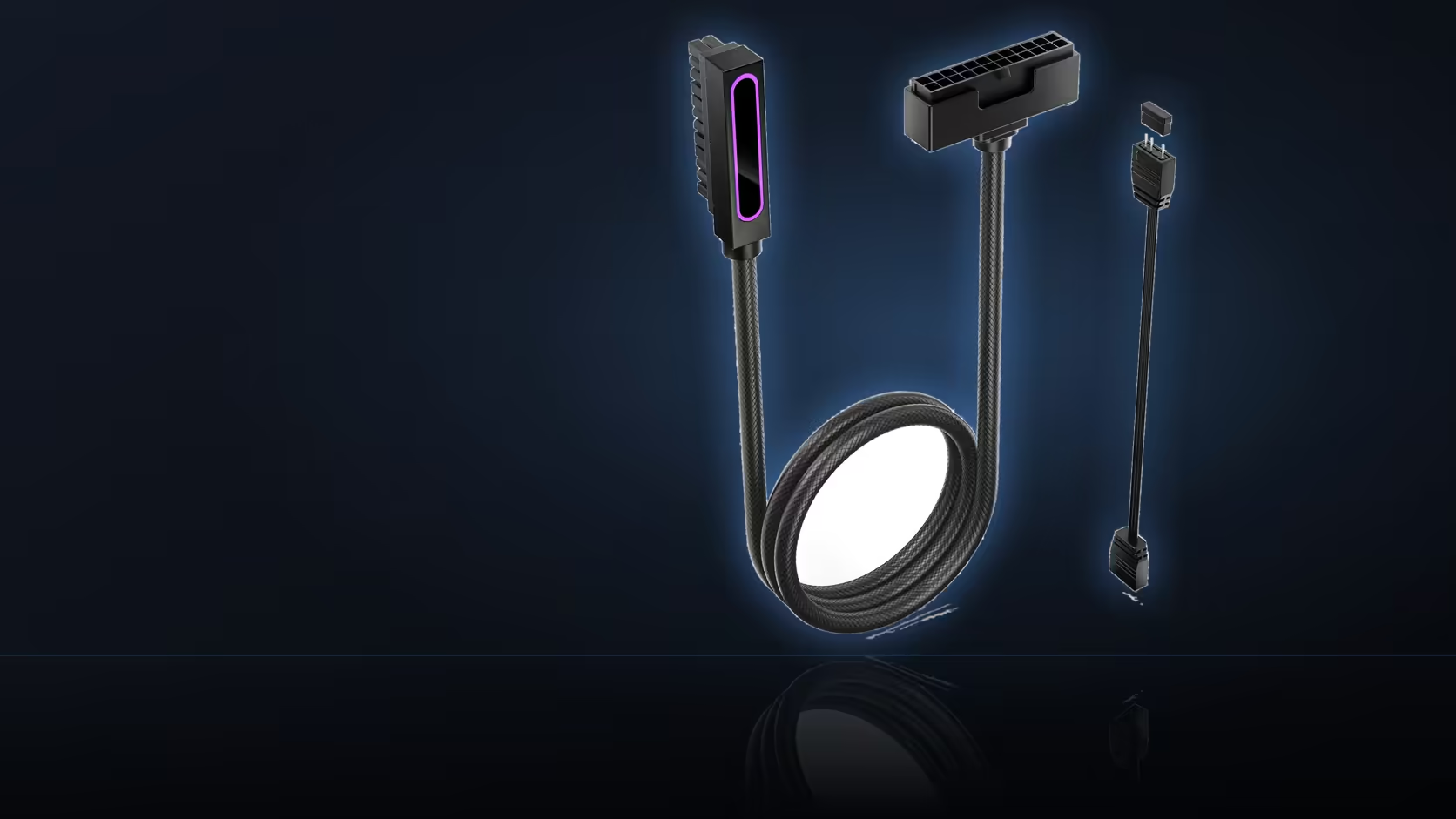
Two entirely different approaches to lighting a PC build sit at opposite ends of a simple spectrum: light traced along the full length of a cable, drawing a continuous line across the interior, versus light concentrated at a single connector window, marking one specific point and nothing more.
Quick Answer
Hydrus places its ARGB window in the connector head. Light appears where the cable meets the board rather than along its length. That draws the eye to a point instead of tracing a line across the case.
📍 Where the lit element actually sits
The ARGB window lives entirely inside the integrated right-angle head, which sits flat directly against the board once seated, meaning the visible glow originates specifically from the socket area itself rather than from anywhere along the cable's 30cm length. This is a deliberate positioning choice, not an incidental byproduct of the connector's design - the light is meant to mark that specific location.
📏 How a point of light differs from a line of light
A fully lit cable run draws a continuous line across the case interior, tracing the entire path the cable takes from its junction to its socket - a visually louder, more attention-grabbing effect that dominates whatever space it occupies. A lit connector head, by contrast, marks a single fixed position rather than a path, and that single-point approach tends to sit considerably more quietly within an already busy, already-lit build, adding interest without competing for the same amount of visual real estate a full lit line would demand.
🧥 Does the jacket itself glow at all
No - the frosted jacket functions purely as a covering rather than any kind of light guide or diffuser, so all of the cable's visible light output comes specifically from the window built into the head, with the 30cm of cable itself remaining unlit throughout its entire length regardless of finish or colour.
🎯 Where this single-point effect suits a build best
A minimal, restrained build benefits particularly well from this kind of single-point lighting, since it introduces genuine visual interest without adding a bright line that would otherwise compete with an already-deliberate, pared-back layout. The lighting syncs through a standard 5V 3-pin connection to the board, meaning it automatically follows whatever addressable lighting scheme and colour profile the board is already running elsewhere in the build - there is no separate colour control specific to this cable that would need managing independently from the rest of the system. A black jacket actively strengthens the isolated-point effect too: with the cable itself receding into a dark, unlit interior, the window reads even more clearly as a standalone point of light with nothing else drawing the eye away from it. It is worth knowing the window's visibility is directional too, facing outward from wherever the head is physically oriented - so exactly how much of that light actually reaches a viewer depends considerably on where the socket sits relative to the case window, and which way the connector happens to be facing once fitted. Pull up cable solutions for what else this connector's shelf holds, while how a single lit point could anchor a bigger plan is covered at NZXT case lighting.
🕯️ An analogy worth holding onto
Think of the difference between a single well-placed candle in a dark room and a string of fairy lights running along a shelf. Both are genuinely lighting, and both can look good, but they draw the eye in entirely different ways and suit entirely different moods. A lit connector head is closer to the candle: deliberate, contained, and reliant on the darkness around it for its effect, where a lit cable running its full length behaves more like the string of lights, spreading its presence out gently across the whole space rather than concentrating it deliberately into one single, carefully chosen spot within the case interior itself.
🔍 What this looks like compared to a lit fan hub
A lit fan hub typically presents several small points of light arranged in a repeating pattern across multiple fans, which reads as a coordinated system rather than a singular accent. A single connector head offers the opposite experience entirely - one point, doing one job, with nothing repeating it elsewhere in the build to reinforce or dilute the effect. Neither approach is objectively better; they simply produce genuinely different visual outcomes worth picturing clearly in your own case before committing money to either.
🌌 Why a single point often reads as more deliberate
A build carrying exactly one lit element tends to read as a considered, deliberate choice rather than an incomplete lighting project still waiting for more parts - visitors read restraint as intent far more readily than they read a half-finished RGB scheme as intentional minimalism. That perception alone is worth factoring into the decision, independent of anything to do with brightness, colour, or how much any single accent actually cost to add.
🔧 A final practical note before ordering
Whichever effect ultimately appeals more, confirming the socket's own visibility through the case window remains the deciding practical step, since even the most carefully chosen lighting concept delivers nothing if the connector itself sits somewhere the eye never actually reaches once the build is closed up.
Frequently Asked Questions
Where is the lit element positioned?
Inside the integrated right-angle head, which sits flat against the board, so the glow comes from the socket area itself.
How does that differ visually from a lit cable?
A lit run draws a line across the interior. A lit head marks a single position, which tends to sit more quietly in a busy build.
Does the jacket glow at all?
The frosted jacket is a covering rather than a light guide, so the visible light comes from the window in the head.
Which effect suits a minimal build?
A single lit point, because it adds interest without introducing a bright line that competes with the rest of the layout.
Can the colour be matched to other components?
It syncs over a standard 5V 3-pin connection, so it follows whatever addressable lighting scheme the board is already running.
Does the black jacket change the effect?
It strengthens it. With the cable receding into a dark interior, the window reads as an isolated point of light.
Is the window visible from every angle?
It faces outward from the head, so how much you see depends on where the socket sits relative to the window in the case.
Deciding between a lit point and a lit line?
Browse Evetech's power supply range and see how a single connector window compares to full-length cable lighting.